


A China researcher on Sunday called on the government to pursue joint rescue drills with Japan, citing increasing support for Taiwan among high-level Japanese officials.
Japan this week engaged in joint rescue and humanitarian drills with the Philippine military in northern Luzon Island. Taiwan’s participation in such drills would be possible, as they are aimed at improving humanitarian missions, rather than offensive capabilities, the researcher said, adding that branches of the military could participate on a rotational basis.
Such drills are more likely now than ever before, given support in Japan for Taiwan’s defense. Japanese Minister of Defense Nobuo Kishi and Japanese State Minister of Defense Yasuhide Nakayama have spoken about the importance of defending Taiwan against military aggression.
During a political fundraising event in Tokyo on Monday, Japanese Deputy Prime Minister Taro Aso said that Japan and the US would need to defend Taiwan together in the event of a “major problem,” Bloomberg cited Kyodo News as saying.
Japanese officials are rightly concerned that a Chinese invasion of Taiwan would present an existential threat to Japan. Tokyo and Beijing have clashed numerous times over the contested Diaoyutai Islands (釣魚台), which Japan administers as the Senkaku Islands. If China were to take Taiwan, there is no question that it would take the Diaoyutais next, and emboldened by success there, it would likely have ambitions for Okinawa — if for no other reason than to push the US out of its military base there.
Control of Taiwan would also mean China would have control over the Pratas Islands (Dongsha Islands, 東沙群島) and Itu Aba Island (Taiping Island, 太平島), effectively extending its control throughout the South China Sea. Such a scenario would give China control over passages through the important shipping lanes of the South China Sea and the Taiwan Strait.
China would like the world to believe its interest in Taiwan comes from kinship, with Chinese President Xi Jinping (習近平) often using phrases such as “both sides of the Taiwan Strait are one family” and “the motherland [must be] peacefully unified.”
However, early maps of the People’s Republic of China did not include Taiwan. The Chinese Communist Party’s (CCP) ambitions regarding Taiwan likely started off as nothing more than wanting total annihilation of the Republic of China (ROC), the administration of which fled to Taiwan proper and its outlying islands, where it remains today. The CCP symbolically achieved this aim when it effectively pressured the US and other major economies to adhere to its “one China” policy, and the ROC exited the UN.
The CCP has been pretending for the past several decades that the ROC no longer exists, but it would likely want to solidify that claim once and for all by annexing Taiwan.
Of greater importance to the CCP is the strategic military value of Taiwan. Control of the nation would cement China’s role as a regional hegemony and would push the US out. Tokyo and Washington are clearly well aware of this, which is why they have been engaging in more joint drills in the region and have invited other regional countries to participate.
“In many ways, the People’s Liberation Army drove the US and Japan together and toward new thinking on Taiwan,” the Financial Times on June 30 quoted former US assistant secretary of defense for Indo-Pacific security affairs Randall Schriver as saying. “Assertiveness around the Senkaku and Taiwan at the same time drives home the issue of proximity.”
The government should take advantage of this awareness of the China threat to participate in joint drills with friendly neighbors. While it is growing more likely that Taiwan would not face China alone, it must be ready to coordinate with others on its defense.
Minister of Labor Hung Sun-han (洪申翰) on April 9 said that the first group of Indian workers could arrive as early as this year as part of a memorandum of understanding (MOU) between the Taipei Economic and Cultural Center in India and the India Taipei Association. Signed in February 2024, the MOU stipulates that Taipei would decide the number of migrant workers and which industries would employ them, while New Delhi would manage recruitment and training. Employment would be governed by the laws of both countries. Months after its signing, the two sides agreed that 1,000 migrant workers from India would
In recent weeks, Taiwan has witnessed a surge of public anxiety over the possible introduction of Indian migrant workers. What began as a policy signal from the Ministry of Labor quickly escalated into a broader controversy. Petitions gathered thousands of signatures within days, political figures issued strong warnings, and social media became saturated with concerns about public safety and social stability. At first glance, this appears to be a straightforward policy question: Should Taiwan introduce Indian migrant workers or not? However, this framing is misleading. The current debate is not fundamentally about India. It is about Taiwan’s labor system, its
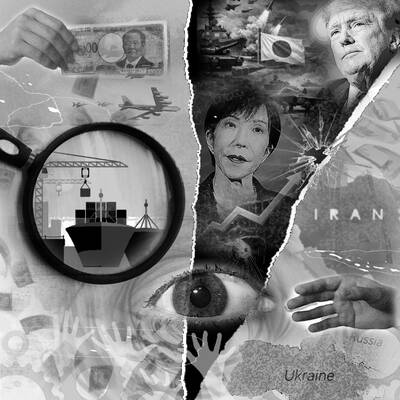
Japan’s imminent easing of arms export rules has sparked strong interest from Warsaw to Manila, Reuters reporting found, as US President Donald Trump wavers on security commitments to allies, and the wars in Iran and Ukraine strain US weapons supplies. Japanese Prime Minister Sanae Takaichi’s ruling party approved the changes this week as she tries to invigorate the pacifist country’s military industrial base. Her government would formally adopt the new rules as soon as this month, three Japanese government officials told Reuters. Despite largely isolating itself from global arms markets since World War II, Japan spends enough on its own
On March 31, the South Korean Ministry of Foreign Affairs released declassified diplomatic records from 1995 that drew wide domestic media attention. One revelation stood out: North Korea had once raised the possibility of diplomatic relations with Taiwan. In a meeting with visiting Chinese officials in May 1995, as then-Chinese president Jiang Zemin (江澤民) prepared for a visit to South Korea, North Korean officials objected to Beijing’s growing ties with Seoul and raised Taiwan directly. According to the newly released records, North Korean officials asked why Pyongyang should refrain from developing relations with Taiwan while China and South Korea were expanding high-level


 RSS
RSS