


On July 1, the Chinese Communist Party (CCP) plans to stage a patriotic extravaganza to celebrate the 100th anniversary of its founding. Among the achievements to be celebrated is the Baihetan Dam, located on the Jinsha River, on the southeastern edge of the Tibetan Plateau. The dam is scheduled to start operations on the same day.
The CCP loves a superlative. It is the world’s largest manufacturer and exporter, with the world’s largest foreign reserves. It boasts the world’s highest railway, and the highest and longest bridges. It is also the world’s most dammed country, with more large dams than the rest of the world combined, priding itself on having the world’s biggest water-transfer canal system.
The dams themselves are often superlative. The Three Gorges Dam is the world’s largest power station, in terms of installed capacity, and the Baihetan Dam is billed as the world’s biggest arch dam, as well as the world’s first project to use a giant 1 gigawatt (GW) hydroturbine generator. With 16 such generators, Baihetan ranks as the world’s second-largest hydroelectric dam (behind the Three Gorges Dam, at 22.5GW).

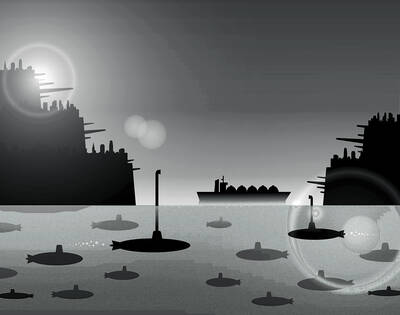
Illustration: Yusha
All of this makes great fodder for CCP-fueled nationalism — essential to the party’s legitimacy. China often flaunts its hydroengineering prowess, including its execution of the most ambitious inter-river water transfers ever conceived, to highlight its military and economic might. (To be sure, there are also superlatives that China will not be flaunting at its upcoming centenary — beginning with the world’s largest network of concentration camps.)
However, China’s dams are not merely symbols of the country’s greatness. Nor is their purpose simply to ensure China’s water security, as the CCP claims. They are also intended as a source of leverage that China can use to exert control over downstream countries.
The CCP’s 1951 annexation of the water-rich Tibetan Plateau — the starting point of Asia’s 10 major river systems — gave China tremendous power over Asia’s water map. In the ensuing decades, the country has made the most of this riparian advantage. For example, by building 11 giant dams on the Mekong River, just before it crosses into Southeast Asia, China has secured the ability to turn off the region’s water tap.
The CCP is failing to consider the high costs of its strategy, which extend far beyond political friction with China’s neighbors. The party’s insatiable damming is wreaking environmental havoc on Asia’s major river systems, including China’s dual lifelines: the Yellow and the Yangtze.
Giant dams damage ecosystems, drive freshwater species to extinction, cause deltas to retreat and often emit more greenhouse gases than coal-fired power plants. More than 350 lakes in China have disappeared in the past few decades and, with few free-flowing rivers left, river fragmentation and depletion have become endemic.
The social costs are no less severe. For starters, given shoddy construction in the first three decades of CCP rule, about 3,200 dams collapsed by 1981, with the 1975 Banqiao Dam failure alone killing up to 230,000 people. Of course, China has raised its dam-building prowess dramatically since then, and Baihetan was completed in just four years. As its early dams age and weather becomes increasingly extreme, catastrophic failures remain a serious risk.
Moreover, dam projects have displaced an enormous number of people. In 2007, just as China’s drive to build mega-dams was gaining momentum, then-Chinese premier Wen Jiabao (溫家寶) revealed that, since the CCP’s rise to power, China had relocated 22.9 million people to make way for water projects — a figure larger than the populations of more than 100 countries. The Three Gorges Dam alone displaced more than 1.4 million people.
This does not seem to bother the CCP much. Baihetan’s inundation of vast stretches of a sparsely populated highland has forced local residents, mostly from the relatively poor Yi nationality, to farm more marginal tracts at higher elevations. As China shifts its focus from the dam-saturated rivers in its heartland to rivers in the ethnic-minority homelands that the CCP annexed, China’s economically and culturally marginalized communities will suffer the most.
There is little doubt that this will happen. The CCP has set its sights on building the world’s first super-dam, on the Yarlung Zangbo River — better known as the Brahmaputra River — near Tibet’s heavily militarized border with India.
The Brahmaputra curves around the Himalayas in a U-turn and forms the planet’s longest and deepest canyon, as it plunges from an altitude of 2,800m toward the Indian floodplains. Damming it means building at an elevation of more than 1,500m — the highest at which a mega-dam has ever been built.
Because the gorge holds the world’s largest untapped concentration of river energy, the super-dam is supposed to have a hydropower generating capacity of 60GW, nearly three times that of the Three Gorges Dam.
The fact that the gorge is one of the world’s most biodiverse regions seems to be of little concern to the CCP, which is far more interested in being able to use water as a weapon against India, its Asian rival. China has set the stage for construction, completing a highway through the canyon and announcing the start of high-speed train service to a military town near the gorge. When it opens, the route will enable the transport of heavy equipment, materials and workers to the remote region, which was long thought inaccessible because of its treacherous terrain.
The CCP views its centenary as cause for celebration, but the rest of the world should see the party for what it is: repressive, genocidal and environmentally rapacious. And it should prepare for what the CCP’s second century might bring.
Brahma Chellaney is a professor of strategic studies at the New Delhi-based Center for Policy Research and a fellow at the Robert Bosch Academy in Berlin.
Copyright: Project Syndicate
In the event of a war with China, Taiwan has some surprisingly tough defenses that could make it as difficult to tackle as a porcupine: A shoreline dotted with swamps, rocks and concrete barriers; conscription for all adult men; highways and airports that are built to double as hardened combat facilities. This porcupine has a soft underbelly, though, and the war in Iran is exposing it: energy. About 39,000 ships dock at Taiwan’s ports each year, more than the 30,000 that transit the Strait of Hormuz. About one-fifth of their inbound tonnage is coal, oil, refined fuels and liquefied natural gas (LNG),
On Monday, the day before Chinese Nationalist Party (KMT) Chairwoman Cheng Li-wun (鄭麗文) departed on her visit to China, the party released a promotional video titled “Only with peace can we ‘lie flat’” to highlight its desire to have peace across the Taiwan Strait. However, its use of the expression “lie flat” (tang ping, 躺平) drew sarcastic comments, with critics saying it sounded as if the party was “bowing down” to the Chinese Communist Party (CCP). Amid the controversy over the opposition parties blocking proposed defense budgets, Cheng departed for China after receiving an invitation from the CCP, with a meeting with
To counter the CCP’s escalating threats, Taiwan must build a national consensus and demonstrate the capability and the will to fight. The Chinese Communist Party (CCP) often leans on a seductive mantra to soften its threats, such as “Chinese do not kill Chinese.” The slogan is designed to frame territorial conquest (annexation) as a domestic family matter. A look at the historical ledger reveals a different truth. For the CCP, being labeled “family” has never been a guarantee of safety; it has been the primary prerequisite for state-sanctioned slaughter. From the forced starvation of 150,000 civilians at the Siege of Changchun
The two major opposition parties, the Chinese Nationalist Party (KMT) and the Taiwan People’s Party (TPP), jointly announced on Tuesday last week that former TPP lawmaker Chang Chi-kai (張啟楷) would be their joint candidate for Chiayi mayor, following polling conducted earlier this month. It is the first case of blue-white (KMT-TPP) cooperation in selecting a joint candidate under an agreement signed by their chairpersons last month. KMT and TPP supporters have blamed their 2024 presidential election loss on failing to decide on a joint candidate, which ended in a dramatic breakdown with participants pointing fingers, calling polls unfair, sobbing and walking


 RSS
RSS