


With a mass vaccination program inoculating millions around the globe, the world appears to be turning a corner in the battle to bring the COVID-19 pandemic under control, giving hope that sometime this year, societies might return to a semblance of normalcy.
As nations gradually transition from firefighting mode into an investigation phase, more questions will invariably be asked about the virus’ origins.
Earlier this month, a team of WHO experts finished a one-month probe into the origins of the pandemic. The team is in the process of compiling its report.
However, there are already many indications that, predictably, the investigation was stage-managed by Beijing, and that the report will be a whitewash.
Following months of painstaking negotiations with the Chinese authorities, the team finally touched down in Beijing on Jan. 14. After spending 14 days in a quarantine hotel, the team was left with a mere two weeks to carry out its investigation.
Needless to say, Chinese officials kept a tight leash on the investigators, controlling the itinerary, their movements and who they were allowed to interview.
On the second day after the team was let out of isolation, their Chinese minders took them to a new propaganda “museum,” which spins a Chinese Communist Party-friendly narrative of Wuhan’s struggle to control the virus, replete with giant portraits of Chinese President Xi Jinping (習近平).
Speaking to Reuters, Dominic Dwyer, an Australian infectious diseases expert and team member, disclosed that China refused to furnish investigators with crucial raw data from 174 cases during the early phase of the outbreak in Wuhan in December 2019.
“That’s standard practice for an outbreak investigation,” Dwyer said of receiving such data.
In lieu of the data, the team was simply provided with a “summary” by Chinese officials.
Dwyer said that gaining access to the raw data is particularly important, as only half of the 174 cases had exposure to the Huanan market in Wuhan, which is said to be where the virus was initially detected.
Dwyer said he did not wish to speculate why the Chinese authorities were not forthcoming with the data, but the question remains: What is China trying to hide?
Could it be that Beijing wanted to prevent the team from tracing the virus back to the now-infamous Wuhan Institute of Virology?
Peter Daszak, president of the EcoHealth Alliance and a member of the WHO team, has nearly two decades of experience working with the institute, including controversial “gain of function” research using bat viruses. Some have suggested that his inclusion on the team presented a conflict of interests.
At a news conference to announce the team’s initial findings on Feb. 9, WHO investigators dismissed the theory that the virus could have leaked from the institute as “extremely unlikely” and said that they would not be recommending further investigation into the lab leak theory.
A number of international experts have since voiced concern over the team’s decision to rule out the lab leak hypothesis so quickly. In stark contrast, the team did leave the door open to a fringe theory being pushed by Chinese scientists that the virus might have been transmitted to humans through frozen food from abroad.
Chinese state media sprang into action, pronouncing Wuhan “cleared of guilt” and called for an investigation into US laboratories.
One does not need a doctorate in epidemiology to work out what is going on: The WHO has participated in a politicized “investigation,” choreographed from start to finish by Beijing. More than one year on from the start of the outbreak, the truth is no closer to being revealed.
Minister of Labor Hung Sun-han (洪申翰) on April 9 said that the first group of Indian workers could arrive as early as this year as part of a memorandum of understanding (MOU) between the Taipei Economic and Cultural Center in India and the India Taipei Association. Signed in February 2024, the MOU stipulates that Taipei would decide the number of migrant workers and which industries would employ them, while New Delhi would manage recruitment and training. Employment would be governed by the laws of both countries. Months after its signing, the two sides agreed that 1,000 migrant workers from India would
In recent weeks, Taiwan has witnessed a surge of public anxiety over the possible introduction of Indian migrant workers. What began as a policy signal from the Ministry of Labor quickly escalated into a broader controversy. Petitions gathered thousands of signatures within days, political figures issued strong warnings, and social media became saturated with concerns about public safety and social stability. At first glance, this appears to be a straightforward policy question: Should Taiwan introduce Indian migrant workers or not? However, this framing is misleading. The current debate is not fundamentally about India. It is about Taiwan’s labor system, its
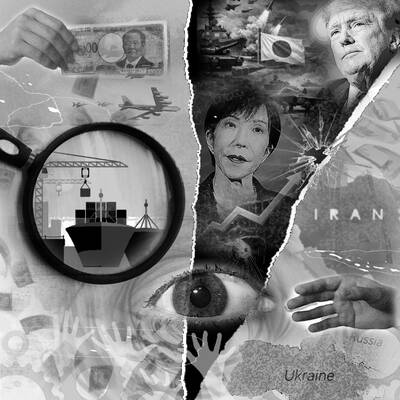
Japan’s imminent easing of arms export rules has sparked strong interest from Warsaw to Manila, Reuters reporting found, as US President Donald Trump wavers on security commitments to allies, and the wars in Iran and Ukraine strain US weapons supplies. Japanese Prime Minister Sanae Takaichi’s ruling party approved the changes this week as she tries to invigorate the pacifist country’s military industrial base. Her government would formally adopt the new rules as soon as this month, three Japanese government officials told Reuters. Despite largely isolating itself from global arms markets since World War II, Japan spends enough on its own
On March 31, the South Korean Ministry of Foreign Affairs released declassified diplomatic records from 1995 that drew wide domestic media attention. One revelation stood out: North Korea had once raised the possibility of diplomatic relations with Taiwan. In a meeting with visiting Chinese officials in May 1995, as then-Chinese president Jiang Zemin (江澤民) prepared for a visit to South Korea, North Korean officials objected to Beijing’s growing ties with Seoul and raised Taiwan directly. According to the newly released records, North Korean officials asked why Pyongyang should refrain from developing relations with Taiwan while China and South Korea were expanding high-level


 RSS
RSS