


We are still in the early chapters of the COVID-19 story and it is too soon to judge the full impact of the pandemic. However, one can tentatively discern six negative trends for Europe. These had all emerged before the virus struck but are now accelerating.
In various ways they are all likely to help the cause of anti-EU populists demanding greater economic autarky, stronger borders and more hostility to green policies.
COVID-19 has given extra ammunition to those arguing for greater national or European self-sufficiency. Long before it arrived, there was talk of “deglobalization” and “reshoring” of supply chains.
This stemmed in part from politics. US President Trump’s protectionist policies threatened international supply chains, as did the UK’s pursuit of a hard Brexit.
Narrowing wage differentials between emerging economies such as China and rich countries, which reduce the advantages of outsourcing were economic factors.
Concerns about the security of the supply of drugs, medical equipment and key components for the car industry, alongside greater suspicion of Chinese companies, have boosted the case for more national or European autonomy of supply chains.
National capitals are gaining more clout versus EU institutions. For decades these institutions have been losing ground to the member states, which have often resented the accumulation of power in Brussels.
The major capitals assert their authority in hard times. They did so during the 2008-2009 global financial crisis and during the subsequent debt crisis of the eurozone, when they had to provide the bailout money.
Once more, the European Commission has struggled to keep the 27 member states together and to coordinate their pandemic responses, not only because most of the key powers on health, fiscal policy and border control reside at national level, but also because many people look to national leaders to navigate difficulties.
The EU has been strengthening the Schengen area’s external border since the 2015 refugee and migrant crisis. Some governments also reintroduced checks on borders within the zone of unrestricted movement inside Europe.
The health emergency has increased suspicion of foreigners, and in March the EU’s Schengen-area countries closed their external border for non-essential travelers. More obstacles to movement within the Schengen area have also sprouted.
At some point, national governments will have the virus largely under control, but they will be wary of softening the Schengen borders. Visitors from parts of the world where the virus might still be rampant will not be welcome.
Many politicians will also want to make life as difficult as possible for irregular migrants.
The pandemic is likely to strengthen opposition to policies that are designed to moderate the climate crisis.
Before the virus arrived, populist parties in Sweden, Germany and in the UK, as well as the “yellow vest” movement in France, were using hostility to green policies as a means of drumming up support.
Once standards of living start dropping dramatically, European countries might not want to take a further hit to jobs and incomes from measures designed to tackle the climate emergency.
European leaders pledge to respect agreements made for curbing carbon emissions. However, as the recession bites, the pressures on them to moderate their green agenda, including from energy-intensive industries, will strengthen.
For several years an East-West division has left Hungary, Poland and at times some other central European nations at odds with the rest of the EU. They have rowed over the distribution of asylum seekers, with some eastern European countries refusing to take any, targets for reducing carbon emissions, and the rule of law, with Poland and Hungary disregarding the independence of the judiciary and media pluralism.
COVID-19 has widened the rift. Wealthier member states fear that they will lose money from the EU budget to the southern European countries most afflicted by the virus.
Meanwhile, Hungarian Prime Minister Viktor Orban has used the pandemic as justification for introducing rule by decree, exacerbating fears that he is creating a de facto dictatorship.
The virus is widening the North-South fissure which emerged in the eurozone crisis 10 years ago. Germany, the Netherlands and their northern allies were reluctant to give substantial help to the their southern neighbors in difficulty.
COVID-19 has struck the EU asymmetrically. Particularly Italy and Spain, have suffered more deaths from the pandemic than most others, started the crisis with higher levels of debt and depend on industries such as tourism that are badly affected.
Southern European countries want solidarity from their northern neighbors, ideally in the form of some sort of eurobond. Here, the EU as a whole would borrow money and then disburse grants depending on need.
EU leaders have agreed to set up a recovery fund to support the worst-affected regions. However, this seems likely to provide more in the way of loans than grants, because governments in wealthier member states remain opposed to large-scale transfers within the EU.
This stinginess is rooted in voters’ hostility to an EU-wide distribution of debt. It delights populists such as former Italian deputy prime minister Matteo Salvini, who is skilled at exploiting every perceived slight from the EU. One opinion poll in April found that 49 percent of Italians wanted to leave the EU.
If Europe pushes self-sufficiency too far, it will impair the benefits that trade delivers to all continents. Closing borders within or around the Schengen area, once COVID-19 is under control, would achieve very little. When the EU is faced with transnational challenges such as economic depression, a pandemic or climate change, it needs strong central institutions.
EU leaders should not slacken in their efforts to tackle climate change. The rift inside the EU is alarming and can not be resolved by tolerating disrespect for the rule of law.
As for the North-South divide, the European Central Bank might be able to do enough to keep Italy and other weaker states in the eurozone.
However, the politics of an unresolved rift might turn very nasty, increasing anti-EU sentiment across the bloc, and it could trigger countries leaving the EU or the euro.
Charles Grant is the director of the Centre for European Reform.
A gap appears to be emerging between Washington’s foreign policy elites and the broader American public on how the United States should respond to China’s rise. From my vantage working at a think tank in Washington, DC, and through regular travel around the United States, I increasingly experience two distinct discussions. This divergence — between America’s elite hawkishness and public caution — may become one of the least appreciated and most consequential external factors influencing Taiwan’s security environment in the years ahead. Within the American policy community, the dominant view of China has grown unmistakably tough. Many members of Congress, as
The Hong Kong government on Monday gazetted sweeping amendments to the implementation rules of Article 43 of its National Security Law. There was no legislative debate, no public consultation and no transition period. By the time the ink dried on the gazette, the new powers were already in force. This move effectively bypassed Hong Kong’s Legislative Council. The rules were enacted by the Hong Kong chief executive, in conjunction with the Committee for Safeguarding National Security — a body shielded from judicial review and accountable only to Beijing. What is presented as “procedural refinement” is, in substance, a shift away from
The shifting geopolitical tectonic plates of this year have placed Beijing in a profound strategic dilemma. As Chinese President Xi Jinping (習近平) prepares for a high-stakes summit with US President Donald Trump, the traditional power dynamics of the China-Japan-US triangle have been destabilized by the diplomatic success of Japanese Prime Minister Sanae Takaichi in Washington. For the Chinese leadership, the anxiety is two-fold: There is a visceral fear of being encircled by a hardened security alliance, and a secondary risk of being left in a vulnerable position by a transactional deal between Washington and Tokyo that might inadvertently empower Japan
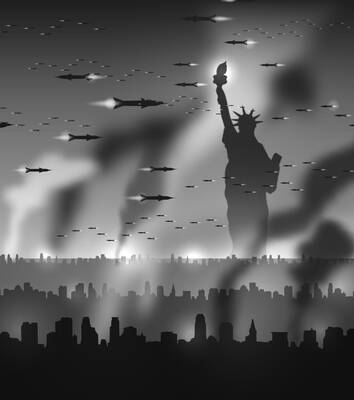
After declaring Iran’s military “gone,” US President Donald Trump appealed to the UK, France, Japan and South Korea — as well as China, Iran’s strategic partner — to send minesweepers and naval forces to reopen the Strait of Hormuz. When allies balked, the request turned into a warning: NATO would face “a very bad” future if it refused. The prevailing wisdom is that Trump faces a credibility problem: having spent years insulting allies, he finds they would not rally when he needs them. That is true, but superficial, as though a structural collapse could be caused by wounded feelings. Something


 RSS
RSS