


President Ma Ying-jeou’s (馬英九) recent remarks that the nation’s wealth divide is one of the world’s smallest demonstrate that he is still more focused on numbers than the real financial challenges that ordinary workers and families face.
Addressing a small and medium-sized enterprise conference on Oct. 28 in Taipei, Ma said that last year the average annual disposable income of the top 20 percent of the nation’s households was 6.08 times greater than that of the bottom 20 percent, an improvement from the 6.39 times recorded in 2001.
Ma said at the conference that the difference in average incomes earned by the top 20 percent of individuals and the bottom 20 percent had narrowed steadily since 2001 to 4.08 times last year, with the Gini coefficient — a commonly used measure of inequality — reaching 0.336 last year, the lowest level seen in more than a decade, according to data compiled by the Directorate-General of Budget, Accounting and Statistics (DGBAS).
A Gini coefficient of zero indicates complete equality of income, while a figure of 1 indicates complete inequality. Taiwan’s Gini coefficient of 0.336 for last year is in the middle of all nations surveyed in the Institute for Management Development’s annual global competitiveness survey and, of course, Ma likes to claim that narrowing the income gap is one of his administration’s most significant achievements.
However, the problem is that official statistics fail to accurately reflect the actual distribution of incomes in the nation. Even more alarming is that official statistics cannnot reveal the real concentration of wealth in the hands of the rich, who also earn income from property or stock sales.
The growing concentration of wealth in the hands of the few also reflects a nation that has been laboring with sluggish economic growth and stagnant wages for many years, as DGBAS statistics indicate that wages have accounted for a declining share of the nation’s GDP over the past 20 years, in contrast with corporate earnings, which have seen an increasing contribution during the same period. Last year, employee wages constituted only about 45 percent of GDP — one of the lowest levels in the world.
In addition, from 1992 to 2012, the contribution of wages to GDP decreased by 5.5 percent, in comparison with a 3.7 percent gain in corporate earnings over the same period, suggesting that an increasing proportion of Taiwan’s growth in GDP has gone to wealthy corporate shareholders rather than to employee salaries.
So, when Ma repeatedly claims that the nation’s economy is recovering, one has to ponder what recovery he is alluding to, why wages remain flat after almost 15 years and whether the economy is working for the interests of the majority, or for the wealthy elite and big business.
On the other hand, a growing wealth gap is part of an international trend. Earlier this month, the World Economic Forum released a report saying that rising income inequality and unemployment would be the top challenges facing global leaders next year, while Credit Suisse said in its annual global wealth report last month that global wealth inequality has increased since 2008, with the wealthiest 1 percent of the world’s population possessing 48.2 percent of global wealth, up from the 46 percent last year. The bottom half of people hold just 1 percent of global wealth, by comparison.
The increase in the wealth divide is now a global issue and the situation in Taiwan reflects this, with the issue threatening national competitiveness and social stability. After gaining international attention with his controversial book Capital in the Twenty-First Century, published last year to address the issue of income inequality, French economist Thomas Piketty was due to visit the nation for the first time yesterday.
It will be interesting to know what his thoughts on the issue are with respect to Taiwan, especially during the current period of weak economic growth.
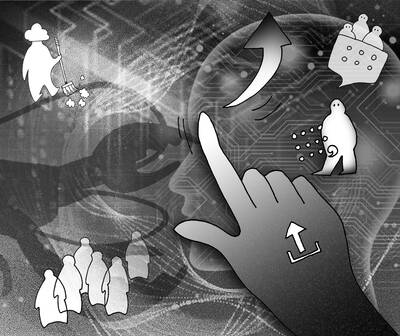
Weeks into the craze, nobody quite knows what to make of the OpenClaw mania sweeping China, marked by viral photos of retirees lining up for installation events and users gathering in red claw hats. The queues and cosplay inspired by the “raising a lobster” trend make for irresistible China clickbait. However, the West is fixating on the least important part of the story. As a consumer craze, OpenClaw — the AI agent designed to do tasks on a user’s behalf — would likely burn out. Without some developer background, it is too glitchy and technically awkward for true mainstream adoption,
Out of 64 participating universities in this year’s Stars Program — through which schools directly recommend their top students to universities for admission — only 19 filled their admissions quotas. There were 922 vacancies, down more than 200 from last year; top universities had 37 unfilled places, 40 fewer than last year. The original purpose of the Stars Program was to expand admissions to a wider range of students. However, certain departments at elite universities that failed to meet their admissions quotas are not improving. Vacancies at top universities are linked to students’ program preferences on their applications, but inappropriate admission
On Monday, a group of bipartisan US senators arrived in Taiwan to support the nation’s special defense bill to counter Chinese threats. At the same time, Beijing announced that Chinese President Xi Jinping (習近平) had invited Chinese Nationalist Party (KMT) Chairwoman Cheng Li-wun (鄭麗文) to visit China, a move to make the KMT a pawn in its proxy warfare against Taiwan and the US. Since her inauguration as KMT chair last year, Cheng, widely seen as a pro-China figure, has made no secret of her desire to interact with the Chinese Communist Party (CCP) and meet with Xi, naming it a
Taiwan People’s Party (TPP) Chairman Huang Kuo-chang (黃國昌) took the stage at a protest rally on Sunday in front of the Presidential Office Building in Taipei in support of former TPP chairman Ko Wen-je (柯文哲), who has been sentenced to 17 years in jail for corruption and embezzlement. Huang told the crowd that Chinese Nationalist Party (KMT) Chairwoman Cheng Li-wun (鄭麗文) had sent a message of support the previous day, saying she would be traveling from the south to Taipei: If the protest continued into the evening, she had said, she would show up. The rally was due to end


 RSS
RSS