


The recent headline wars between the Want Want Holdings-controlled China Times Group and Hong Kong-listed Next Media Ltd have once again highlighted how self-restraint and self-discipline are rare in the Taiwanese media. In addition, the way journalists have failed to cover news about their own companies fairly while attacking other papers, protecting the image of their own bosses, is even more disgusting. To quote National Communications Commission (NCC) Chairperson Su Herng (蘇蘅), this was an example both of the public apparatus being used for personal agendas and of declining press integrity.
The NCC itself has also been putting on a bad show as of late. The recent controversial bid by Want Want China Broadband to acquire 11 cable television services owned by China Network Systems (CNS) saw the NCC riven with internal disagreements, making it a lame duck. Three NCC commissioners withdrew from the review after Want Want China Times Group accused them of bias when the NCC reviewed a deal in which Want Want Holdings purchased the China Times in 2008. Were these commissioners academics, they could perhaps be excused for their refusal to carry out the review. However, they are civil servants, and as such, their refusal constitutes dereliction of duty. Other commissioners have also said they no longer want to work at the NCC. Clearly, they are incapable of dealing with pressure and this casts doubt on the independence of the NCC.
However, the NCC is not the only organization to have failed in the performance of its duties. Civic groups in Taiwan have records of media running illegal Chinese advertisements and accepting product placements by Chinese firms. The US non-governmental press watchdog Freedom House has issued warnings about this in the past and the Control Yuan has had to correct such misconduct before.
The Mainland Affairs Council (MAC) acts as if it knows nothing. The MAC has for years now been slack in enforcing regulations. A few months ago, it greatly relaxed restrictions on advertisements from China and claimed that the only thing it would not allow is disguised advertorials by Chinese firms. However, NCC members’ failure to fulfill their duties was revealed last month when the governor of China’s Fujian Province visited Taiwan, and even now there are still legislators trying to play the whole affair down by claiming it involved freedom of speech. China also tried to step in and help the Taiwanese government with this issue, but their efforts have added little credibility.
Poor administration is also clear in the hiring of management personnel in public broadcasting. Two years ago, after the Chinese Nationalist Party (KMT) administration under President Ma Ying-jeou (馬英九) managed to force dissenting voices off the board of Public Television Service (PTS), and after stealing the chairperson and general manager positions at the broadcaster, the Cabinet has now stopped the review process for PTS’ new board, even though the current board’s tenure expired in late 2010. The board members are now in legal limbo, standing around doing nothing.
Last month, the KMT-controlled administration also managed to lower the number of votes necessary to see members of the next PTS board pass their reviews from three-quarters of the vote to two-thirds, to ensure all of their friends pass and are allowed to continue controlling PTS, an outlet that is supposed to belong to the people.
Incompetence and arrogance are the distinguishing characteristics of the Ma administration and these two things come across strongly in the way it enacts its media policies.
Lu Shih-hsiang is an adviser to the Taipei Times.
Translated by Drew Cameron
A gap appears to be emerging between Washington’s foreign policy elites and the broader American public on how the United States should respond to China’s rise. From my vantage working at a think tank in Washington, DC, and through regular travel around the United States, I increasingly experience two distinct discussions. This divergence — between America’s elite hawkishness and public caution — may become one of the least appreciated and most consequential external factors influencing Taiwan’s security environment in the years ahead. Within the American policy community, the dominant view of China has grown unmistakably tough. Many members of Congress, as
The Hong Kong government on Monday gazetted sweeping amendments to the implementation rules of Article 43 of its National Security Law. There was no legislative debate, no public consultation and no transition period. By the time the ink dried on the gazette, the new powers were already in force. This move effectively bypassed Hong Kong’s Legislative Council. The rules were enacted by the Hong Kong chief executive, in conjunction with the Committee for Safeguarding National Security — a body shielded from judicial review and accountable only to Beijing. What is presented as “procedural refinement” is, in substance, a shift away from
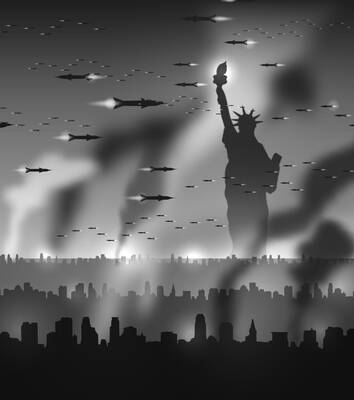
After declaring Iran’s military “gone,” US President Donald Trump appealed to the UK, France, Japan and South Korea — as well as China, Iran’s strategic partner — to send minesweepers and naval forces to reopen the Strait of Hormuz. When allies balked, the request turned into a warning: NATO would face “a very bad” future if it refused. The prevailing wisdom is that Trump faces a credibility problem: having spent years insulting allies, he finds they would not rally when he needs them. That is true, but superficial, as though a structural collapse could be caused by wounded feelings. Something
The shifting geopolitical tectonic plates of this year have placed Beijing in a profound strategic dilemma. As Chinese President Xi Jinping (習近平) prepares for a high-stakes summit with US President Donald Trump, the traditional power dynamics of the China-Japan-US triangle have been destabilized by the diplomatic success of Japanese Prime Minister Sanae Takaichi in Washington. For the Chinese leadership, the anxiety is two-fold: There is a visceral fear of being encircled by a hardened security alliance, and a secondary risk of being left in a vulnerable position by a transactional deal between Washington and Tokyo that might inadvertently empower Japan


 RSS
RSS