


"Treason doth never prosper: what's the reason? For if it prosper, none dare call it treason." John Harington's early-17th-century epigram still hits the spot. Power's objective facts determine what counts as perfidious treason or virtuous loyalty.
In 1605, Guy Fawkes and his team plotted a spectacular bit of Catholic sabotage. With better planning, they might all have been secretaries of state by the end of the week. As it was, they would be commemorated as violent missionaries. For their treason was not just against the king -- it also made them un-British.
Perhaps remembering the fifth of November, the Blair government now proposes a revival of the offense of treason in order to deal with terrorist intent. For Rome then, read Mecca now. But the extravagance of the accusation of treachery makes it a dangerous one.
Hardly any jury would convict on so contentious a charge. Enforcement, however, is irrelevant to this particular legislative caprice. After all, violation of the wife of the heir to the crown remains treasonable, yet Major James Hewitt is still at large. The revival proposed is a symbolic statement and a visible demonstration of who is in charge in Britain today.
The language of treason is the language of war, and it acquired its highest moral tone during the 20th-century conflicts of total war involving the civilian population. Democratic governments played on the fear of a fifth column within in order to bolster the national purpose. But that idea of a common will had its totalitarian aspects, which included the deliberate cultivation of fear and suspicion.
Careless talk, so claimed the famous government poster, cost lives -- and so it was best to whisper because the traitor within might be within earshot.
Treachery revived on the statute book simply confirms the suspicion that the "war on terror" really means the endless war of a whole culture against Islam itself. Far from increasing the authority of government to act and giving it a new moral purpose, the use of allegations of treason will undermine it. For it confirms Harington's suggestion that government simply makes up the rules to suit itself.
The people who created New Labour did, after all, seize an entire political party from within. These Trotskyites of the Right then transformed the Labour party and used it in order to gain control of the central machinery of government itself. They had already redefined what was and what was not "treason" within the Labour party and had recast that organization as a vehicle for their personal ambitions.
It's therefore hardly surprising that this governmental elite should seek to revive the offense of treason to suit its own purposes. But this is a dangerous game to play, even from the point of view of the elite itself, since it exposes the fragile moral code that keeps the state on the road.
The state can only operate institutionally if it enjoys a monopoly of violence. And governments both ancient and modern necessarily use violence against those who oppose their authority.
But the mere possession of a lot of cannon and gunpowder, or air-to-surface missiles, is not enough. Treason -- whether against the sovereign or against "our way of life" -- has therefore been used in order to give an ennobling purpose to government. It is part of that fabric of morality and of loyalism which has been used by power in order to sanction, and so conceal, the extent of its violence.
In aristocratic governments -- Stuart England then or Saudi today -- the terrain of violence is a level killing field divided between cronies and dissidents. This year's king and his mates could well be next year's prisoners -- which is why treachery in these societies is largely a question of dates. Modern democracies, fond of their ethics, parade their difference from aristocracies and ventilate the language of morality in order to justify their particular force.
But many of the violent acts of subversives they oppose -- such as detention of persons and seizure of assets -- are not that different from the methods used by more legitimate authority. It's the aims that make the difference. Bandits and gangsters do not on the whole give money to schools and hospitals.
The league of gentlemen-rebels who framed the US Constitution reacted against the fact that "treason" meant a betrayal of the sovereign, which is why they defined treason so restrictively -- it wasn't meant to be anything personal. But it's the personal bite that makes treachery a hurtful accusation in private life, and it is best left in that inner space.
The revival of treason in the UK today is an archaic measure and one that takes us back to the world of blood feuds and lineage-loyalty -- something that the sanctimonious West used to pride itself on having transcended.
A gap appears to be emerging between Washington’s foreign policy elites and the broader American public on how the United States should respond to China’s rise. From my vantage working at a think tank in Washington, DC, and through regular travel around the United States, I increasingly experience two distinct discussions. This divergence — between America’s elite hawkishness and public caution — may become one of the least appreciated and most consequential external factors influencing Taiwan’s security environment in the years ahead. Within the American policy community, the dominant view of China has grown unmistakably tough. Many members of Congress, as
The Hong Kong government on Monday gazetted sweeping amendments to the implementation rules of Article 43 of its National Security Law. There was no legislative debate, no public consultation and no transition period. By the time the ink dried on the gazette, the new powers were already in force. This move effectively bypassed Hong Kong’s Legislative Council. The rules were enacted by the Hong Kong chief executive, in conjunction with the Committee for Safeguarding National Security — a body shielded from judicial review and accountable only to Beijing. What is presented as “procedural refinement” is, in substance, a shift away from
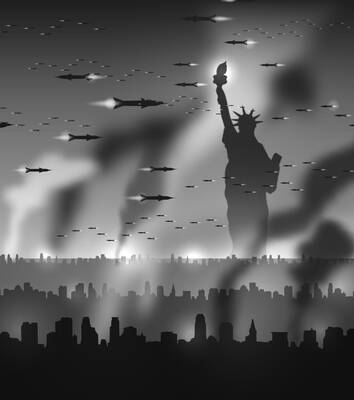
After declaring Iran’s military “gone,” US President Donald Trump appealed to the UK, France, Japan and South Korea — as well as China, Iran’s strategic partner — to send minesweepers and naval forces to reopen the Strait of Hormuz. When allies balked, the request turned into a warning: NATO would face “a very bad” future if it refused. The prevailing wisdom is that Trump faces a credibility problem: having spent years insulting allies, he finds they would not rally when he needs them. That is true, but superficial, as though a structural collapse could be caused by wounded feelings. Something
The shifting geopolitical tectonic plates of this year have placed Beijing in a profound strategic dilemma. As Chinese President Xi Jinping (習近平) prepares for a high-stakes summit with US President Donald Trump, the traditional power dynamics of the China-Japan-US triangle have been destabilized by the diplomatic success of Japanese Prime Minister Sanae Takaichi in Washington. For the Chinese leadership, the anxiety is two-fold: There is a visceral fear of being encircled by a hardened security alliance, and a secondary risk of being left in a vulnerable position by a transactional deal between Washington and Tokyo that might inadvertently empower Japan


 RSS
RSS