


"Brown is the new black," Meera Syal said at the ImagineAsia film festival in London a few years ago. She is the original librettist for the musical "Bombay Dreams," now playing on Broadway.
The Indian writer was not making a fashion statement; she was speaking of the popularity in the Western world of South Asian culture, including food, drink, dance, drama and films from India, Pakistan, Bangladesh, Sri Lanka and other portions of what used to be called the subcontinent. The booming Hindi movie industry is called Bollywood, a 1976 coinage of the crime-fiction writer H.R.F. Keating that combined Bombay with Hollywood. All this, wrote Richard Corliss in <
Tangent: The spice mixture known as curry, sometimes based on the aromatic leaves of the curry tree and often mixed with turmeric and other strong spices, drew its name from the Tamil <
"Brown is the new black," as used above, meant the culture of people with the brown skin color of South Asians is now as popular as, or even "hotter" than, that of the culture of black-skinned people -- in the estimation of with-it whites, especially in Britain.
Now to the fashion origin of the new black. Start with the universally accepted notion that black is basic. Hems may rise and fall (or do both asymmetrically), and feather boas may come into vogue or stay out, but black just keeps rolling along. When its fashion dominance lasts too long, however, and the whole couture world looks as if it is on its way to a funeral, something new is desired. In 1983, Suzy Menkes, then of <
Reached in Paris, where now holds sway as a columnist for <
So what is today's new black, Suzy? "For the first time I can remember, the front row at last season's fashion shows was not just a sea of black, but one with lots of pattern and print. Perhaps florals are the new black."
Fashion authorities less influential than my columnist colleague in Paris suggest that pink has become temporarily dominant. But coming to the field of lexicography, it appears that the meaning of the phrase has gone beyond the confines of fashion and morphed to "whatever is avant-garde; the latest innovation to attract a following." The Menkes formulation, like Coco Chanel's "little black dress" of the late 1920s, has achieved the status of a classic even as the popularity of colors rises and falls. The word from California is that "orange is the new pink."
"No Longer the Next Big Thing" went a recent front-page headline in <
An early use of this as a self-conscious expression -- that is, placed in quotes by the speaker to show it is a cliche -- was in 1977, when Steve Ditlea wrote in <
Here's a secret to etymological sourcing: Access <
But in this world of fascination with predictions of big things to come, what neologism will replace this redoubtable phrase? Erin McKean, editor of <
But if we can find the next big thing for the next big thing -- on the leading, cutting edge -- we will have discovered the new black.
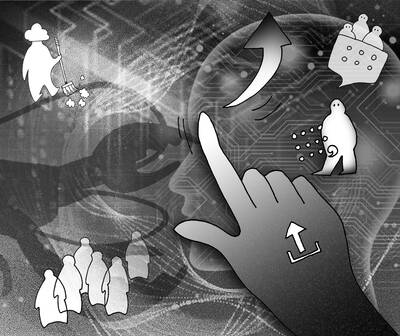
Weeks into the craze, nobody quite knows what to make of the OpenClaw mania sweeping China, marked by viral photos of retirees lining up for installation events and users gathering in red claw hats. The queues and cosplay inspired by the “raising a lobster” trend make for irresistible China clickbait. However, the West is fixating on the least important part of the story. As a consumer craze, OpenClaw — the AI agent designed to do tasks on a user’s behalf — would likely burn out. Without some developer background, it is too glitchy and technically awkward for true mainstream adoption,
Out of 64 participating universities in this year’s Stars Program — through which schools directly recommend their top students to universities for admission — only 19 filled their admissions quotas. There were 922 vacancies, down more than 200 from last year; top universities had 37 unfilled places, 40 fewer than last year. The original purpose of the Stars Program was to expand admissions to a wider range of students. However, certain departments at elite universities that failed to meet their admissions quotas are not improving. Vacancies at top universities are linked to students’ program preferences on their applications, but inappropriate admission
On Monday, a group of bipartisan US senators arrived in Taiwan to support the nation’s special defense bill to counter Chinese threats. At the same time, Beijing announced that Chinese President Xi Jinping (習近平) had invited Chinese Nationalist Party (KMT) Chairwoman Cheng Li-wun (鄭麗文) to visit China, a move to make the KMT a pawn in its proxy warfare against Taiwan and the US. Since her inauguration as KMT chair last year, Cheng, widely seen as a pro-China figure, has made no secret of her desire to interact with the Chinese Communist Party (CCP) and meet with Xi, naming it a
Taiwan People’s Party (TPP) Chairman Huang Kuo-chang (黃國昌) took the stage at a protest rally on Sunday in front of the Presidential Office Building in Taipei in support of former TPP chairman Ko Wen-je (柯文哲), who has been sentenced to 17 years in jail for corruption and embezzlement. Huang told the crowd that Chinese Nationalist Party (KMT) Chairwoman Cheng Li-wun (鄭麗文) had sent a message of support the previous day, saying she would be traveling from the south to Taipei: If the protest continued into the evening, she had said, she would show up. The rally was due to end


 RSS
RSS