


Ho hum, another sex scandal involving a government official. Ho hum, another scandal about corrupt teachers. Just when it seems that corruption scandals can't get any more outrageous, along comes the strange saga of the International Biology Olympiad held two years ago, complete with grade tampering, visits to prostitutes and used condoms kept in a refrigerator. But there is nothing ho hum or laughable about the obsessive lengths some parents will go to ensure their child's educational successes and the enormous pressure this puts on students to live up to parental demands.
The Olympiad story is truly an "only in Taiwan" one, with quite a cast of characters. There are the parents who allegedly bribed one of the competi-tion's judges, by paying for him to visit a hostess club and have sex. To ensure the official kept his end up, the parents allegedly tapped their conversations with him and preserved a sample of his semen (the condom in the fridge). Then there is the high school biology teacher -- the alleged middleman in the deal. The story broke only because the teen who was the focus of such efforts didn't do as well as his parents wanted.
This sordid tale brings to mind the recent scandal in the US about a mother who faked IQ tests and pretended to be her son in phone calls in order to convince people that he was one of the youngest prodigies in history. The woman confessed to her elaborate deception only after her son, now eight-years old, attempted suicide because he was unable to cope with the pressure from her. Fortunately, his life was saved.
Such pressure -- and such suicide attempts -- are all too common here. The parental and social pressure on youngsters to excel so they can get into a top university is extreme. For decades the message to kids is that getting into a top university and getting a diploma is everything. In fact the more diplomas the merrier. They have been indoctrinated to believe that without an impressive education there is no chance to get ahead in life. Education is completely equated with social and economic mobility. But not just any kind of education will do -- the focus is on medicine, engineering and law. Interest and talent in almost anything else, especially sports, the arts and music, are discouraged by parents and teachers alike.
That parents want their children to succeed is natural. What is unnatural is when that success is measured solely in terms of academic achievement and money. The path to such success means a child's academic career is mapped out early on. So countless children are sent off to endless after-school math, English and other classes at cram schools, starting from elementary school onwards.
Parental domination continues into adulthood. Parents usually decide their children's university majors, complete or buy the works their children submit to various academic competitions, and do all they can to remove any obstacles to academic success. A child's individuality is completely ignored, making them overly dependent upon their parents or other authority figures and sorely lacking in problem-solving ability and a sense of responsibility.
Such children grow up to be the kind of parents their parents were -- unless they are strong enough to make an effort to break the cycle and risk upsetting their families. For many that means leaving Taiwan -- if they can afford to -- so that their children won't face the same academic nightmare.
The increase in the number of schools and implementation of a diversified school admission program to replace the Joint College Entrance Exam may eventually help alleviate some of the stress put on students -- if parents cooperate as well. But more must be done. The costs to society otherwise is a price that Taiwan can no longer afford to pay.
A gap appears to be emerging between Washington’s foreign policy elites and the broader American public on how the United States should respond to China’s rise. From my vantage working at a think tank in Washington, DC, and through regular travel around the United States, I increasingly experience two distinct discussions. This divergence — between America’s elite hawkishness and public caution — may become one of the least appreciated and most consequential external factors influencing Taiwan’s security environment in the years ahead. Within the American policy community, the dominant view of China has grown unmistakably tough. Many members of Congress, as
The Hong Kong government on Monday gazetted sweeping amendments to the implementation rules of Article 43 of its National Security Law. There was no legislative debate, no public consultation and no transition period. By the time the ink dried on the gazette, the new powers were already in force. This move effectively bypassed Hong Kong’s Legislative Council. The rules were enacted by the Hong Kong chief executive, in conjunction with the Committee for Safeguarding National Security — a body shielded from judicial review and accountable only to Beijing. What is presented as “procedural refinement” is, in substance, a shift away from
The shifting geopolitical tectonic plates of this year have placed Beijing in a profound strategic dilemma. As Chinese President Xi Jinping (習近平) prepares for a high-stakes summit with US President Donald Trump, the traditional power dynamics of the China-Japan-US triangle have been destabilized by the diplomatic success of Japanese Prime Minister Sanae Takaichi in Washington. For the Chinese leadership, the anxiety is two-fold: There is a visceral fear of being encircled by a hardened security alliance, and a secondary risk of being left in a vulnerable position by a transactional deal between Washington and Tokyo that might inadvertently empower Japan
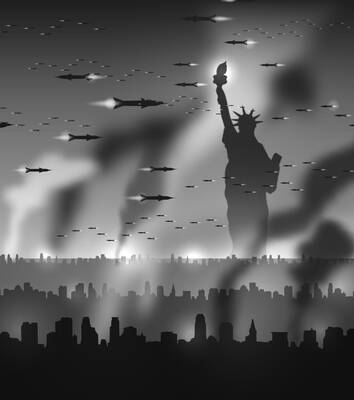
After declaring Iran’s military “gone,” US President Donald Trump appealed to the UK, France, Japan and South Korea — as well as China, Iran’s strategic partner — to send minesweepers and naval forces to reopen the Strait of Hormuz. When allies balked, the request turned into a warning: NATO would face “a very bad” future if it refused. The prevailing wisdom is that Trump faces a credibility problem: having spent years insulting allies, he finds they would not rally when he needs them. That is true, but superficial, as though a structural collapse could be caused by wounded feelings. Something


 RSS
RSS