


The young waitress waved at the empty tables as a clutch of idle cooks hovered in a corner of one of the Gambian capital’s trendy restaurants, all eyes fixed on the front door.
“Last year if you came here at eight, the place would be full,” she said gloomily.
The small West African country is among many exotic travel destinations bracing for a bad hit by the financial crisis as worried consumers delay far-flung holidays.
Only a six-hour plane ride with no jet leg from many parts of Europe, Gambia boasts sun, sea and a break from relentless grey on its Atlantic seaboard teasingly nicknamed the “Smiling Coast.”
Yet already in last month’s run-up to the high season, restaurants in the coastal capital, Banjul, registered a drop in guests. The three-to-one waitress-to-diner ratio in more than one establishment was less a “luxury” than a “worry” indicator.
Marketing director Lamin Saho at the Gambian Tourism Authority said room occupancy was around 42 percent, down from about 60 percent in the same period last year.
“There is a decline compared to previous years due to the global financial problems,” he said.
Gambia draws some 100,000 visitors a year, a healthy record for a place that had only 300 in 1965, government figures showed, shortly after the first “tourists” ventured to this English-speaking enclave nestled inside Senegal.
Most visitors are European, with nearly half British (46 percent), followed by the Dutch (11 percent) and the Swedish (5 percent).
“For British holidaymakers things are now more expensive,” Saho said, with the financial crisis compounded by exchange rates that have seen the pound drop against the Gambian dalasis.
This spells bad news for Gambia because Britons traditionally spend more money than the thrifty Dutch, who prefer to stay in all-inclusive hotels.
Zimbabwe-born Londoner Beverley Brown, who works for a pharmaceutical company, came despite the looming recession back home.
“My holiday was sort of a last-minute decision. I didn’t want to spend too much,” she said, adding: “In my office I am the only person to go away this Christmas.”
Tiny Gambia — a slim, fertile stretch on either side of the Gambia River — depends heavily on tourism, and the drop could deal a hefty blow in a country struggling with high unemployment.
Though no official jobless numbers are available, the latest figures from the World Bank say 61 percent of the 1.5 million population live below the nationally established poverty line.
Some 16,000 people work directly in the tourism sector, though the livelihoods of many more depend on business tourism generates indirectly.
Tourism recently surpassed the export of groundnuts as the country’s biggest foreign exchange earner, and now accounts for some 16 percent of GDP, government figures showed.
Gambian Secretary of State for Finance and Economic Affairs Bala Musa Gaye, however, said that serious challenges had emerged last year and could continue this year.
“Gambia will be affected directly or indirectly by the global financial crisis in terms of remittances from abroad, aid flows, foreign direct investment and tourism receipts,” he said.
While final figures for last year have not yet been released, the latest numbers from the Gambian Tourism Authority show that last year’s summer season already took a hit.
In May, June and July tourism arrivals dropped 26.4 percent, 15.7 percent and 14.1 percent respectively, and the usually busy winter season is not expected to be any better.
Government-trained tour guides, who work as freelancers at the country’s big resorts like Serrekunda, are already struggling with fewer — and penny-pinching — tourists.
“You can really feel it in the way they spend,” said Sheriff Mballow, the secretary-general of the tourist guide association. “They spend less and are less likely to do business than before.”

The nation’s fastest supercomputer, Nano 4 (晶創26), is scheduled to be launched in the third quarter, and would be used to train large language models in finance and national defense sectors, the National Center for High-Performance Computing (NCHC) said. The supercomputer, which would operate at about 86.05 petaflops, is being tested at a new cloud computing center in the Southern Taiwan Science Park in Tainan. The exterior of the server cabinet features chip circuitry patterns overlaid with a map of Taiwan, highlighting the nation’s central position in the semiconductor industry. The center also houses Taiwania 2, Taiwania 3, Forerunner 1 and
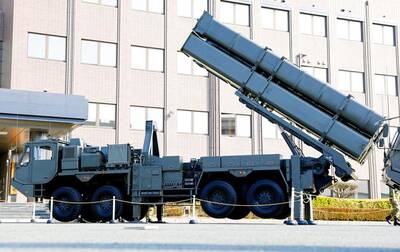
Japan has deployed long-range missiles in a southwestern region near China, the Japanese defense minister said yesterday, at a time when ties with Beijing are at their lowest in recent years. The missiles were installed in Kumamoto in the southern region of Kyushu, as Japan is attempting to shore up its military capacity as China steps up naval activity in the East China Sea. “Standoff defense capabilities enable us to counter the threat of enemy forces attempting to invade our country ... while ensuring the safety of our personnel,” Japanese Minister of Defense Shinjiro Koizumi said. “This is an extremely important initiative for
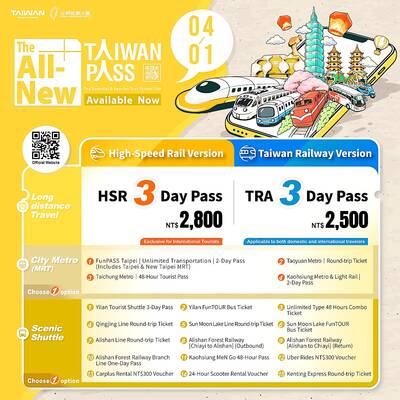
MORE POPULAR: Taiwan Pass sales increased by 59 percent during the first quarter compared with the same period last year, the Tourism Administration said The Tourism Administration yesterday said that it has streamlined the Taiwan Pass, with two versions available for purchase beginning today. The tourism agency has made the pass available to international tourists since 2024, allowing them to access the high-speed rail, Taiwan Railway Corp services, four MRT systems and four Taiwan Tourist Shuttles. Previously, five types of Taiwan Pass were available, but some tourists have said that the offerings were too complicated. The agency said only two types of Taiwan Pass would be available, starting from a three-day pass with the high-speed rail and a three-day pass with Taiwan Railway Corp. The former costs NT$2,800
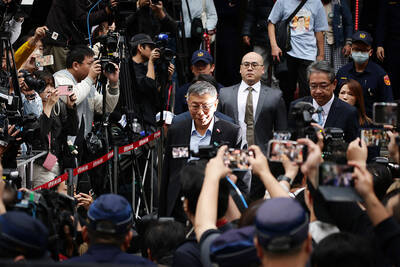
FIRST TRIAL: Ko’s lawyers sought reduced bail and other concessions, as did other defendants, but the bail judge denied their requests, citing the severity of the sentences Former Taipei mayor Ko Wen-je (柯文哲) was yesterday sentenced to 17 years in prison and had his civil rights suspended for six years over corruption, embezzlement and other charges. Taipei prosecutors in December last year asked the Taipei District Court for a combined 28-year, six-month sentence for the four cases against Ko, who founded the Taiwan People’s Party (TPP). The cases were linked to the Core Pacific City (京華城購物中心) redevelopment project and the mismanagement of political donations. Other defendants convicted on separate charges included Chinese Nationalist Party (KMT) Taipei City Councilor Angela Ying (應曉薇), who was handed a 15-year, six-month sentence; Core Pacific


 RSS
RSS