


For many decades successful branding -- a holy grail of the corporate world -- had a clear set of rules. Produce quality goods at the right price. Frame the value in memorable messages seen by millions on television and in print. Then fine-tune the pitch by measuring sales and evaluating consumer responses through letters, phone calls, focus groups and surveys.
Nowhere have those rules been applied more effectively than in Cincinnati, the home of Procter & Gamble, which made a fortune turning Crest, Pampers and Tide into must-have items on household shopping lists.
But the branding game has changed radically, largely because of the myriad choices the Internet provides consumers and because of the economic influence of widespread Web pontificating, known as the blogosphere, which barely existed as a popular force until about four years ago.
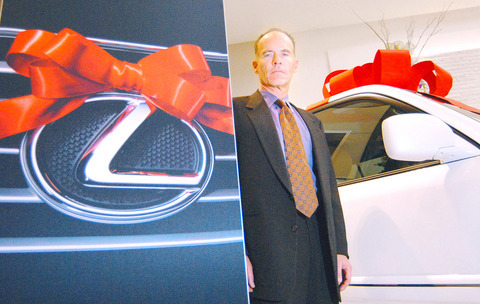
PHOTO: NY TIMES NEWS SERVICE
As consumers eagerly post word-of-mouth commentary in online communities, message boards and Web logs, a question confronts brandmeisters: Who wins and who loses as time-tested practices of mass production and mass marketing are undermined by the informed and often cranky voices of the knowledge age?
A possible answer to that question can be found here, on the fourth floor of a 19th-century brick and stone building on Main Street, in the office of Nielsen BuzzMetrics.
The company, an A.C. Nielsen unit formed this year in a merger of three smaller companies, asserts that it has welded together technology, communications and business expertise in a new way. In essence, it can tap into the electronic musings of millions of people to learn about the values, desires and opinions that start marketing trends.
BuzzMetrics represents the convergence of brand and online-business specialists holding MBAs -- several of whom trained at Procter & Gamble -- with computer scientists who say they are building the digital equivalent of a crystal ball.
The firm's computer scientists and programmers, led by Sundar Kadayam, a 43-year-old software engineer, say they have developed sophisticated search engines to sweep the Internet and drill down into rich veins of extemporaneous word-of-mouth commentary and conversation found online.
The search engines retrieve phrases, opinions, keywords, sentences and images, and the company runs the data through processing programs powerful enough to sift millions of messages simultaneously. By analyzing vocabulary, language patterns and phrasing, the programs determine whether comments are positive or negative and whether the authors are men or women, young or old.
"The days of sitting behind the focus-group wall are going the way of the buggy whip," said Mike Nazzaro, president and chief operating officer of BuzzMetrics. "We are fundamentally changing the way marketing and market research will be done in the future. We're providing guidance to marketing decisions that was never possible."
BuzzMetrics maintains that blogs and their attendant message boards and forums are tuning forks for consumer sentiment that threaten to upend traditional branding efforts. An influential blogger can undermine a brand faster than any grapevine ever before encountered in the marketplace, as the computer maker Dell discovered. The company's level of service and quality was denounced by bloggers this year, and the complaints found broad exposure when one popular media Web site added its critical voice.
WORD OF MOUTH
At the same time, positive word of mouth magnified by the Internet can be a boon, as Toyota discovered with its hybrid Prius sedan, which has been praised by admirers on sites created just for that purpose.
"There are winners and losers," said Paul Rand, a partner and the global chief development and innovation officer at Ketchum Public Relations.
"Companies adapt or go to the bottom. Consumer-generated content on the Internet is a complete disruptor. It forces companies to work smarter and listen harder," he said.
Executives awakened to both the threat and the potential are scrambling to harness data culled online. BuzzMetrics, a pioneer in trolling for brand awareness on the Web, is still a tiny company; it says its revenue for this year will be about US$20 million. For now, it occupies a sweet spot in a promising new industry, but should search giants like Google move more aggressively into its market, BuzzMetrics may find the going tougher.
"Search is at the core of everything Google does and we are more committed to improving search than ever before," a Google spokesman said in an e-mail message. "We will continue to innovate our search technology to provide users with the fastest and most relevant search experience on the Web."
For the time being, say analysts at Forrester Research and Jupiter Research, BuzzMetrics is at the front of its field. In a report published in September, Peter Kim, a Forrester analyst, said brand monitoring appeared poised for enormous expansion as companies shifted priorities and resources in the US$12 billion-a-year market research business. Emily Riley, an advertising analyst at Jupiter, predicts that companies will double spending on brand monitoring next year.
Among BuzzMetrics' competitors are Umbria, based in Denver, Colorado; Cymfony, in Watertown, Massachusetts; BrandIntel, in Toronto, Canada; Biz360 in San Mateo, California; and MotiveQuest in Chicago.
While their specific approaches vary slightly, all use some combination of Web search engine, analysis programs and human analysts to help organize data and provide a narrative that clients can understand, Riley said.
Their ultimate goal, she said, is "to find out the deep thoughts of consumers and help clients understand what's happening in their markets."
RAPID TRANSITION
Kim and Riley said that the old methods for keeping track of consumer sentiment, measuring the competition and improving advertising were in rapid transition. Traditional media are fragmenting. Focus groups are expensive, constrained and slow. New research shows that consumers are eager to evade advertising on television, block pop-up ads on the Internet and sign up for "do not call" lists to bar telephone solicitations.
At the same time, new surveys show that 90 percent of consumers trust word-of-mouth suggestions and that some make purchases based on such guidance.
"Consumer-created content is still new enough that it's much more influential at driving brand awareness than driving purchases," Riley said. "People who read about something on a blog will generally do some further research, either by asking friends or through a search engine, for example, before forming their opinion," she said.
"We're brand radar," said Pete Blackshaw, 42, a former brand manager and Internet marketer at Procter & Gamble, now BuzzMetrics' chief marketing officer. "You can't fly a plane without radar."
Among the growing number of BuzzMetrics' fans is Bruce Ertmann, the corporate manager for consumer-generated media at Toyota Motor Sales in Torrance, California.
"Toyota is rebalancing how it engages its customers and its markets," said Ertmann, who is 49 and has worked for Toyota for 23 years. "BuzzMetrics is helping us understand what's happening."
Around Thanksgiving, for example, the Lexus division of Toyota ran a series of holiday TV commercials, one featuring two men, a new car in the driveway with a huge red bow on its roof, and dialogue that seemed to indicate that the men lived together and that one had given the car to the other.
Some viewers were struck by what they saw as a TV spot directed at the gay market and complained to the automaker. Lexus executives responded that the ad was not aimed at the gay market, but the company, unnerved by the nature of the complaints and by research showing that the commercial was weak in terms of brand recall, dropped the ad.
Ertmann said Toyota, protective of its reputation and wary of controversy, was essentially reacting instinctively and taking action without evaluating all the information that became available. After it hired BuzzMetrics to gauge consumer attitudes on the matter, it discovered that most viewers, especially the young urban and suburban consumers who write and read blogs and could buy Lexus vehicles, were pleased with the Lexus ad.
"A decision had been made to pull that ad from the rotation, and that decision was made before we had a chance to gather the BuzzMetrics analysis and report it back to Lexus," Ertmann said. "I was disappointed that Lexus did not wait for this cutting-edge intelligence."
ADVICE
Other companies have also turned to BuzzMetrics for its advice. TechRepublic, a unit of CNET Networks, and publisher of a Web site for information technology professionals, used the firm's services to track technology trends. Food giant ConAgra has used BuzzMetrics to anticipate lifestyle and dieting trends. Sony's online entertainment group tapped the company to help it track interest in computer games. And Coca-Cola has used BuzzMetrics to gauge responses to a short comedic film posted on YouTube.
The headquarters of Nielsen BuzzMetrics are in the Greenwich Village office of the US arm of its parent, VNU, a media company based in the Netherlands. Smaller research and development divisions are in Pittsburgh and Tel Aviv. But about 40 percent of its staff of 120 and many managers are in Cincinnati.
BuzzMetrics offers a range of services and products to suit the new rules of marketing. One report, costing US$20,000 or more, tells companies what their customers are saying on the Internet and what that means for their brand and markets. It also sells its proprietary search software and database, BrandPulse, to companies that want to use their own staff to monitor content.
This service costs US$80,000 to US$500,000, depending on how many of the client's employees will use the database and search engine, the number of brands and competitors covered and the specific information sought.
The Cincinnati office is led by former executives of two companies founded here during the Internet boom of the late 1990s.
The first, PlanetFeedback, was launched by Blackshaw and Nazzaro, now 40, a Harvard MBA and former Procter & Gamble brand manager.
The main product of Planet-Feedback, which was financed by US$31 million in venture capital, was a Web site intended to attract consumer opinions about products and services, and to earn revenue from advertising.
The second company, Intelliseek, which Kadayam helped to found, developed Internet search and information retrieval programs and software.
In 2004, Intelliseek bought PlanetFeedback, combining the market, branding and Web expertise of the Blackshaw-Nazzaro team with Kadayam's computer science background.
Early last year, VNU invested in an Israeli research and development company, which then bought BuzzMetrics. With additional capital from VNU, BuzzMetrics bought Intelliseek and changed the name of the firm to Nielsen BuzzMetrics.
Now that it is generating steady revenue in brand monitoring, BuzzMetrics is considering how to use its media search and monitoring capabilities to expand into other markets such as politics.
Kadayam recently projected on a large white screen the company's most promising new tool, which he calls Floodgate. It is a program that displays in real time what people around the world are saying on thousands of blogs and message boards. The program shows each new message as a blinking green dot that fades to light blue and then vanishes after a few minutes. The program can cluster messages according to general themes, and track keywords and phrases and the full content of what the writer is saying.
Click on any dot and the message appears in complete text in real time. A blogger from England writes about the ritual of putting her baby to bed. One from California celebrates buying a new computer game.
Within a few minutes, the screen begins to look like the night sky, full of blue and green stars, all arranged by subject -- an evolving constellation of the thoughts and desires that form the parameters of the new information universe.

Japan has deployed long-range missiles in a southwestern region near China, the Japanese defense minister said yesterday, at a time when ties with Beijing are at their lowest in recent years. The missiles were installed in Kumamoto in the southern region of Kyushu, as Japan is attempting to shore up its military capacity as China steps up naval activity in the East China Sea. “Standoff defense capabilities enable us to counter the threat of enemy forces attempting to invade our country ... while ensuring the safety of our personnel,” Japanese Minister of Defense Shinjiro Koizumi said. “This is an extremely important initiative for

The nation’s fastest supercomputer, Nano 4 (晶創26), is scheduled to be launched in the third quarter, and would be used to train large language models in finance and national defense sectors, the National Center for High-Performance Computing (NCHC) said. The supercomputer, which would operate at about 86.05 petaflops, is being tested at a new cloud computing center in the Southern Taiwan Science Park in Tainan. The exterior of the server cabinet features chip circuitry patterns overlaid with a map of Taiwan, highlighting the nation’s central position in the semiconductor industry. The center also houses Taiwania 2, Taiwania 3, Forerunner 1 and

MORE POPULAR: Taiwan Pass sales increased by 59 percent during the first quarter compared with the same period last year, the Tourism Administration said The Tourism Administration yesterday said that it has streamlined the Taiwan Pass, with two versions available for purchase beginning today. The tourism agency has made the pass available to international tourists since 2024, allowing them to access the high-speed rail, Taiwan Railway Corp services, four MRT systems and four Taiwan Tourist Shuttles. Previously, five types of Taiwan Pass were available, but some tourists have said that the offerings were too complicated. The agency said only two types of Taiwan Pass would be available, starting from a three-day pass with the high-speed rail and a three-day pass with Taiwan Railway Corp. The former costs NT$2,800

FIRST TRIAL: Ko’s lawyers sought reduced bail and other concessions, as did other defendants, but the bail judge denied their requests, citing the severity of the sentences Former Taipei mayor Ko Wen-je (柯文哲) was yesterday sentenced to 17 years in prison and had his civil rights suspended for six years over corruption, embezzlement and other charges. Taipei prosecutors in December last year asked the Taipei District Court for a combined 28-year, six-month sentence for the four cases against Ko, who founded the Taiwan People’s Party (TPP). The cases were linked to the Core Pacific City (京華城購物中心) redevelopment project and the mismanagement of political donations. Other defendants convicted on separate charges included Chinese Nationalist Party (KMT) Taipei City Councilor Angela Ying (應曉薇), who was handed a 15-year, six-month sentence; Core Pacific


 RSS
RSS