


EMC Corp wants a little help from its foes.
The Hopkinton, Massachusetts-based data-storage company is making overtures to share software code with its rivals, including IBM Corp and Hitachi Data Systems. The goal is to allow their storage cabinets to function together within networks run by big customers like banks and airlines.
But some data-storage hardware makers aren't so eager. They fear software that meshes with EMC's specifications would boost sales of EMC's own equipment. And they have other ideas about how to connect their gear -- or, to use the industry term, to promote "interoperability."
For instance, IBM's data-storage unit backs several independent trade groups it says will lead to more neutral specifications. It has also begun to share code with Hitachi. One major player that has agreed to share code with EMC is Compaq Computer Corp.
But it would be "a little bit misleading" to say the deal represents an endorsement of EMC's broader strategy to make its software integral to more computer networks, said Don Langeberg, Compaq marketing director.
EMC's difficulties at striking alliances frustrate some industry insiders like Steve Duplessie, a Milford-based consultant to most of the big storage companies.
The better storage devices interoperate, the more likely customers are to buy them.
The lesson has been driven home in other technology sectors, from handheld computers to database software. Joining EMC "would give IBM a better chance to sell hardware, and the customer wouldn't have to make a choice on software," Duplessie said. "The customer would win. So it doesn't make any sense not to do it."
Indeed, many companies that purchased large volumes of technology equipment in the late 1990s, first to accommodate growing sales, then to prepare for Y2K and finally to launch e-business operations, are still working to deploy their updated networks more efficiently.
Having machines built by different companies communicate with one another is a top priority.
EMC's senior executives agree. They want to strike terms on which the company would provide hardware competitors access to its "application programming interfaces." These are essentially hooks that allow software to control specific pieces of hardware.
"We would welcome swaps with any and all the competitors," said Don Swatik, EMC vice president for alliances. He notes that more than 90 software companies already share access to EMC's code -- including Tivoli, an IBM unit independent of its data-storage hardware division.
But even as they reach out, Swatik and others dismiss the software capabilities of some of their rivals. Aside from Tivoli, "It's very clear the software IBM has for their products is grossly inadequate," Swatik said.
How it manages relations with its other companies in the software arena poses an important test for EMC, which has seen its financial footing erode. It faces tougher competition on price and technical capabilities and is struggling with flat sales in a market it once thought recession-proof. Some fund managers have even suggested EMC ought to sell out to IBM, its larger rival, eliminating lots of competition.
Executives at both companies call such a deal unlikely, but it's clear EMC wants to reposition itself in a way that has the potential to bring the two competitors closer together.
EMC's chief executive, Joe Tucci, is trying to foster a culture less abrasive to outsiders, and the company also participates in industry trade associations. In addition, Tucci recently reassigned a top engineer, Moshe Yanai, who had tried to keep EMC's strategy centered on hardware, especially its high-end Symmetrix data-storage systems. Yanai wouldn't comment, but many say his removal will allow more flexibility in promoting software.
Investors hope the software strategy works as financial pressures mount. Instead of reaching its goal of US$12 billion in revenue last year, analysts expect EMC will report later this week that it took in around US$7 billion last year. The shortfall has forced EMC to lay off thousands of employees and to mothball several buildings near Interstate 495. Analysts expect EMC to report a profit for last year but to post a loss this year.
EMC's storage software has been a bright spot for the company, however EMC sold about US$1.2 billion worth of software in the first three quarters of last year, a 27 percent increase over the same period in 2000. EMC is also spending heavily on software development; it is expected to lay out around US$1.3 billion last year and this year. The goal is to generate 30 percent of its revenue from software sales by 2003, up from 14 percent in 2000.
Storage software controls data-management tasks like copying files automatically, or shipping large amounts of data to remote locations.
Consumers don't think much about these systems until something goes wrong, like a disappearing ticket reservation. For that reason, robust software is crucial for customers. Pete Lazzari, chief technology officer at CNA Insurance Cos, said the availability of certain software tools from EMC had "a heavy influence" on his decision last month to buy enough EMC equipment to store 60 terabytes of information.
EMC's sales of storage-management software represented a quarter of the US$5.2 billion market last year, Gartner Dataquest estimates. Tivoli and Veritas were next, each with about 16 percent.
But those software-makers don't produce hardware, making it easier for EMC to give them access to its programming interfaces. In contrast, when EMC and other hardware-makers talk, it seems like they can't even agree on where to have lunch.
In 1999, for instance, EMC began promoting a program known as "FiberAlliance," to develop methods to connect storage devices with fiber-optic cables. IBM never joined, calling the organization too tied to EMC. Instead, it backed a competing method known as "fiber-channel" communications.
Since then, FiberAlliance has "pretty much fallen by the wayside," says Brian Truskowski, IBM's chief technology officer for storage. EMC says that's hardly the case, since the FiberAlliance work became part of a standard endorsed by the American National Standards Institute -- one that even Tivoli began using.
"If that's IBM's definition of failure, their definition and ours are apparently different," Swatik said.
Truskowski says that EMC has snubbed competitors plenty itself. For instance, EMC helped found the "Storage Performance Council," along with Compaq and Hitachi, to develop tests to measure the capabilities of software from different vendors. But EMC dropped out in early 2000, claiming the testing standards "didn't reflect reality," according to an EMC spokesman.
Other companies dropped out as well, but Truskowski says EMC feared the tests would point out too many weaknesses. "My frustration is that it seems like if the open industry standards stuff we're doing isn't going the way EMC would like, they announce their own separate initiative, and declare that open," he said.
All of these tensions are coming into play as EMC tries to sign up more software partners.
Carolyn DiCenzo, chief analyst at Gartner, said the new moves represent a different kind of competition for EMC. "EMC is trying to understand what they have to be, in order to be a player in the wider space" of data storage software, she said.
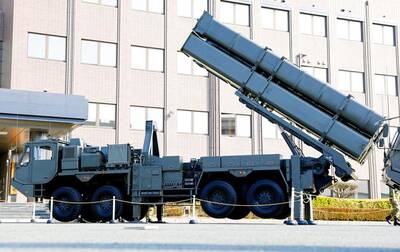
Japan has deployed long-range missiles in a southwestern region near China, the Japanese defense minister said yesterday, at a time when ties with Beijing are at their lowest in recent years. The missiles were installed in Kumamoto in the southern region of Kyushu, as Japan is attempting to shore up its military capacity as China steps up naval activity in the East China Sea. “Standoff defense capabilities enable us to counter the threat of enemy forces attempting to invade our country ... while ensuring the safety of our personnel,” Japanese Minister of Defense Shinjiro Koizumi said. “This is an extremely important initiative for
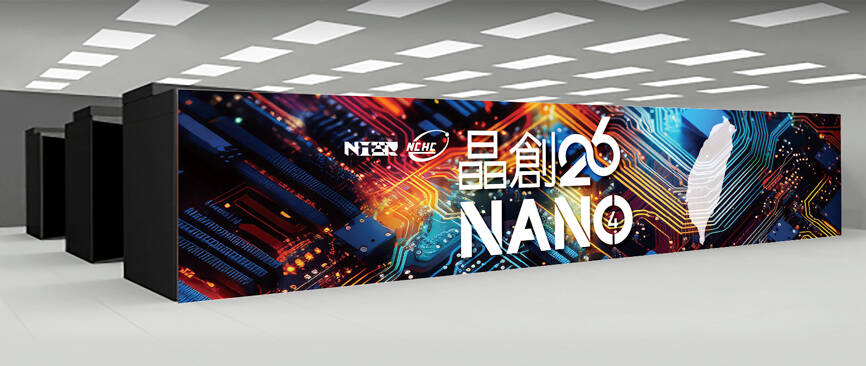
The nation’s fastest supercomputer, Nano 4 (晶創26), is scheduled to be launched in the third quarter, and would be used to train large language models in finance and national defense sectors, the National Center for High-Performance Computing (NCHC) said. The supercomputer, which would operate at about 86.05 petaflops, is being tested at a new cloud computing center in the Southern Taiwan Science Park in Tainan. The exterior of the server cabinet features chip circuitry patterns overlaid with a map of Taiwan, highlighting the nation’s central position in the semiconductor industry. The center also houses Taiwania 2, Taiwania 3, Forerunner 1 and
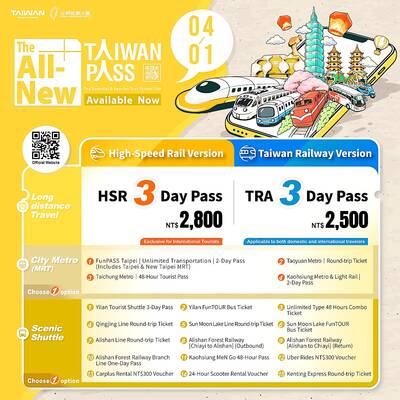
MORE POPULAR: Taiwan Pass sales increased by 59 percent during the first quarter compared with the same period last year, the Tourism Administration said The Tourism Administration yesterday said that it has streamlined the Taiwan Pass, with two versions available for purchase beginning today. The tourism agency has made the pass available to international tourists since 2024, allowing them to access the high-speed rail, Taiwan Railway Corp services, four MRT systems and four Taiwan Tourist Shuttles. Previously, five types of Taiwan Pass were available, but some tourists have said that the offerings were too complicated. The agency said only two types of Taiwan Pass would be available, starting from a three-day pass with the high-speed rail and a three-day pass with Taiwan Railway Corp. The former costs NT$2,800

FIRST TRIAL: Ko’s lawyers sought reduced bail and other concessions, as did other defendants, but the bail judge denied their requests, citing the severity of the sentences Former Taipei mayor Ko Wen-je (柯文哲) was yesterday sentenced to 17 years in prison and had his civil rights suspended for six years over corruption, embezzlement and other charges. Taipei prosecutors in December last year asked the Taipei District Court for a combined 28-year, six-month sentence for the four cases against Ko, who founded the Taiwan People’s Party (TPP). The cases were linked to the Core Pacific City (京華城購物中心) redevelopment project and the mismanagement of political donations. Other defendants convicted on separate charges included Chinese Nationalist Party (KMT) Taipei City Councilor Angela Ying (應曉薇), who was handed a 15-year, six-month sentence; Core Pacific


 RSS
RSS