


Advanced Micro Devices Inc (AMD) yesterday said it is investing US$10 billion in the Taiwanese microchip ecosystem to ensure the availability of advanced packaging technology capacity over the next three years, given rapidly growing artificial intelligence (AI) infrastructure demand.
In addition to advanced chips, the new investment also aims to foster a new advanced packaging ecosystem in Taiwan using elevated fan-out bridge (EFB) technology, the chip company said. The investment was announced on Thursday.
“So what we are doing with a number of our partners is to really coinvest so that the capacity is available for revenue later in 2026, but also into 2027, 2028 and 2029,” AMD CEO Lisa Su (蘇姿丰) told a news briefing arranged by CommonWealth Magazine in Taipei yesterday.
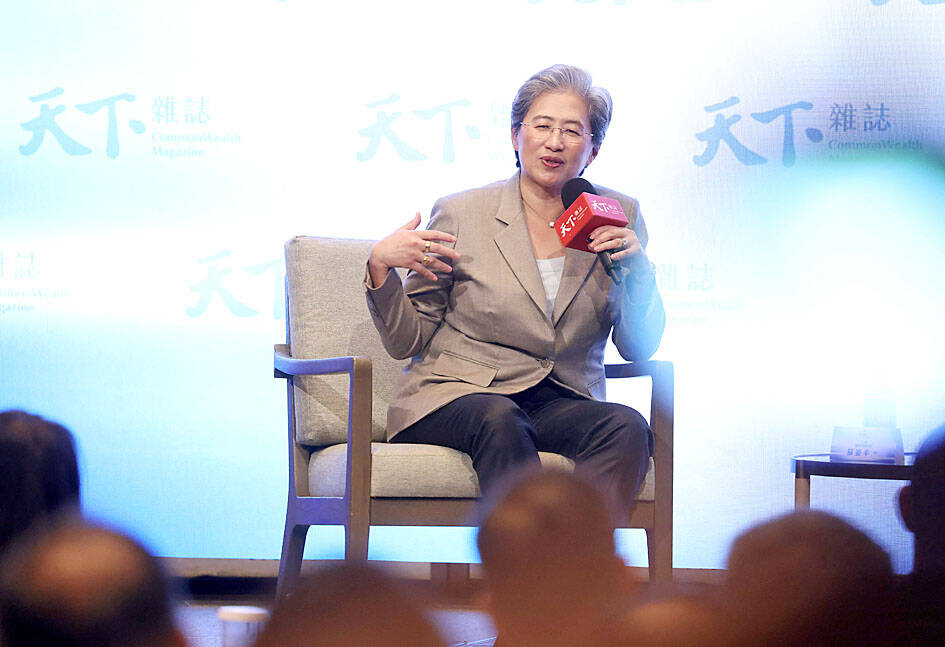
Photo: I-Hwa Cheng, AFP
“As it relates to EFB, I think CoWoS [chip-on-wafer-on-substrate] is a great technology. We’re also always looking for technologies that will help optimize the cost point of the advanced packaging solution,” Su said. “I think it’s still early in EFB development, and we’re investing in EFB capacity as well as ensuring that we have good CoWoS capacity, and we’ll continue to allocate depending on where the demand goes going forward.”
That suggested that EFB could be an alternative to CoWoS technology developed by Taiwan Semiconductor Manufacturing Co (TSMC, 台積電).
TSMC has been accelerating expansion of CoWoS capacity over the past two years, but has been unable to resolve its supply bottleneck given the seemingly insatiable demand for AI chips.
Nvidia Corp is the largest consumer of CoWoS capacity.
EFB architecture significantly increases interconnect bandwidth and improves power efficiency while offering cost and area advantages over conventional silicon interposers. It operates on a similar architectural concept to Intel Corp’s embedded multi-die interconnect bridge technology.
TSMC’s CoWoS capability has been “extremely good,” Su said, adding that the company has been very “happy” with the progress so far.
As its partners have built up CoWoS capacity, it would not be a “big concern,” but AMD has to plan ahead to ensure there is sufficient CoWoS capacity, she said.
AMD’s local EFB ecosystem partners include chip testing and packaging service providers such as ASE Technology Holding Co (日月光投控), its subsidiary Siliconware Precision Industries Co (矽品精密) and Powertech Technology Inc (力成科技), which is developing fan-out panel-level packaging technology.
Local major substrate suppliers Unimicron Technology Corp (欣興電子), Nan Ya Printed Circuit Board Corp (南亞電路板) and Kansas Interconnect Technology Corp (景碩) are also part of the ecosystem.
Responding to skepticism about the AI boom, Su said she believes the demand is real.
“If you think about a baseball game, maybe we’re in, you know, the third inning of still nine innings,” Su said. “That means there is still a lot of innovations to happen and a lot of opportunity for companies in the AI ecosystem.”
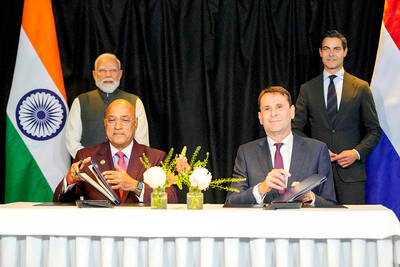
NEW MARKET: The partnership opens up India to the Dutch company, which already has a strong hold in the semiconductor market of South Korea, Taiwan and China ASML Holding NV entered into a partnership agreement with Tata Electronics Pvt Ltd aimed at ramping up India’s goal to develop domestic chip-manufacturing capabilities. The Dutch company’s technology would help power Tata Electronics’ planned 300 millimeter (mm) semiconductor foundry in Gujarat, according to a joint statement from the two companies on Saturday. The signing of a memorandum of understanding coincides with a visit by Indian Prime Minister Narendra Modi to the Netherlands, which is looking to deepen bilateral relations with New Delhi. ASML, whose top customers include Taiwan Semiconductor Manufacturing Co (台積電) and Samsung Electronics Co, makes lithography machines that can print
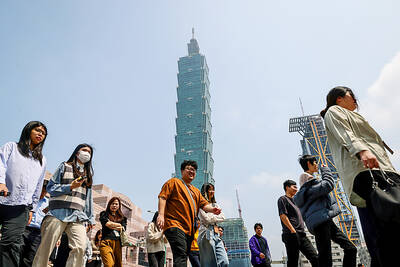
TECH RELIANCE: Growth is increasingly reflecting an unequal K-shaped distribution, where technology sectors outperform and other industries struggle, an expert said Standard Chartered Bank has significantly raised its forecast for Taiwan’s economic growth to 9.5 percent this year, up from 7.6 percent previously, citing surging artificial intelligence (AI) demand driving exports, semiconductor production and investment. The upgrade reflects a sustained AI supercycle that continues to fuel demand for advanced chips and technology infrastructure, which form the backbone of Taiwan’s exports, the bank said in a report this week. “We raise our 2026 growth forecast to reflect a much stronger-than-expected first-quarter GDP figure,” Standard Chartered senior economist for greater China and Asia Tommy Wu (胡東安) said in the report. Driven largely by a 35.3 percent
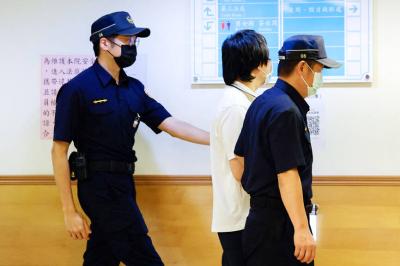
Tokyo Electron's Taiwan unit today said in a written response that it respects the judicial process, takes the court ruling seriously and would not appeal in the Taiwan Semiconductor Manufacturing Co (TSMC, 台積電) trade secrets case. Last month, a court fined the Taiwan unit of Japan's Tokyo Electron NT$150 million (US$4.74 million) in a case involving trade secrets related to TSMC's sensitive chip technology.
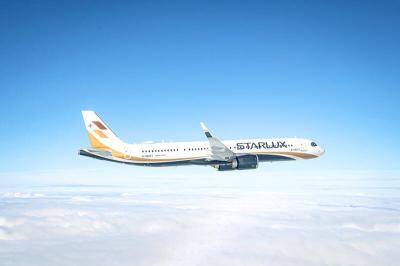
Two of Taiwan’s international carriers, Starlux Airlines Co (星宇航空) and EVA Airways Corp (長榮航空), have retained the five-star airline rating awarded by international airline review organization Skytrax. Starlux was awarded the distinction for a second consecutive year, while EVA Air received it for the 11th straight year, Skytrax said in statements released yesterday and on Thursday last week, respectively. The five-star rating is considered one of the airline industry's highest honors and is awarded following professional audits of airline product and frontline service standards, Skytrax said. The ratings are based on in-depth assessments using unified global quality standards rather than customer review scores


 RSS
RSS