


Samsung Electronics Co’s semiconductor arm brought in historic profit last quarter, beating expectations with a 48-fold jump as artificial intelligence (AI) data center orders delivered hefty margins.
The chipmaking unit, which competes with SK Hynix Inc and US-based Micron Technology Inc in memory, reported an operating income of 53.7 trillion won (US$36.26 billion) in the first quarter. The result compares with the average analyst estimate of 35.3 trillion won. Group-wide net income rose to 47.1 trillion won.
The results reflect massive spending by hyperscalers, with Meta Platforms Inc and Alphabet Inc planning to plow even bigger sums into AI infrastructure. That is spurring some investors to bet that high-bandwidth memory — one of the key bottlenecks to AI’s rise — is no longer beholden to boom-and-bust cycles and could tap sustained growth.

Photo: AFP
“The more relevant question is duration: How long does HBM4 pricing power hold, and is AI infrastructure spending durable?” Roundhill Investments CEO Dave Mazza said. “Absent a material deceleration in hyperscaler capex, the earnings runway supports current multiples.”
Samsung is “substantially” increasing its own capital spending this year, the company said on a conference call to discuss its earnings, without elaborating. It is on track to provide samples of HBM4e, the next generation of its most advanced chips for AI use, in the current quarter — ahead of SK Hynix’s road map for the latter half of the year. Samsung also sees the surging margins for conventional memory narrowing the gap to HBM next year.
The company has very limited inventory and available supply is “far short of customer demand,” a Samsung executive said on its call.
Samsung’s demand-fulfillment rate is at a record low and the supply-demand gap is likely to further widen next year, its management said.
Accelerators such as those made by Nvidia Corp are limited by the speed and capacity of memory to supply data, making DRAM a key factor in determining the quality of AI services.
Analysts expect Samsung’s chip division to build on its record-breaking profit over the next several quarters, as contract prices continue their steep upward trajectory amid limited supply. They point to a more than 180 percent rise in South Korea’s chip exports during the first 20 days of last month as a sign of continued momentum for Samsung and SK Hynix.
Counterpoint Research expects a 60 percent quarter-on-quarter rise in average DRAM contract prices in the April-to-June period, analyst Tom Kang said.
Average contract prices for DRAM rose 42 percent sequentially last month, the research firm’s monthly memory price tracker showed.
Samsung — the world’s largest memory maker — is considering a shift toward multiyear contracts with the aim to stabilize supply and ease concerns about shortages, company co-CEO Jun Young-hyun told shareholders at an annual general meeting last month. Such a move would further bolster prices and provide a buffer against cyclical downturns.
The chip unit’s profit growth contrasts with declines in Samsung’s mobile and displays operations, which are fighting rising materials and components prices.

SECOND-RATE: Models distilled from US products do not perform the same as the original and undo measures that ensure the systems are neutral, the US’ cable said The US Department of State has ordered a global push to bring attention to what it said are widespread efforts by Chinese companies, including artificial intelligence (AI) start-up DeepSeek (深度求索), to steal intellectual property from US AI labs, according to a diplomatic cable. The cable, dated Friday and sent to diplomatic and consular posts around the world, instructs diplomatic staff to speak to their foreign counterparts about “concerns over adversaries’ extraction and distillation of US AI models.” Distillation is the process of training smaller AI models using output from larger, more expensive ones to lower the costs of training a powerful new
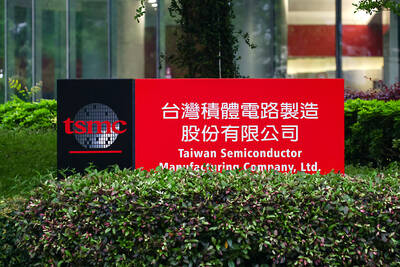
Shares of Taiwan Semiconductor Manufacturing Co (TSMC, 台積電) have repeatedly hit new highs, but an equity analyst said the stock’s valuation remains within a reasonable range and any pullback would likely be technical. The contract chipmaker’s historical price-to-earnings (P/E) ratio has ranged between 20 and 30, Cathay Futures Consultant Co (國泰證期) analyst Tsai Ming-han (蔡明翰) told Central News Agency. With market consensus projecting that TSMC would post earnings per share of about NT$100 (US$3.17) this year, supported by strong global demand for artificial intelligence (AI) applications, and the stock currently trading at a P/E ratio of below 25, Tsai said the valuation
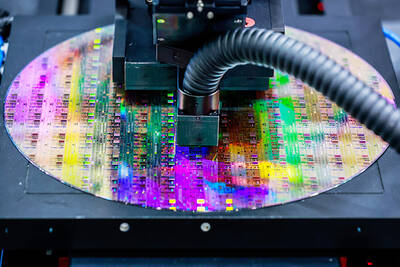
The artificial intelligence (AI) boom has triggered a seismic reshuffling of global equity markets, with Taiwan and South Korea muscling past European nations one by one. With its stock market now valued at nearly US$4.3 trillion, Taiwan surpassed the UK, Europe’s biggest market, earlier this month, data compiled by Bloomberg showed. South Korea is about US$140 billion away from doing the same. The tech-heavy Asian markets have shot past Germany and France in the past seven months. The shift is largely down to massive gains in shares of three companies that provide essential hardware for AI: Taiwan Semiconductor Manufacturing Co (TSMC, 台積電),
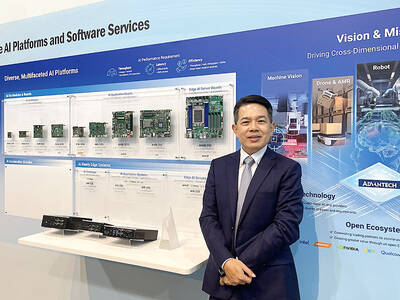
NEXT-GENERATION: The company announced plans to roll out platforms with 100 TOPS performance and expects AI-capable systems to become the standard Industrial computer maker Advantech Co (研華) is eyeing strong growth potential in edge artificial intelligence (AI), as the technology shifts from cloud-centric computing to edge deployment and real-world applications, Advantech embedded Internet of Things president Miller Chang (張家豪) said on Thursday last week. Amid rising demand for inference as the industry shifts from training, edge AI is emerging as a key field, given the need for low latency, real-time response and data privacy, Chang said in an exclusive interview with the Taipei Times. While consumer devices such as smartphones already feature some AI capabilities, large-scale inference demand would mainly come from applications


 RSS
RSS