


The manufacturing sector rebounded last month, as domestic demand and artificial intelligence (AI)-driven growth gathered pace, but growing geopolitical risks in the Middle East continued to cast a shadow over the outlook.
In a statement released yesterday, the Taiwan Institute of Economic Research (TIER, 台經院) said the composite index for the manufacturing sector rose 3.32 points from a revised 10.88 in February to 14.20 last month, the second-highest level in the past year.
The increase shifted the sector’s signal from “yellow-blue,” indicating sluggish growth, to “green,” signaling stable conditions, TIER said.
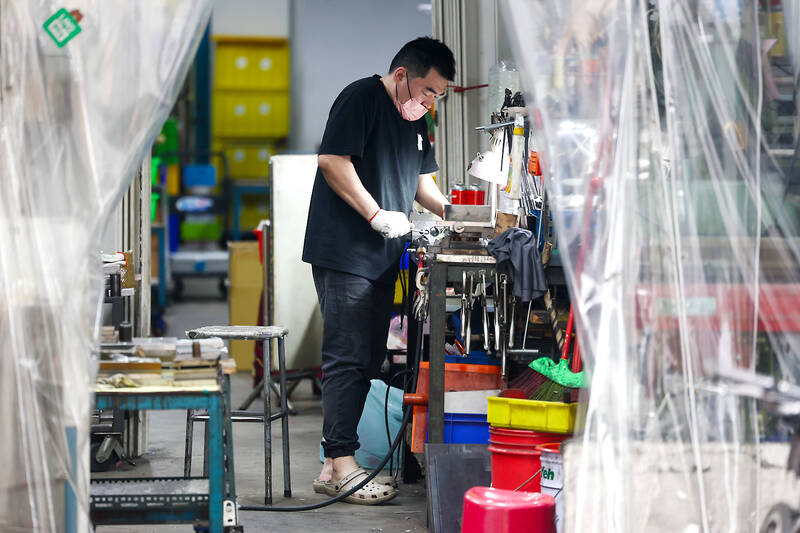
Photo: CNA
The improvement was driven largely by domestic factors, including a post-Lunar New Year resumption of factory operations, inventory restocking and stronger demand linked to AI and high-
performance computing applications, TIER said.
Export orders, industrial production and imports posted stronger year-on-year growth, supported in part by advance stockpiling by clients seeking to hedge against uncertainties stemming from ongoing conflicts, it said.
The rebound was also reflected in a sharp shift in business signals, with the ratio of firms in contraction falling significantly, and those in stable and expansionary conditions rising, TIER said.
Among major industries, the chemical sector rebounded sharply, with export orders and production returning to double-digit percentage growth on the back of recovering demand from the semiconductor industry and increased procurement tied to geopolitical concerns, TIER said.
Meanwhile, the electronics sector continued to benefit from strong demand for AI-related applications, cloud services and the launch of new laptops, pushing its business climate indicator into “red,” the highest level in TIER’s five-color system, the statement said.
However, TIER cautioned that international developments remained a key source of uncertainty.
Tensions in the Middle East have heightened concerns over energy supply disruptions, with a potential impact on oil prices, inflation and global manufacturing activity, particularly in Asia, the institute said.
In addition, volatility in financial markets and continued trade policy uncertainties in major economies could weigh on global demand and supply chain stability, it said.
Sustained investment in AI and semiconductor technologies is expected to support the manufacturing sector, it said, but warned that geopolitical risks and external demand fluctuations would remain critical factors shaping the trajectory.

SECOND-RATE: Models distilled from US products do not perform the same as the original and undo measures that ensure the systems are neutral, the US’ cable said The US Department of State has ordered a global push to bring attention to what it said are widespread efforts by Chinese companies, including artificial intelligence (AI) start-up DeepSeek (深度求索), to steal intellectual property from US AI labs, according to a diplomatic cable. The cable, dated Friday and sent to diplomatic and consular posts around the world, instructs diplomatic staff to speak to their foreign counterparts about “concerns over adversaries’ extraction and distillation of US AI models.” Distillation is the process of training smaller AI models using output from larger, more expensive ones to lower the costs of training a powerful new
Shares of Taiwan Semiconductor Manufacturing Co (TSMC, 台積電) have repeatedly hit new highs, but an equity analyst said the stock’s valuation remains within a reasonable range and any pullback would likely be technical. The contract chipmaker’s historical price-to-earnings (P/E) ratio has ranged between 20 and 30, Cathay Futures Consultant Co (國泰證期) analyst Tsai Ming-han (蔡明翰) told Central News Agency. With market consensus projecting that TSMC would post earnings per share of about NT$100 (US$3.17) this year, supported by strong global demand for artificial intelligence (AI) applications, and the stock currently trading at a P/E ratio of below 25, Tsai said the valuation
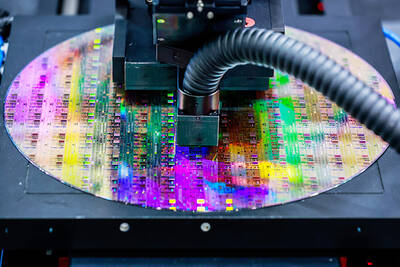
The artificial intelligence (AI) boom has triggered a seismic reshuffling of global equity markets, with Taiwan and South Korea muscling past European nations one by one. With its stock market now valued at nearly US$4.3 trillion, Taiwan surpassed the UK, Europe’s biggest market, earlier this month, data compiled by Bloomberg showed. South Korea is about US$140 billion away from doing the same. The tech-heavy Asian markets have shot past Germany and France in the past seven months. The shift is largely down to massive gains in shares of three companies that provide essential hardware for AI: Taiwan Semiconductor Manufacturing Co (TSMC, 台積電),
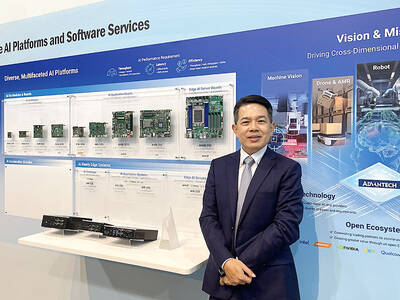
NEXT-GENERATION: The company announced plans to roll out platforms with 100 TOPS performance and expects AI-capable systems to become the standard Industrial computer maker Advantech Co (研華) is eyeing strong growth potential in edge artificial intelligence (AI), as the technology shifts from cloud-centric computing to edge deployment and real-world applications, Advantech embedded Internet of Things president Miller Chang (張家豪) said on Thursday last week. Amid rising demand for inference as the industry shifts from training, edge AI is emerging as a key field, given the need for low latency, real-time response and data privacy, Chang said in an exclusive interview with the Taipei Times. While consumer devices such as smartphones already feature some AI capabilities, large-scale inference demand would mainly come from applications


 RSS
RSS