


Grab Holdings Ltd agreed to buy Delivery Hero SE’s Foodpanda operations in Taiwan for US$600 million, a deal that marks its first foray outside of its Southeast Asian base.
The cash acquisition will allow Grab to expand into 21 cities across Taiwan, the Singapore-based ride-hailing and delivery company said in a statement yesterday. Grab expects the transaction to be completed in the second half, subject to regulatory approvals.
The purchase will give Grab a presence on the island of about 23 million people, helping it to expand beyond its intensely competitive home market. Grab has seen growth slow dramatically as it takes steps to focus on profitability.
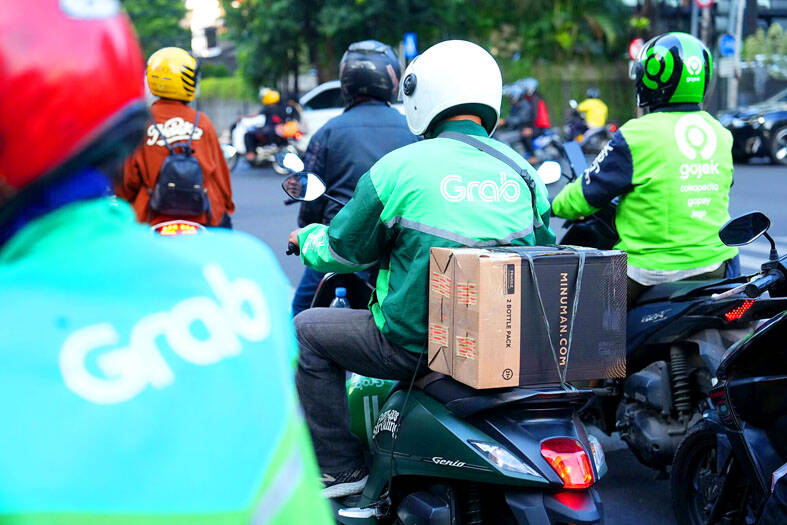
Photo: Bloomberg
Management at Germany-based Delivery Hero is under pressure from several of its largest shareholders to conduct a strategic review amid wider industry consolidation. Investors including Hong Kong hedge fund Aspex Management, its second-biggest shareholder, have pushed for a sale or divestments to streamline the business.
Single country divestitures or minority stake sales in businesses would not go far enough, Aspex wrote previously in a letter to Delivery Hero chief executive officer Niklas Ostberg. The company’s shares fell about 35 percent last year.
Delivery Hero’s previous attempt to sell its Taiwanese unit to Uber Technologies Inc failed after the island’s antitrust regulators rejected the acquisition. Uber terminated the deal, valued at US$950 million, last year.
Grab, meanwhile, is seeking new sources of growth after an increased customer base left it with less room for user gains. It introduced novel product offerings and made acquisitions to bring in more consumers in a challenging economy. The Foodpanda deal is expected to contribute at least US$60 million in incremental adjusted earnings before interest, taxes, depreciation and amortization in 2028, Grab said.
In Southeast Asia, Grab has been exploring a takeover of Jakarta-based GoTo Group, which could help ease competition. The years-long effort has been delayed by regulatory scrutiny as well as differences over perceived valuation. In the latest hurdle for a deal, negotiations stumbled over wireless carrier Telkomsel’s roughly 2 percent stake in GoTo.
Shares of Grab remain far below their initial price in its 2021 listing. The company has also taken steps to expand beyond ride-hailing and delivery, betting on new initiatives in areas such as digital finance.

Shares of contract chipmaker Taiwan Semiconductor Manufacturing Co (TSMC, 台積電) came under pressure yesterday after a report that Apple Inc is looking to shift some orders from the Taiwanese company to Intel Corp. TSMC shares fell NT$55, or 2.4 percent, to close at NT$2,235 on the local main board, Taiwan Stock Exchange data showed. Despite the losses, TSMC is expected to continue to benefit from sound fundamentals, as it maintains a lead over its peers in high-end process development, analysts said. “The selling was a knee-jerk reaction to an Intel-Apple report over the weekend,” Mega International Investment Services Corp (兆豐國際投顧) analyst Alex Huang
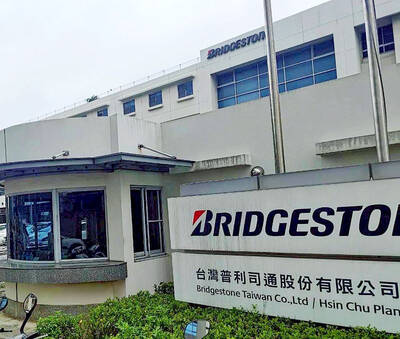
TRANSITION: With the closure, the company would reorganize its Taiwanese unit to a sales and service-focused model, Bridgestone said Bridgestone Corp yesterday announced it would cease manufacturing operations at its tire plant in Hsinchu County’s Hukou Township (湖口), affecting more than 500 workers. Bridgestone Taiwan Co (台灣普利司通) said in a statement that the decision was based on the Tokyo-based tire maker’s adjustments to its global operational strategy and long-term market development considerations. The Taiwanese unit would be reorganized as part of the closure, effective yesterday, and all related production activities would be concluded, the statement said. Under the plan, Bridgestone would continue to deepen its presence in the Taiwanese market, while transitioning to a sales and service-focused business model, it added. The Hsinchu

Taiwan Semiconductor Manufacturing Co (TSMC, 台積電) has approved a capital budget of US$31.28 billion for production expansion to meet long-term development needs during the artificial intelligence (AI) boom. The company’s board meeting yesterday approved the capital appropriation plan for purposes such as the installation of advanced technology capacity and fab construction, the world’s largest contract chipmaker said in a statement. At an earnings conference last month, TSMC forecast that its capital expenditure for this year would be at the higher end of the US$52 billion to US$56 billion range it forecast in January in response to robust demand for 5G, AI and

Taiwan Semiconductor Manufacturing Co’s (TSMC, 台積電) investment project in Arizona has progressed better than expected, but it still faces challenges such as water and labor shortages, National Development Council (NDC) Minister Yeh Chun-hsien (葉俊顯) said yesterday. Speaking with reporters after visiting TSMC’s Arizona hub and attending the SelectUSA Investment Summit in Maryland last week, Yeh said TSMC’s Arizona site turned a profit of NT$16.14 billion (US$514 million) last year in its first full year of mass production. “TSMC told me it was surprised by the smooth trial run of the first fab, which has left the company optimistic about the project’s outlook,”


 RSS
RSS