


Taiwan Semiconductor Manufacturing Co’s (TSMC, 台積電) investment project in Arizona has progressed better than expected, but it still faces challenges such as water and labor shortages, National Development Council (NDC) Minister Yeh Chun-hsien (葉俊顯) said yesterday.
Speaking with reporters after visiting TSMC’s Arizona hub and attending the SelectUSA Investment Summit in Maryland last week, Yeh said TSMC’s Arizona site turned a profit of NT$16.14 billion (US$514 million) last year in its first full year of mass production.
“TSMC told me it was surprised by the smooth trial run of the first fab, which has left the company optimistic about the project’s outlook,” Yeh said.
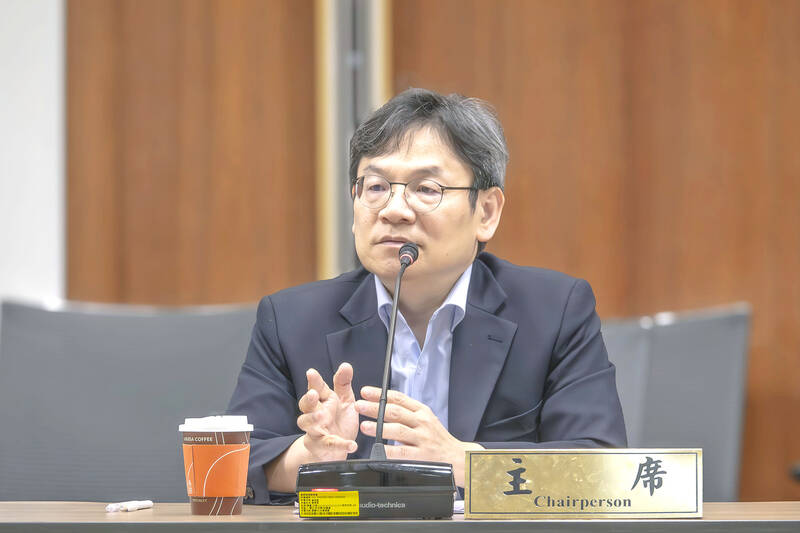
Photo courtesy of the National Development Council
The first fab at TSMC’s Arizona campus began mass production in the fourth quarter of 2024, while construction of a second fab has been completed, with mass production scheduled to begin in the second half of next year.
Construction of a third fab started earlier this year.
The three fabs were the centerpieces of TSMC’s US$65 billion initial investment project in Arizona. The chipmaker also announced an additional US$100 billion investment plan to build three more fabs, two chip packaging facilities and one research and development center in the US state.
The company has said previously that it had secured a large parcel of land near its current facilities in Arizona for future expansion, but it has not provided a clear timetable for new facilities under the US$100 billion plan.
Though Yeh said TSMC voiced optimism over the project’s future, he said the company told him it still faced several challenges, including water shortages.
Yeh said Arizona’s dry climate has made securing sufficient water resources a major concern for TSMC, which hopes to receive support from the Arizona state government.
In past, including in April 2023, TSMC has tried to allay fears that water would be a problem, saying it had plans for comprehensive water treatment and recycling facilities in Arizona that would meet the needs of its advanced wafer fabs.
TSMC is also seeking to ensure a stable power supply for its Arizona facilities, Yeh said, and it also faces complex state environmental and electricity consumption regulations.
In addition, the company has also had trouble obtaining visas for overseas hires as labor shortages remain another concern, Yeh said, without going into further detail about any of the specific issues.
Meanwhile, Yeh said TSMC is hoping Taiwanese upstream suppliers of semiconductor chemicals and equipment will follow it to the United States, though such investments would require regulatory revisions.

Cairo’s new monorail slices across the city skyline, running above the familiar chaos of blaring horns and aging buses’ exhaust fumes that mark rush hour below. The US$4.5 billion monorail, opened this month, is among Egypt’s most prominent new transport projects, part of a debt-funded infrastructure drive criticized for sapping state finances while bringing limited benefits to most of the country’s 109 million people. “It feels like you’re in a different country,” said Ramy Sayed, a restaurant manager, aboard a driverless Innovia 300 train. “No noise, no traffic, we’re not used to this.” The eastern line runs 56km from the bustling middle-class
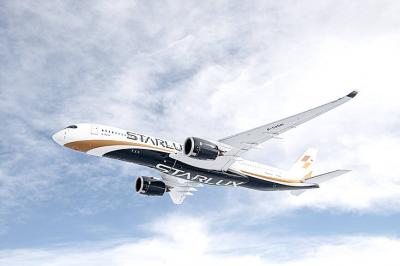
Starlux Airlines Co (星宇航空) today unveiled a long-haul network expansion plan at a shareholders’ meeting in Taipei, including direct flights to Barcelona, Spain, and Zurich, Switzerland, as well as a service connecting Taipei, Sydney and New Zealand. Starlux is to become the first Taiwanese carrier to offer non-stop services to the two European cities, while the inaugural oceanic route is expected to expand transit opportunities within the Australia-New Zealand market, Starlux said. Flight services to Chicago, Dallas, Washington and New York are under evaluation, the airline added. Prior to the shareholders’ meeting, the airline earlier this year announced that it would be
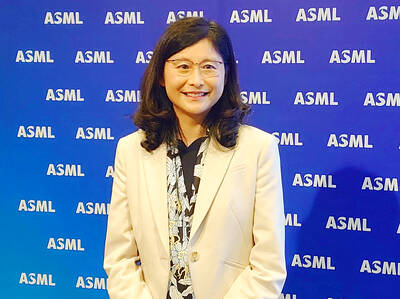
Netherlands-based semiconductor equipment supplier ASML Holding NV yesterday said that it is planning to hire an additional 1,000 people in Taiwan this year in response to growing demand from clients. ASML had previously planned to recruit 600 people this year, but that the plan has been adjusted upward, ASML vice president and ASML Taiwan general manager Grace Wang (汪佳慧) told reporters. ASML has a workforce of more than 4,500 in Taiwan, accounting for about 10 percent of its global total, Wang said. This year’s recruitment campaign would focus on adding people in the customer support, manufacturing and supply chain domains to assist ASML

Nvidia Corp yesterday announced that CEO Jensen Huang (黃仁勳) would attend an employee meeting in Taipei tomorrow to celebrate the launch of the company’s Taiwan headquarters project. Huang would attend a gathering at the site of Nvidia’s planned headquarters in Beitou Shilin Technology Park (北投士林科技園區), the company said in a statement. After arriving in Taiwan on Saturday last week, Huang told reporters that he plans to meet with Quanta Computer Inc (廣達) chairman Barry Lam (林百里) and Taiwan Semiconductor Manufacturing Co (TSMC, 台積電) chairman C.C. Wei (魏哲家), and would attend the groundbreaking ceremony for Nvidia’s Taiwan headquarters tomorrow. Nvidia has not yet applied


 RSS
RSS