


The intensifying military tensions between the US and Iran are beginning to ripple through Taiwan’s financial sector, with banks, insurers and securities firms holding sizable exposure to the Middle East, the Financial Supervisory Commission (FSC) said.
As of the end of last year, the three major financial segments’ combined exposure reached NT$2.35 trillion (US$74.35 billion), up 3.07 percent from a year earlier, the FSC said yesterday, urging local financial institutions to boost risk controls and monitor potential volatility stemming from the geopolitical situation.
Corporate exposure to the Middle East is concentrated in countries with relatively strong fiscal positions and sovereign credit ratings, including the United Arab Emirates (UAE), Saudi Arabia, Qatar, Kuwait, Israel, Oman and Jordan, the commission said.
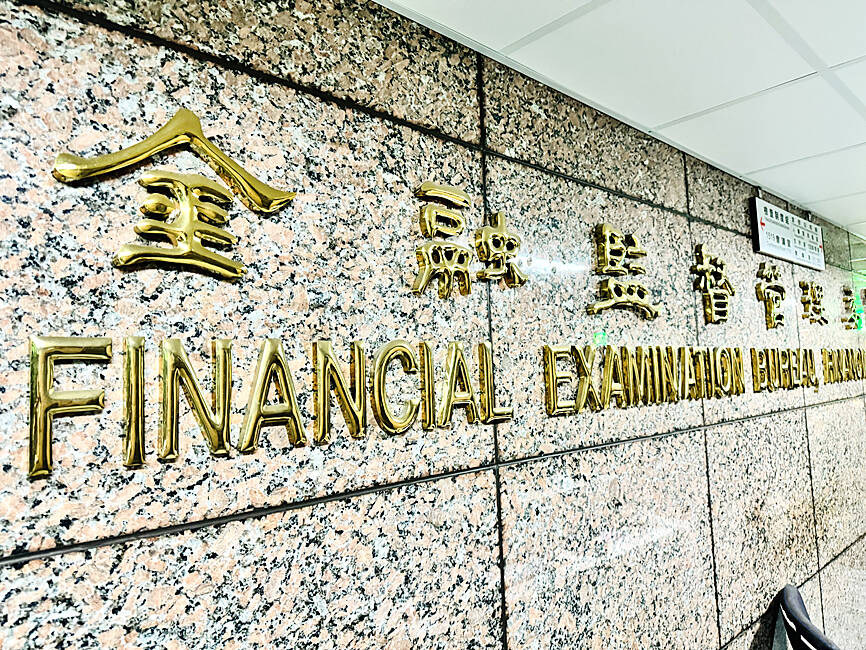
Photo: Kelson Wang, Taipei Times
Among financial firms, insurers carry the largest share of risk, as this segment’s exposure reached NT$1.77 trillion at the end of last year, with the majority of positions tied to investments, primarily in sovereign bonds, it said.
Insurers’ top three investment destinations are the UAE at NT$619.3 billion, Saudi Arabia at NT$477 billion and Qatar at NT$394.4 billion, it said.
The UAE has consistently ranked as the 10th-largest overseas market for Taiwan’s financial holding companies. The country has also become a core market for Taiwanese life insurers deploying capital in the Middle East.
Ongoing US-Iran tensions could trigger sharp short-term volatility in sovereign debt valuations, while longer-term risks might include rising energy costs, which could affect life insurers’ ability to manage long-duration bond portfolios, analysts said.
Banks reported NT$599.2 billion in combined exposure to the Middle East, concentrated in the UAE, Saudi Arabia, Qatar, Kuwait, Israel, Jordan and Oman, the commission said.
The segment’s exposure to the Middle East is primarily in the form of loans to regional financial institutions and corporations, with investment positions largely in bonds issued by local financial institutions. No Taiwanese banks have exposure to Iran, the commission said.
Taiwanese mutual funds hold a combined NT$67.8 billion in Middle East-related assets, which the Securities and Futures Bureau described as limited in both value and proportion relative to total fund assets.
Financial firms’ exposure to Israel totaled NT$136.7 billion at the end of last year, down 4 percent from a year earlier, the commission said.
The decline was the largest among the seven Middle Eastern countries, suggesting that firms have begun trimming positions to mitigate geopolitical risks there.
The TAIEX yesterday plunged 771.44 points, or 2.2 percent, to close at the day’s low of 34,323.65 following a sell-off sparked by the ongoing military conflict in the Middle East.
The New Taiwan dollar also fell sharply against the US dollar, losing NT$0.178 to end at NT$31.609 in Taipei trading.
With the geopolitical landscape in flux, financial institutions must maintain proactive risk management and monitor developments closely, particularly those heavily invested in sovereign debt markets vulnerable to sudden shifts in regional stability, the commission said.
Shares of contract chipmaker Taiwan Semiconductor Manufacturing Co (TSMC, 台積電) came under pressure yesterday after a report that Apple Inc is looking to shift some orders from the Taiwanese company to Intel Corp. TSMC shares fell NT$55, or 2.4 percent, to close at NT$2,235 on the local main board, Taiwan Stock Exchange data showed. Despite the losses, TSMC is expected to continue to benefit from sound fundamentals, as it maintains a lead over its peers in high-end process development, analysts said. “The selling was a knee-jerk reaction to an Intel-Apple report over the weekend,” Mega International Investment Services Corp (兆豐國際投顧) analyst Alex Huang
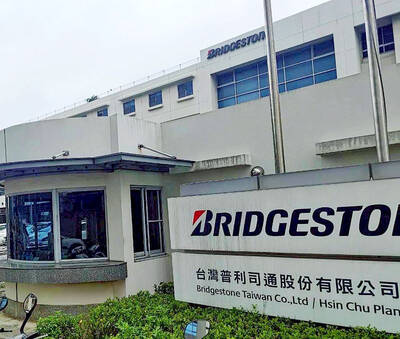
TRANSITION: With the closure, the company would reorganize its Taiwanese unit to a sales and service-focused model, Bridgestone said Bridgestone Corp yesterday announced it would cease manufacturing operations at its tire plant in Hsinchu County’s Hukou Township (湖口), affecting more than 500 workers. Bridgestone Taiwan Co (台灣普利司通) said in a statement that the decision was based on the Tokyo-based tire maker’s adjustments to its global operational strategy and long-term market development considerations. The Taiwanese unit would be reorganized as part of the closure, effective yesterday, and all related production activities would be concluded, the statement said. Under the plan, Bridgestone would continue to deepen its presence in the Taiwanese market, while transitioning to a sales and service-focused business model, it added. The Hsinchu
Taiwan Semiconductor Manufacturing Co (TSMC, 台積電) has approved a capital budget of US$31.28 billion for production expansion to meet long-term development needs during the artificial intelligence (AI) boom. The company’s board meeting yesterday approved the capital appropriation plan for purposes such as the installation of advanced technology capacity and fab construction, the world’s largest contract chipmaker said in a statement. At an earnings conference last month, TSMC forecast that its capital expenditure for this year would be at the higher end of the US$52 billion to US$56 billion range it forecast in January in response to robust demand for 5G, AI and

Taiwan Semiconductor Manufacturing Co’s (TSMC, 台積電) investment project in Arizona has progressed better than expected, but it still faces challenges such as water and labor shortages, National Development Council (NDC) Minister Yeh Chun-hsien (葉俊顯) said yesterday. Speaking with reporters after visiting TSMC’s Arizona hub and attending the SelectUSA Investment Summit in Maryland last week, Yeh said TSMC’s Arizona site turned a profit of NT$16.14 billion (US$514 million) last year in its first full year of mass production. “TSMC told me it was surprised by the smooth trial run of the first fab, which has left the company optimistic about the project’s outlook,”


 RSS
RSS