


Standard Chartered Bank Taiwan’s newly appointed chief executive officer, Anthony Yu (游天立), yesterday unveiled an ambitious growth strategy for the bank’s wealth management division, reflecting a bullish outlook on Taiwan’s high-net-worth market.
Yu, the first local executive to lead Standard Chartered Bank’s Taiwan operations, emphasized rising client demand and detailed plans to expand the bank’s digital capabilities, as well as its physical presence across the country.
Standard Chartered Taiwan saw a remarkable surge in new wealth management clients last month, with the number of clients holding assets equivalent to US$1 million more than doubling compared with the same month last year, he said.
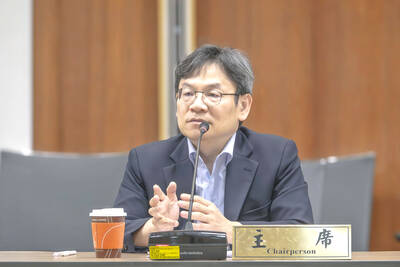
Photo: CNA
“The strong equity market, combined with growing demand for diversified and succession-focused financial solutions, has created a substantial opportunity for our wealth management business,” Yu told reporters.
Taiwan’s benchmark equity index has surged past the 35,000-point mark, generating significant paper gains and expanding the pool of investable assets.
As the foreign bank with the largest market share in custody services for overseas institutional investors, Standard Chartered has benefited from the capital inflows and heightened market activity, said the veteran banker, who previously worked at HSBC and Citi before joining Standard Chartered.
Since taking the helm three months ago, Yu has prioritized raising Taiwan’s profile within the London-headquartered group.
He said that one of his main objectives is to ensure headquarters recognizes Taiwan as a high-potential market, enabling greater flexibility in strategic planning, resource allocation and product innovation.
Standard Chartered entered this year on a strong footing. The group last year posted an 18 percent rise in profit, with a return on equity exceeding 14 percent.
Overall operations and wealth management each delivered double-digit percentage growth, reflecting robust client demand and effective execution of the bank’s strategy.
Yu outlined a multipronged approach for this year.
The bank aims to enhance product offerings, refine internal processes through digitization and expand its relationship manager team, which currently numbers about 400, he said.
Last year, about 70 new relationship managers were added, and further expansion is planned through a mix of external hiring and internal development, he said.
Physical presence remains a key component of the strategy. Following flagship wealth management branches in Taipei’s Xinyi District (信義) and Taichung’s central business district, a third flagship outlet is scheduled to open in May near Taipei’s affluent Tianmu (天母) area, he said.
Additional expansions in Kaohsiung and other major cities are under review, reflecting a continued focus on personalized, high-touch client service, Yu said.
Yu expressed confidence that the bank’s wealth management business would sustain double-digit growth this year and beyond under his leadership.
Taiwan’s strong economic fundamentals and robust capital market performance create a fertile environment for growth, he said.
With strategic investments in product offerings, talent and transaction processes, Standard Chartered is well positioned to seize upcoming opportunities and reinforce its market leadership, he added.
Shares of contract chipmaker Taiwan Semiconductor Manufacturing Co (TSMC, 台積電) came under pressure yesterday after a report that Apple Inc is looking to shift some orders from the Taiwanese company to Intel Corp. TSMC shares fell NT$55, or 2.4 percent, to close at NT$2,235 on the local main board, Taiwan Stock Exchange data showed. Despite the losses, TSMC is expected to continue to benefit from sound fundamentals, as it maintains a lead over its peers in high-end process development, analysts said. “The selling was a knee-jerk reaction to an Intel-Apple report over the weekend,” Mega International Investment Services Corp (兆豐國際投顧) analyst Alex Huang
TRANSITION: With the closure, the company would reorganize its Taiwanese unit to a sales and service-focused model, Bridgestone said Bridgestone Corp yesterday announced it would cease manufacturing operations at its tire plant in Hsinchu County’s Hukou Township (湖口), affecting more than 500 workers. Bridgestone Taiwan Co (台灣普利司通) said in a statement that the decision was based on the Tokyo-based tire maker’s adjustments to its global operational strategy and long-term market development considerations. The Taiwanese unit would be reorganized as part of the closure, effective yesterday, and all related production activities would be concluded, the statement said. Under the plan, Bridgestone would continue to deepen its presence in the Taiwanese market, while transitioning to a sales and service-focused business model, it added. The Hsinchu
Taiwan Semiconductor Manufacturing Co (TSMC, 台積電) has approved a capital budget of US$31.28 billion for production expansion to meet long-term development needs during the artificial intelligence (AI) boom. The company’s board meeting yesterday approved the capital appropriation plan for purposes such as the installation of advanced technology capacity and fab construction, the world’s largest contract chipmaker said in a statement. At an earnings conference last month, TSMC forecast that its capital expenditure for this year would be at the higher end of the US$52 billion to US$56 billion range it forecast in January in response to robust demand for 5G, AI and
Taiwan Semiconductor Manufacturing Co’s (TSMC, 台積電) investment project in Arizona has progressed better than expected, but it still faces challenges such as water and labor shortages, National Development Council (NDC) Minister Yeh Chun-hsien (葉俊顯) said yesterday. Speaking with reporters after visiting TSMC’s Arizona hub and attending the SelectUSA Investment Summit in Maryland last week, Yeh said TSMC’s Arizona site turned a profit of NT$16.14 billion (US$514 million) last year in its first full year of mass production. “TSMC told me it was surprised by the smooth trial run of the first fab, which has left the company optimistic about the project’s outlook,”


 RSS
RSS