


As luxury companies like LVMH Moet Hennessy Louis Vuitton SE and Gucci owner Kering SA struggle to recover from a two-year slowdown, they are navigating increasingly sharp share price swings stoked by hedge fund bets and investor nerves over artificial intelligence (AI)-rattled markets.
Sales of expensive handbags and designer clothing have slid at many top brands, including Dior and Gucci, after a post-pandemic boom, and investors are now keenly tuned in to any signals of the sector returning to growth.
So far, it is a mixed picture. In addition, recent broader AI-related selloffs on the US stock market risk dampening the spending power of high-end consumers, while hedge funds’ wagers on luxury stocks are exacerbating price moves.
Photo: Reuters
Shares in LVMH, the world’s biggest luxury group with a 260 billion euro (US$308.49 billion) market cap, suffered their biggest one-day fall since 2020 late last month after CEO Bernard Arnault struck a cautious tone for the year ahead, dashing hopes of a swift recovery.
Kering shares jumped 11 percent last week after the group’s fourth-quarter revenue fell slightly less than expected and new CEO Luca de Meo talked of “early, fragile” signs of recovery.
Luxury stocks and the wider consumer discretionary sector were among the most shorted going into this results season, according to hedge fund data provider Hazeltree.
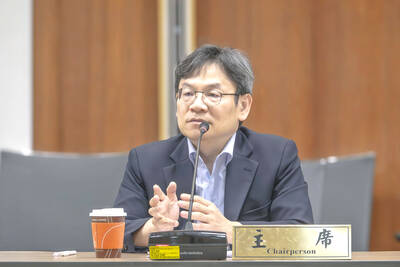
“Two factors are driving the volatility in luxury stocks like Kering,” said Michael Oliver Weinberg, a hedge fund investor and special adviser to the Tokyo University of Science Endowment.
“First, indexation has locked up capital in passive ‘buy and hold’ positions,” he said, referring to how chunks of stock are tied up in index funds, leaving a smaller amount to be traded by active funds, triggering bigger moves. “Second, the market is now dominated by multi-manager hedge funds trading specifically against news and data points when they have a research or information edge.”
The growing sway of hedge funds has driven greater volatility in European stocks more broadly in recent years.
Luxury’s reliance on spending by the wealthy also exposes it more than most to the US stock market, which, after a blistering bull run, is seeing increasingly wild swings driven by AI trends.
Kering CEO De Meo has said the stock market is a barometer for Americans’ luxury spending and flagged an AI market correction as a risk for European luxury groups.
“Many Americans have savings held in stocks, so if the market holds up well, consumption will keep driving growth. If there’s a crash, an AI bubble, etcetera, then we’ll talk again,” De Meo said on Tuesday last week after reporting results. “But for now it’s looking good.”
While hedge funds trade the swings in sentiment, longer-term investors in luxury companies are having to hold on tight.
“In these record high markets that are very concentrated with high valuations, clearly people are extremely nervous and everybody is wanting to hit the sell button,” J. Stern & Co managing partner Christopher Rossbach said in London.
“You have to look at the company fundamentals and look through the noise because there are significant cyclical issues that have hit luxury companies, but they are working through them,” he added.
Some investors are looking to switch bets between luxury names, hoping to cash in on turnaround stories. While struggling Kering surged after sales fell less than expected, Birkin bag maker Hermes — which has come through the slowdown unscathed — gained just 2.5 percent after another solid quarter of growth.
“You’re seeing quite significant share price moves as the nuance is slightly different” at each company, Rothschild & Co Redburn luxury research head Emily Cooledge said. “And because we’re at that fragile tipping point moment.”
Shares of contract chipmaker Taiwan Semiconductor Manufacturing Co (TSMC, 台積電) came under pressure yesterday after a report that Apple Inc is looking to shift some orders from the Taiwanese company to Intel Corp. TSMC shares fell NT$55, or 2.4 percent, to close at NT$2,235 on the local main board, Taiwan Stock Exchange data showed. Despite the losses, TSMC is expected to continue to benefit from sound fundamentals, as it maintains a lead over its peers in high-end process development, analysts said. “The selling was a knee-jerk reaction to an Intel-Apple report over the weekend,” Mega International Investment Services Corp (兆豐國際投顧) analyst Alex Huang
TRANSITION: With the closure, the company would reorganize its Taiwanese unit to a sales and service-focused model, Bridgestone said Bridgestone Corp yesterday announced it would cease manufacturing operations at its tire plant in Hsinchu County’s Hukou Township (湖口), affecting more than 500 workers. Bridgestone Taiwan Co (台灣普利司通) said in a statement that the decision was based on the Tokyo-based tire maker’s adjustments to its global operational strategy and long-term market development considerations. The Taiwanese unit would be reorganized as part of the closure, effective yesterday, and all related production activities would be concluded, the statement said. Under the plan, Bridgestone would continue to deepen its presence in the Taiwanese market, while transitioning to a sales and service-focused business model, it added. The Hsinchu
Taiwan Semiconductor Manufacturing Co (TSMC, 台積電) has approved a capital budget of US$31.28 billion for production expansion to meet long-term development needs during the artificial intelligence (AI) boom. The company’s board meeting yesterday approved the capital appropriation plan for purposes such as the installation of advanced technology capacity and fab construction, the world’s largest contract chipmaker said in a statement. At an earnings conference last month, TSMC forecast that its capital expenditure for this year would be at the higher end of the US$52 billion to US$56 billion range it forecast in January in response to robust demand for 5G, AI and
Taiwan Semiconductor Manufacturing Co’s (TSMC, 台積電) investment project in Arizona has progressed better than expected, but it still faces challenges such as water and labor shortages, National Development Council (NDC) Minister Yeh Chun-hsien (葉俊顯) said yesterday. Speaking with reporters after visiting TSMC’s Arizona hub and attending the SelectUSA Investment Summit in Maryland last week, Yeh said TSMC’s Arizona site turned a profit of NT$16.14 billion (US$514 million) last year in its first full year of mass production. “TSMC told me it was surprised by the smooth trial run of the first fab, which has left the company optimistic about the project’s outlook,”


 RSS
RSS