


The Ministry of Economic Affairs yesterday broke ground on the Industrial Technology Research Institute’s advanced semiconductor research and development (R&D) base in Hsinchu County’s Jhudong Township (竹東).
The NT$3.772 billion (US$119.56 million) base is a joint project with the National Development Council and the National Science and Technology Council as part of the government’s Chip-based Industrial Innovation Program, the ministry said.
The base would house pilot production lines for advanced semiconductor processes, submicron sensing chips and advanced packaging, as well as laboratories for inspection, measurement and verification, it said.
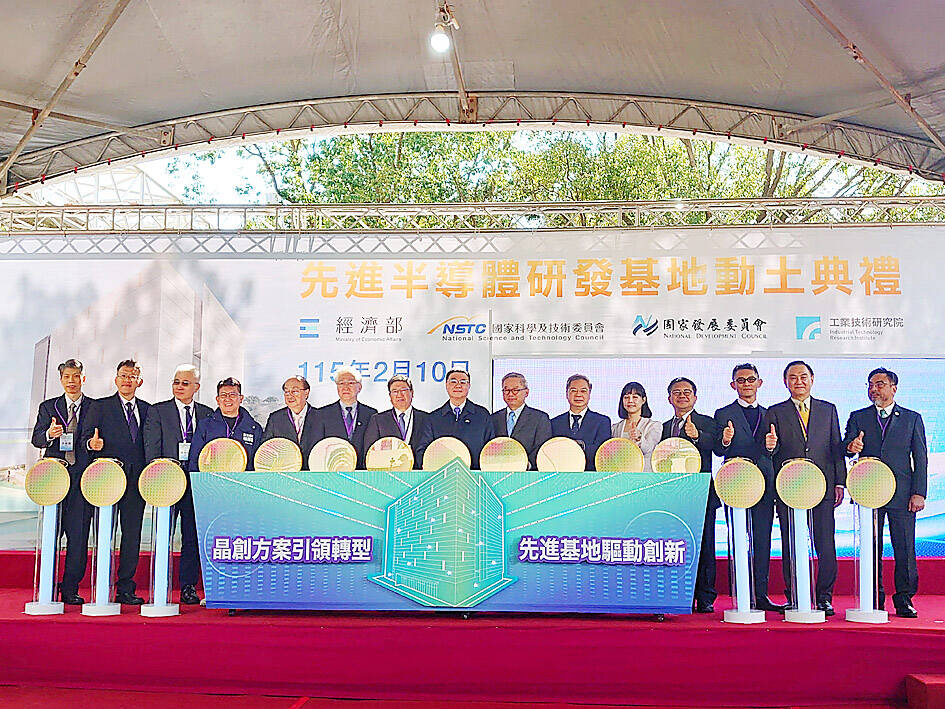
Photo: CNA
It is scheduled for completion by the end of next year, with phased operations beginning in the first quarter of 2028, the ministry said.
Once operational, the base would offer three core services — pilot verification for innovative integrated circuit (IC) designs, development of advanced semiconductor manufacturing processes, and localized verification of equipment and materials, it said.
The ministry expects the new facility to lower validation barriers for small and medium-sized IC design firms and start-ups, helping them bring their products to market.
The base could shorten product development time for firms by about 30 percent, it said.
It would also strengthen the competitiveness of domestic materials and equipment suppliers, and enable early deployment of cutting-edge technologies such as artificial intelligence (AI) chips, silicon photonics, quantum computing and next-generation memory chips, reinforcing Taiwan’s critical position in the global semiconductor industry, the ministry said.
Amid shifting geopolitics and global supply-chain restructuring, the key for Taiwan to stay ahead globally is strengthening R&D resilience and maintaining technological autonomy, which the new base would greatly support, Minister of Economic Affairs Kung Ming-hsin (龔明鑫) said at the groundbreaking ceremony.
Kung said the new base would primarily serve small and medium-sized firms, start-ups, and domestic equipment and materials suppliers. It would allow small-batch, customized testing of new materials, equipment and processes, shortening R&D cycles and accelerating commercialization to make the industrial ecosystem more complete and resilient, he said.
The base would provide R&D and pilot production services for 28-nanomater to 90-nanometer nodes, and integrate chip design, manufacturing, packaging and testing into a one-stop service. It aims to help local firms achieve breakthroughs and support AI applications across industries, Kung said.
The ministry expects the base to provide more forward-looking research on AI chips, silicon photonics and quantum technologies, serving as a core engine for digital transformation in areas such as smart healthcare, autonomous vehicles and factory automation.
Kung especially thanked Taiwan Semiconductor Manufacturing Co (台積電) for supporting the establishment of the R&D base.
Yesterday’s ceremony was attended by Premier Cho Jung-tai (卓榮泰) and National Science and Technology Council Minister Wu Cheng-wen (吳誠文), as well as representatives from major semiconductor firms.
Shares of contract chipmaker Taiwan Semiconductor Manufacturing Co (TSMC, 台積電) came under pressure yesterday after a report that Apple Inc is looking to shift some orders from the Taiwanese company to Intel Corp. TSMC shares fell NT$55, or 2.4 percent, to close at NT$2,235 on the local main board, Taiwan Stock Exchange data showed. Despite the losses, TSMC is expected to continue to benefit from sound fundamentals, as it maintains a lead over its peers in high-end process development, analysts said. “The selling was a knee-jerk reaction to an Intel-Apple report over the weekend,” Mega International Investment Services Corp (兆豐國際投顧) analyst Alex Huang
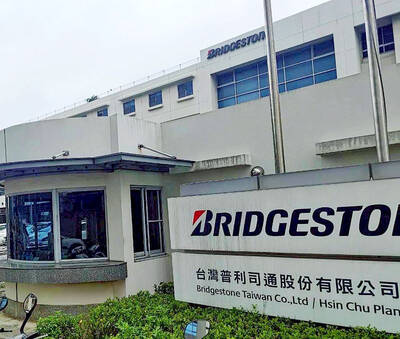
TRANSITION: With the closure, the company would reorganize its Taiwanese unit to a sales and service-focused model, Bridgestone said Bridgestone Corp yesterday announced it would cease manufacturing operations at its tire plant in Hsinchu County’s Hukou Township (湖口), affecting more than 500 workers. Bridgestone Taiwan Co (台灣普利司通) said in a statement that the decision was based on the Tokyo-based tire maker’s adjustments to its global operational strategy and long-term market development considerations. The Taiwanese unit would be reorganized as part of the closure, effective yesterday, and all related production activities would be concluded, the statement said. Under the plan, Bridgestone would continue to deepen its presence in the Taiwanese market, while transitioning to a sales and service-focused business model, it added. The Hsinchu
Taiwan Semiconductor Manufacturing Co (TSMC, 台積電) has approved a capital budget of US$31.28 billion for production expansion to meet long-term development needs during the artificial intelligence (AI) boom. The company’s board meeting yesterday approved the capital appropriation plan for purposes such as the installation of advanced technology capacity and fab construction, the world’s largest contract chipmaker said in a statement. At an earnings conference last month, TSMC forecast that its capital expenditure for this year would be at the higher end of the US$52 billion to US$56 billion range it forecast in January in response to robust demand for 5G, AI and
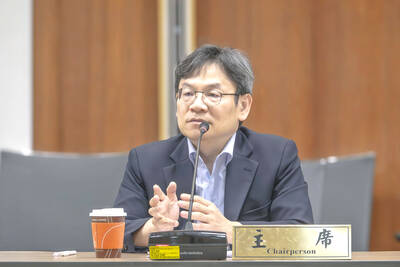
Taiwan Semiconductor Manufacturing Co’s (TSMC, 台積電) investment project in Arizona has progressed better than expected, but it still faces challenges such as water and labor shortages, National Development Council (NDC) Minister Yeh Chun-hsien (葉俊顯) said yesterday. Speaking with reporters after visiting TSMC’s Arizona hub and attending the SelectUSA Investment Summit in Maryland last week, Yeh said TSMC’s Arizona site turned a profit of NT$16.14 billion (US$514 million) last year in its first full year of mass production. “TSMC told me it was surprised by the smooth trial run of the first fab, which has left the company optimistic about the project’s outlook,”


 RSS
RSS