


Oracle Corp plans to raise US$45 billion to US$50 billion this year through a combination of debt and equity sales to build additional cloud infrastructure capacity, reflecting the scale of financing needed to feed demand for artificial intelligence (AI).
Oracle is raising money to build additional capacity to meet the contracted demand from the company’s largest cloud customers, including Advanced Micro Devices Inc, Meta Platforms Inc, Nvidia Corp, OpenAI, TikTok Inc and xAI Corp, the company said in a statement Sunday.
The announcement coincides with persistent fears about whether massive AI-linked investments by tech companies such as Oracle can pay off. The company’s shares have fallen about 50 percent from its record high on Sept. 10, wiping out roughly US$460 billion in value.
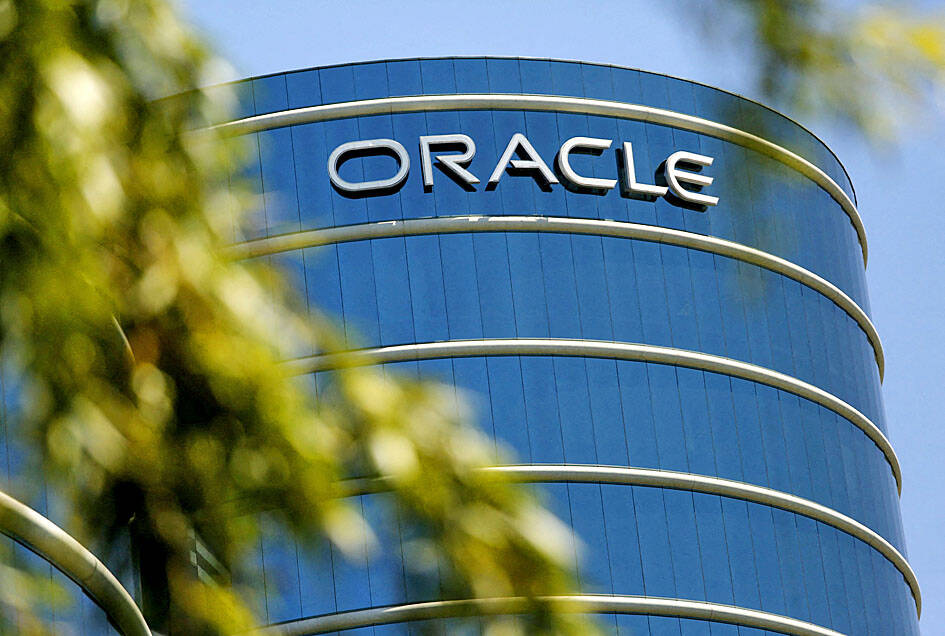
Photo: Reuters
Developing AI data centers has pushed Oracle’s free cash flow negative, where it is expected to stay until 2030, according to data compiled by Bloomberg. The company is on the hook for tens of billions of dollars in spending, largely on semiconductors and leases.
A succesful raise could help Oracle begin to dig itself out of its pit, said Gil Luria, an analyst at DA Davidson & Co.
The company plans to raise half of the funds via equity-linked and common equity issuances, including mandatory convertible preferred securities and through an at-the-market equity program of as much as US$20 billion.
Issuing equity would help send a message to the market that Oracle is serious about maintaining its investment-grade debt rating, wrote John DiFucci, an analyst at Guggenheim, in a January report.
The rest of its funding target would be raised via bonds issuance early this year. The company borrowed US$18 billion in last year in what was one of the year’s largest corporate bond offerings.
However, the debt market might not have an appetite for this much investment-grade debt from Oracle given its commitments and trading in its credit default swaps, Luria said. Issuing equity might hurt the company’s stock price, he said.
As Oracle debt swelled and Wall Street raised concerns of an AI bubble, investors rushed to buy credit default swaps tied to Oracle, which by December pushed the prices on some of the derivatives to the highest since the 2008 financial crisis.
A key part of Oracle’s cloud investment is its contract with OpenAI, which has committed to spending about US$300 billion to rent servers from Oracle. OpenAI is not profitable, adding to worries about the financial strains from huge capital expenditures without a clear timeline for returns.
Making this significant of an announcement on a Sunday afternoon is unusual for a mature company such as Oracle. The timing, “could be the management team trying to stop the endless slide in the share price by trying to give investors some hope ahead of Monday’s open,” Luria said.
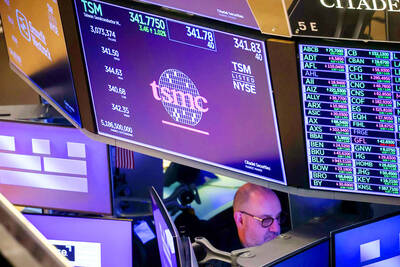
STRONG INTEREST: Analysts have pointed to optimism in TSMC’s growth prospects in the artificial intelligence era as the cause of the rising number of shareholders The number of people holding shares of chipmaker Taiwan Semiconductor Manufacturing Co (TSMC, 台積電) hit a new high last week despite a decline in its stock price, the Taiwan Depository and Clearing Corp (TDCC, 台灣集保) said. The number of TSMC shareholders rose to 2.46 million as of Friday, up 75,536 from a week earlier, TDCC data showed. The stock price fell 1.34 percent during the same week to close at NT$1,840 (US$57.55). The decline in TSMC’s share price resulted from volatility in global tech stocks, driven by rising international crude oil prices as the war against Iran continues. Dealers said
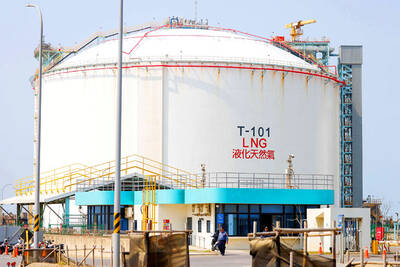
Taiwan’s natural gas supply remains stable through the end of May, despite rising concerns about potential disruptions to Qatari liquefied natural gas (LNG) supplies due to escalating conflicts in the Middle East, the Ministry of Economic Affairs said yesterday. The ministry in a statement said that Taiwan has completed preparations for natural gas supply and shipping schedules through the end of May. It has also made plans to increase natural gas imports from regions outside the Middle East in June to ensure a stable supply, it added. Taiwan sources natural gas from 14 countries and is not solely dependent on the Middle East,

China is clamping down on fertilizer exports to protect its domestic market, industry sources said, putting an additional strain on global markets that were already grappling with shortages caused by the US-Israeli war on Iran. China is among the largest fertilizer exporters — shipping more than US$13 billion of it last year — and it has a history of controlling exports to keep prices low for farmers. Shipments through the war-blocked Strait of Hormuz account for about one-third of the sea-borne supply. This month, Beijing banned exports of nitrogen-potassium fertilizer blends and certain phosphate varieties, sources said. The ban, which has not

Grab Holdings Ltd agreed to buy Delivery Hero SE’s Foodpanda operations in Taiwan for US$600 million, a deal that marks its first foray outside of its Southeast Asian base. The cash acquisition will allow Grab to expand into 21 cities across Taiwan, the Singapore-based ride-hailing and delivery company said in a statement yesterday. Grab expects the transaction to be completed in the second half, subject to regulatory approvals. The purchase will give Grab a presence on the island of about 23 million people, helping it to expand beyond its intensely competitive home market. Grab has seen growth slow dramatically as it takes


 RSS
RSS