


Car sales in Taiwan fell about 26 percent last month from the month before to about 35,000 units, missing market expectations as analysts cited caution amid uncertainty over tariff policy on US auto imports.
Analysts said sales could decline further this month due to the Lunar New Year holiday and the extended Feb. 28 holiday weekend, reducing the number of working days. Sales volume could fall to about 26,000 units.
The Ministry of Transportation and Communications records a sale as happening on the day a car is delivered and given a license plate, rather than when the sales contract is signed.
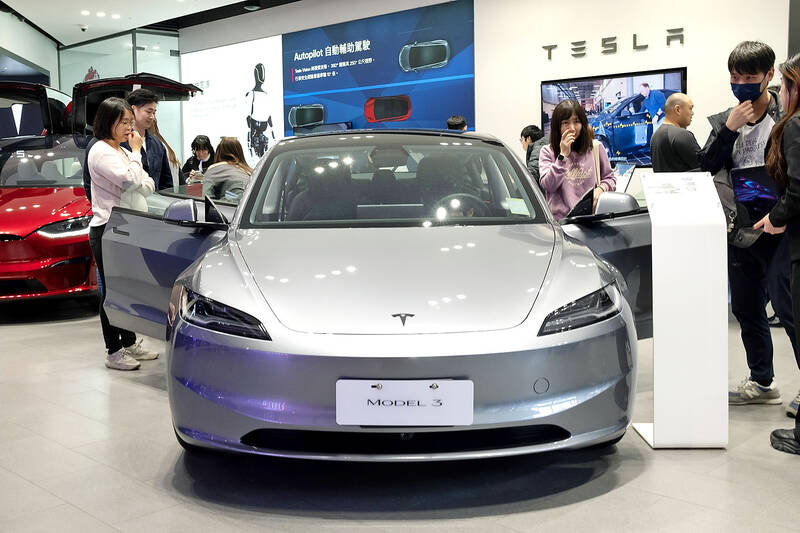
Photo: CNA
Data compiled by the auto industry showed car sales last month stood at 35,073 units, down 25.9 percent from a month earlier, but up very slightly from 35,064 units for the same period last year.
Last month’s figure was below earlier market expectations of about 43,000 units, as analysts said that although the US agreed to cut tariffs on Taiwanese goods from 20 percent to 15 percent last month, Taiwan’s import tariffs on US autos have not been decided, leading many potential car buyers to put their purchase plans on hold.
The tariff policy offset the benefits resulting from car vendors’ aggressive promotional campaigns and a cut in commodity taxes by the government, analysts said.
Last month, Hotai Motor Co (和泰汽車), the sales agent for Toyota and Lexus in Taiwan, remained the largest car vendor in Taiwan, with combined Toyota and Lexus sales of 14,787 units, accounting for a 42.2 percent share of the local auto market, down from 46.6 percent in January 2025.
Hotai Motor said sales of Toyota and Lexus vehicles this month are forecast to hit 8,000 units, or about a 30.8 percent share of the local auto market.
The data showed sales of imported cars in Taiwan plunged 41.3 percent last month from a month earlier to 14,561 units, and the January figure was 12.2 percent lower than a year earlier.
Sales of luxury cars last month dipped 44.7 percent from a month earlier and dropped 26.1 percent from a year earlier to 7,234 units, the data indicated.
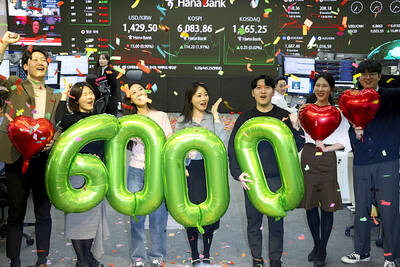
South Korea’s equity benchmark yesterday crossed a new milestone just a month after surpassing the once-unthinkable 5,000 mark as surging global memory demand powers the country’s biggest chipmakers. The KOSPI advanced as much as 2.6 percent to a record 6,123, with Samsung Electronics Co and SK Hynix Inc each gaining more than 2 percent. With the benchmark now up 45 percent this year, South Korea’s stock market capitalization has also moved past France’s, following last month’s overtaking of Germany’s. Long overlooked by foreign funds, despite being undervalued, South Korean stocks have now emerged as clear winners in the global market. The so-called “artificial intelligence

Chinese artificial intelligence (AI) start-up DeepSeek’s (深度求索) latest AI model, set to be released as soon as next week, was trained on Nvidia Corp’s most advanced AI chip, the Blackwell, a senior official of US President Donald Trump’s administration said on Monday, in what could represent a violation of US export controls. The US believes DeepSeek will remove the technical indicators that might reveal its use of American AI chips, the official said, adding that the Blackwells are likely clustered at its data center in Inner Mongolia, an autonomous region of China. The person declined to say how the US government received
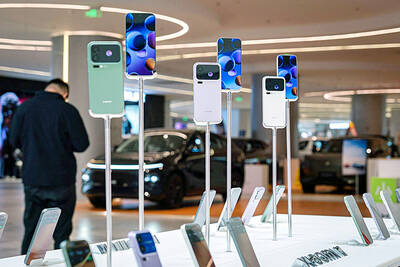
‘SEISMIC SHIFT’: The researcher forecast there would be about 1.1 billion mobile shipments this year, down from 1.26 billion the prior year and erasing years of gains The global smartphone market is expected to contract 12.9 percent this year due to the unprecedented memorychip shortage, marking “a crisis like no other,” researcher International Data Corp (IDC) said. The new forecast, a dramatic revision down from earlier estimates, gives the latest accounting of the ongoing memory crunch that is affecting every corner of the electronics industry. The demand for advanced memory to power artificial intelligence (AI) tasks has drained global supply until well into next year and jeopardizes the business model of many smartphone makers. IDC forecast about 1.1 billion mobile shipments this year, down from 1.26 billion the prior
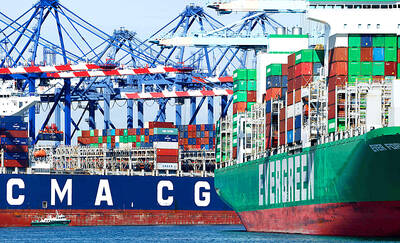
FORTUNES REVERSED: The new 15 percent levies left countries with a 10 percent tariff worse off and stripped away the advantage of those with a 15 percent rate In a swift reversal of fortunes, countries that had been hardest hit by US President Donald Trump’s tariffs have emerged as the biggest winners from the US Supreme Court’s decision to strike down his emergency levies. China, India and Brazil are among those now seeing lower tariff rates for shipments to the US after the court ruled Trump’s use of the International Emergency Economic Powers Act to impose duties was illegal. While Trump subsequently announced plans for a 15 percent global rate, Bloomberg Economics said that would mean an average effective tariff rate of about 12 percent — the lowest since


 RSS
RSS