


Compal Electronics Inc (仁寶) yesterday said it is targeting revenue of NT$1 trillion (US$31.6 billion) for this year, backed by forecast “explosive growth” in its artificial intelligence (AI) server business in the second half of the year.
The company’s revenue last year fell 17 percent year-on-year to NT$757.51 billion.
Compal is stepping up investment in AI-related transformation, including technology development, factory automation and internal management upgrades, company chairman Ray Chen (陳瑞聰) said at a company event in Taipei.
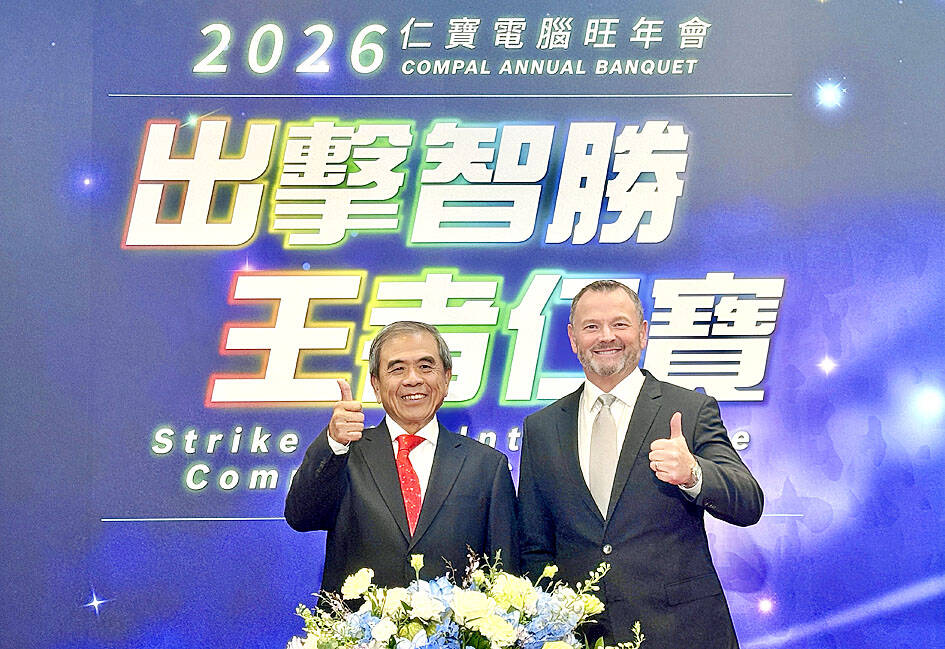
Photo: Fang Wei-chieh, Taipei Times
The company aims to transform into an AI-focused enterprise from a traditional contract manufacturer, he said.
AI servers are projected to account for about 80 percent of its total server revenue this year, up from about 20 percent at the end of last quarter, and would see double-digit percentage growth from last year, Chen said.
Compal launched a US$500 million expansion project in Texas last year, which is expected to begin mass production in the second quarter this year, he said.
The new facility mainly produces “Level 10” and “Level 11” servers, he added.
The company’s server business this year would continue to focus on graphics processing unit-based systems, but it is also in talks with several tier-one cloud service providers and original equipment manufacturers on production of application-specific integrated circuit-based servers, Compal president Anthony Peter Bonadero said.
The company would continue to invest in the US this year, but not necessarily in Texas, Bonadero said, adding that the company is looking for a bigger factory in Taoyuan for capacity expansion, including surface-mount technology assembly lines and printed circuit board capacity.
Compal is also accelerating capacity expansion in Vietnam, and the company’s motherboard production would remain concentrated at its Asian sites, he said.
The company’s overseas capacity expansion underlines growing customer requests for a more geographically balanced manufacturing footprint to avoid overconcentration in a single location, Chen said.
Given rising memorychip prices, International Data Corp forecast that global shipments of notebook computers would contract by 9 to 10 percent this year.
However, Compal is more optimistic, expecting shipments would contract by a low single-digit percentage, Chen said.
The company’s notebook business would remain flat or post slight growth this year, he said.
The memorychip issue is manageable for now, with the industry responding by adopting leaner configurations, more aggressive pricing strategies and tighter supply management, Bonadero said.
Compal has maintained close communication with the three major memory suppliers to ensure stable supply, he said.
However, rising memory prices could persist into next year or even 2028, given ongoing supply constraints and strong demand from AI-related applications, he said.
This year, AI PCs are expected to account for 50 to 60 percent of the company’s total PC shipments, as persistent demand for edge AI and industrial AI PC applications has helped the company secure new orders, Bonadero said.
Shares of contract chipmaker Taiwan Semiconductor Manufacturing Co (TSMC, 台積電) came under pressure yesterday after a report that Apple Inc is looking to shift some orders from the Taiwanese company to Intel Corp. TSMC shares fell NT$55, or 2.4 percent, to close at NT$2,235 on the local main board, Taiwan Stock Exchange data showed. Despite the losses, TSMC is expected to continue to benefit from sound fundamentals, as it maintains a lead over its peers in high-end process development, analysts said. “The selling was a knee-jerk reaction to an Intel-Apple report over the weekend,” Mega International Investment Services Corp (兆豐國際投顧) analyst Alex Huang
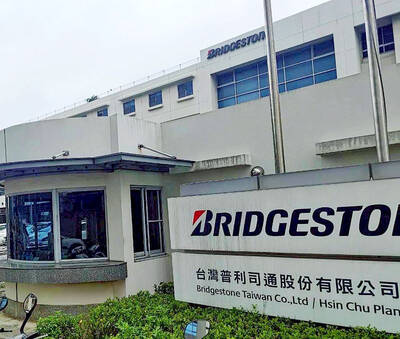
TRANSITION: With the closure, the company would reorganize its Taiwanese unit to a sales and service-focused model, Bridgestone said Bridgestone Corp yesterday announced it would cease manufacturing operations at its tire plant in Hsinchu County’s Hukou Township (湖口), affecting more than 500 workers. Bridgestone Taiwan Co (台灣普利司通) said in a statement that the decision was based on the Tokyo-based tire maker’s adjustments to its global operational strategy and long-term market development considerations. The Taiwanese unit would be reorganized as part of the closure, effective yesterday, and all related production activities would be concluded, the statement said. Under the plan, Bridgestone would continue to deepen its presence in the Taiwanese market, while transitioning to a sales and service-focused business model, it added. The Hsinchu
Taiwan Semiconductor Manufacturing Co (TSMC, 台積電) has approved a capital budget of US$31.28 billion for production expansion to meet long-term development needs during the artificial intelligence (AI) boom. The company’s board meeting yesterday approved the capital appropriation plan for purposes such as the installation of advanced technology capacity and fab construction, the world’s largest contract chipmaker said in a statement. At an earnings conference last month, TSMC forecast that its capital expenditure for this year would be at the higher end of the US$52 billion to US$56 billion range it forecast in January in response to robust demand for 5G, AI and

Taiwan Semiconductor Manufacturing Co’s (TSMC, 台積電) investment project in Arizona has progressed better than expected, but it still faces challenges such as water and labor shortages, National Development Council (NDC) Minister Yeh Chun-hsien (葉俊顯) said yesterday. Speaking with reporters after visiting TSMC’s Arizona hub and attending the SelectUSA Investment Summit in Maryland last week, Yeh said TSMC’s Arizona site turned a profit of NT$16.14 billion (US$514 million) last year in its first full year of mass production. “TSMC told me it was surprised by the smooth trial run of the first fab, which has left the company optimistic about the project’s outlook,”


 RSS
RSS