


Oil prices rose after OPEC+ signaled that it would pause output increases next quarter, following a modest hike for next month.
Brent for January rose above US$65 a barrel, while West Texas Intermediate was near US$61.
OPEC and allies on Sunday said they would raise output by 137,000 barrels a day next month, matching expectations. The group then takes a three month hiatus from January to March.
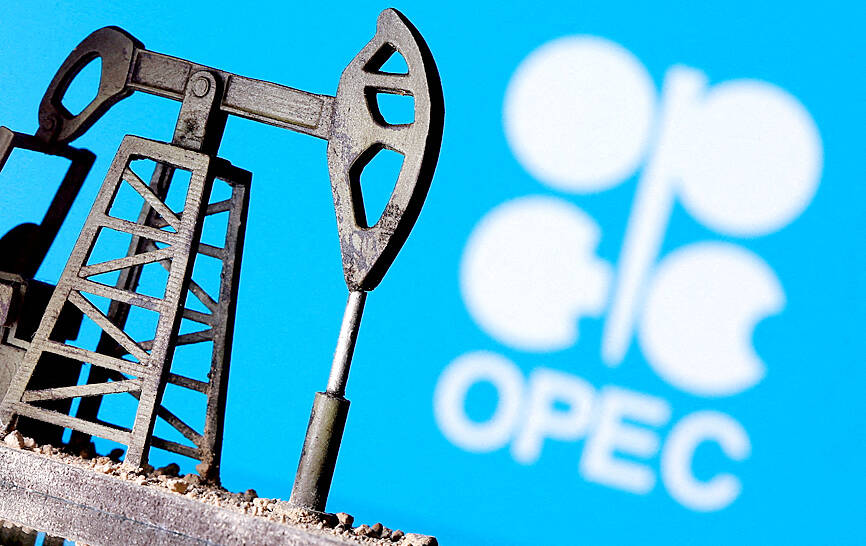
Photo: Reuters
Global benchmark Brent has slumped about 10 percent over the past three months, as the market faces the prospect of ballooning oversupply. Still, prices recently bounced from a five-month low after tighter US sanctions on Russian producers raised some questions about supply prospects from that nation.
The OPEC+ output decision and planned pause are “an acknowledgment from the group that the market is facing a sizeable surplus next year,” ING Groep NV head of commodities strategy Warren Patterson said in Singapore.
There is plenty of uncertainty concerning the scale of oversupply, and it is unclear how disruptive the latest sanctions on Russia are going to be, he added.
The eight key members of OPEC+ are left with about 1.2 million barrels a day of their current supply tranche still to restore. Actual output increases have fallen short of advertised volumes, as some members offset earlier overproduction and others struggle to pump more.
Following the OPEC+ move, Morgan Stanley raised its near-term price forecast for Brent, while maintaining a warning for a “substantial surplus.” The United Arab Emirates yesterday added to the chorus of producers who have come out to downplay glut concerns.
Traders are monitoring disruptions to flows, after a Ukrainian drone attack in the Black Sea left a tanker ablaze and damaged loading facilities in the port city of Tuapse, Russia. The area is home to a refinery run by PJSC Rosneft Oil Co, which was sanctioned last month by the US, along with PJSC Lukoil Oil Co.
US President Donald Trump threatened possible US military action against militants in Nigeria, Africa’s largest oil producer, if the country’s government does not halt the groups’ “killing of Christians.” He hinted at an immediate cutoff in aid to the OPEC member.
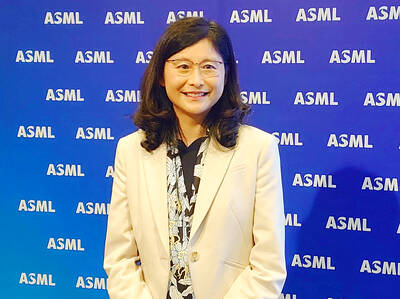
Netherlands-based semiconductor equipment supplier ASML Holding NV yesterday said that it is planning to hire an additional 1,000 people in Taiwan this year in response to growing demand from clients. ASML had previously planned to recruit 600 people this year, but that the plan has been adjusted upward, ASML vice president and ASML Taiwan general manager Grace Wang (汪佳慧) told reporters. ASML has a workforce of more than 4,500 in Taiwan, accounting for about 10 percent of its global total, Wang said. This year’s recruitment campaign would focus on adding people in the customer support, manufacturing and supply chain domains to assist ASML
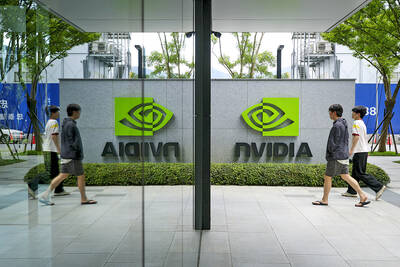
UNDER MICROSCOPE: Taiwan detained three people who allegedly conspired to buy servers in Taiwan and export them using fraudulent documentation, prosecutors said Nvidia Corp chief executive officer Jensen Huang (黃仁勳) on Saturday urged Super Micro Computer Inc to tighten up on compliance after Taiwan detained three people this week for allegedly making fraudulent declarations about artificial intelligence (AI) servers made by its US partner. The development marked the nation’s first crackdown on semiconductor smuggling, which grew after the US slapped restrictions on exports of high-end chips such as Nvidia AI accelerators to China. Nvidia is “rigorous” in explaining regulations to all of its partners, Huang told reporters after arriving in Taipei. “Ultimately Super Micro has to run their own company,” he said in response to

Nvidia Corp yesterday announced that CEO Jensen Huang (黃仁勳) would attend an employee meeting in Taipei tomorrow to celebrate the launch of the company’s Taiwan headquarters project. Huang would attend a gathering at the site of Nvidia’s planned headquarters in Beitou Shilin Technology Park (北投士林科技園區), the company said in a statement. After arriving in Taiwan on Saturday last week, Huang told reporters that he plans to meet with Quanta Computer Inc (廣達) chairman Barry Lam (林百里) and Taiwan Semiconductor Manufacturing Co (TSMC, 台積電) chairman C.C. Wei (魏哲家), and would attend the groundbreaking ceremony for Nvidia’s Taiwan headquarters tomorrow. Nvidia has not yet applied

Huawei Technologies Co (華為) said it has come up with a new pathway to shorten its gap with industry leader Taiwan Semiconductor Manufacturing Co (TSMC, 台積電), potentially achieving a breakthrough in making advanced semiconductors without cutting-edge equipment. Right now there is about a five-year gap between what TSMC is capable of and what Huawei, together with its manufacturing partner Semiconductor Manufacturing International Corp (中芯), can produce. Huawei is to start making 1.4-nanometer chips by 2031 with its own “LogicFolding” technology, Huawei semiconductor chief He Tingbo (何庭波) said in a rare public appearance during a chip conference yesterday, while TSMC has


 RSS
RSS