


OpenAI has completed a deal to raise US$6.6 billion in new funding, giving the artificial intelligence (AI) company a US$157 billion valuation and bolstering its efforts to build the world’s leading generative AI technology.
The funding round was led by Thrive Capital Management LLC, the venture capital firm headed by Josh Kushner, which put in US$1.3 billion. Microsoft Corp, OpenAI’s largest backer, put in about US$750 million, on top of the US$13 billion it had already invested in the start-up, a source familiar with the matter said.
Other investors included Khosla Ventures LLC, Fidelity Management & Research Co and Nvidia Corp, the chipmaker whose powerful processors are at the center of the AI boom.
Photo: Reuters
The OpenAI deal is one of the largest-ever private investments, and makes it one of the three largest venture-backed start-ups, alongside Elon Musk’s Space Exploration Technologies Corp and TikTok owner ByteDance Ltd (字節跳動). The size of the investment underscores the tech industry’s belief in the power of AI and its appetite for the extremely costly research powering its advancement.
Other investors writing major checks included Tiger Global Management LLC, which put in US$350 million, and Altimeter Capital Management LP, which invested at least US$250 million, according to sources familiar with the matter.
Global backers participating in the round included Softbank Group Corp and the new Abu Dhabi-based tech investment firm MGX. Softbank’s investment was US$500 million, according to one of the people. Venture firm Coatue Management LLC also participated.
In a statement, OpenAI said it would use the cash influx to drive forward AI research and increase its computing capacity.
“AI is already personalizing learning, accelerating healthcare breakthroughs and driving productivity,” OpenAI chief financial officer Sarah Friar said. “And this is just the start.”
The huge valuation for OpenAI has transfixed Silicon Valley.
“People are shocked at 150 billion bucks,” said Altimeter chief executive officer Brad Gerstner, speaking on stage at the Madrona Intelligent Applications Summit in Seattle on Wednesday.
However, he also cited reports that the start-up expects to generate more than US$10 billion in revenue next year — adding that a multiple of 10 times projected revenue is not exorbitant for a company about to go public, giving Google and Facebook as comparable examples.
Gerstner called the start-up “the most important AI company in the United States, next to Nvidia.”
Apple Inc did not participate in the deal, although the company was previously in talks to invest. The iPhone maker has a partnership with OpenAI to integrate ChatGPT on its devices and through its Siri voice assistant. As part of that accord, Apple was previously in discussions to get an observer role on OpenAI’s board, although those plans were dropped, sources familiar with the matter said.
In this funding round, OpenAI also wanted investors to refrain from funding five companies they perceive as close competitors, sources said. The list of companies includes rivals developing large language models such as Anthropic and Musk’s xAI. OpenAI’s cofounder Ilya Sutskever’s new company, Safe Superintelligence Inc, is also on the list.
Two AI applications firms, including AI search start-up Perplexity and enterprise search firm Glean, were also named in OpenAI’s conversation with investors, the sources said.
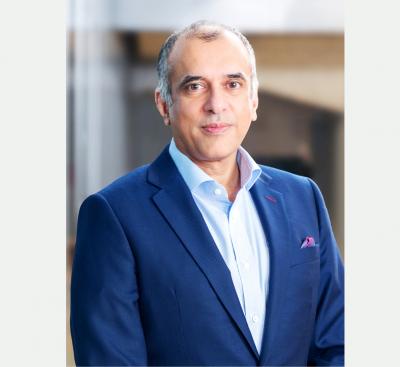
HSBC Holdings PLC is deepening its commitment to Taiwan as the economy emerges as one of the bank’s fastest-growing markets globally, driven by an artificial intelligence (AI) investment boom, expanding cross-border trade, and rising wealth creation. “The advantage that Taiwan has is a growth story linked to the semiconductor and broader AI industries, strong underlying corporate performance, and wealth creation,” said Surendra Rosha, HSBC’s co-chief executive for Asia and the Middle East, in an exclusive interview with the Taipei Times on June 2, during this year’s HSBC Taiwan Conference. That combination has helped HSBC cement its position as the most profitable international
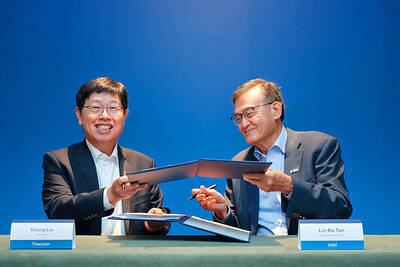
Hon Hai Precision Industry Co (鴻海精密) yesterday said it would work with US chipmaker Intel Corp to jointly develop and deploy next-generation artificial intelligence (AI) infrastructure and intelligent computing platforms in a move to capture booming demand for AI computing systems. Hon Hai, also known as Foxconn Technology Group (富士康), said in a statement that the partnership would combine its global manufacturing scale, system integration expertise and AI data center deployment capabilities with Intel’s strengths in processor architecture, silicon technologies and software ecosystem. The companies said they plan to work on equipment used in AI data centers, including server racks powered by
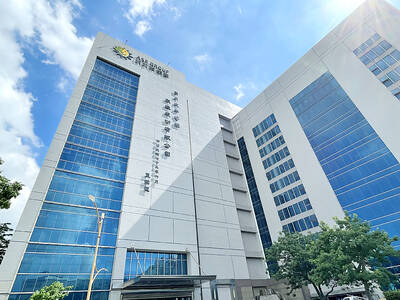
The average pay to employees by ASE Technology Holding Co (日月光投控) was the highest among the companies listed on the local main board last year, while contract chipmaker Taiwan Semiconductor Manufacturing Co (TSMC, 台積電) ranked seventh, the Taiwan Stock Exchange (TWSE) said on Monday. Data compiled by the exchange showed ASE Technology, the world’s largest chip packaging and testing services provider, paid its employees an average of NT$6.28 million (US$199,746) last year, up 40 percent from a year earlier. TSMC, the world’s largest contract chipmaker and the most profitable company in Taiwan, paid its employees NT$4.09 million on average, up
Taiwan Semiconductor Manufacturing Co (TSMC, 台積電) is now ranked ninth among the world’s 100 most valuable companies after its market capitalization more than doubled over the past year, PricewaterhouseCoopers (PwC) Taiwan said in a report last month. TSMC’s market capitalization surged 101 percent year-on-year to US$1.427 trillion as of March 31, the accounting and consulting firm’s 2026 Global Top 100 Companies by Market Capitalization report said. The gain catapulted the world’s largest contract chipmaker from 12th place to ninth in the rankings, and it was the fastest-growing among the global top 10, it said. TSMC was the only Taiwanese company among the top


 RSS
RSS