


Have you suffered an “involuntary career event” recently? Perhaps you were a casualty of “corporate outplacing,” the unfortunate yet ostensibly necessary result of your company “rightsizing.” Managers are running out of ways to say you no longer have a job.
Layoffs in the first month of this year have left tens of thousands without jobs, with the tech industry alone cutting 32,000 roles. The way the bad news is delivered is more important than ever, as companies fear being canceled on social media after a poorly executed final conversation. Executives are using all kinds of euphemisms to avoid being straightforward with their employees.
Harvard Business School professor Sandra Sucher said that delicate language is the result of “moral disengagement,” a harm-doer’s effort to rationalize and soften the action for themselves. Ultimately, the meaning is the same to the worker: They are losing their job.

Photo: EPA-EFE
“The fact that you’re calling it downsizing or an org change — which it very well probably is — doesn’t mean that workers are not going to feel something as a result of what you’re doing,” Sucher said.
A lexicon to describe layoffs euphemistically became more common in the late 1980s and 1990s as job cuts were normalized, according to Sucher. Previously, layoffs were more rare, and mostly the result of a manufacturer closing its plant in a town.
In December last year, Spotify Technology SA opted for the term “right-sized” in its letter announcing job cuts. Citigroup Inc’s statement in November last year referenced a “simplified operating model” to describe its plans to cut 20,000 jobs. At Meta Platforms Inc, Mark Zuckerberg referred to “org changes” in a lengthy memo that included an array of personnel shifts at the company, including job losses.
United Parcel Service Inc announced a “workforce reduction” of 12,000 people during its most recent earnings call.
“We are going to fit our organization to our strategy,” chief executive officer Carol Tome said, according to a transcript.
Executives believe this kind of vague language placates workers, according to Stanford professor Robert Sutton. He called the “anesthetizing” language “jargon monoxide.”
“They somehow seem to believe that if they use language that is more vague and less emotional, that people won’t get as upset,” Sutton said. Instead, it has the opposite effect, he said.
The general shift away from the word “firing” is likely because of the stigma associated with it, according to Wayne Cascio, a professor at CU Denver Business School.
“Layoffs” is used to describe dismissal without cause, while a “firing” is now typically in response to a breach of company rules.
Synonyms for layoffs are not entirely without purpose. They have differences in their breadth of potential meaning that help a company sort out next steps.
“Simplification” can mean people are going to be fired, or that the company is cutting back on meetings. “Restructuring,” on the other hand, can also just signify that an employee is moving departments. A “furlough” is something entirely different, allowing employees to return to work after unpaid time away. “Rightsizing” is intentionally vague so the company leaves itself room to change its plan, according to Cascio.
Phrasing can also vary by region, according to Sucher, who said that “reduction in force” was used more commonly in Europe.
In general, there is a good way to announce a layoff, and it is not euphemistically. Company leaders should take accountability for the loss of jobs, the experts said, especially because many are responding to their own over-hiring post-pandemic.
“You have to acknowledge the fact that you have done something that you understand has hurt their life in a very direct way,” Sucher said.
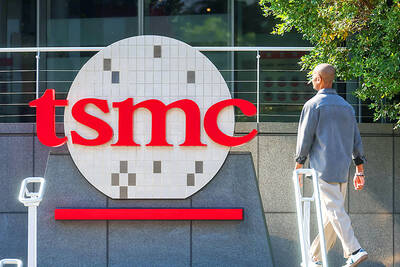
Shares of contract chipmaker Taiwan Semiconductor Manufacturing Co (TSMC, 台積電) came under pressure yesterday after a report that Apple Inc is looking to shift some orders from the Taiwanese company to Intel Corp. TSMC shares fell NT$55, or 2.4 percent, to close at NT$2,235 on the local main board, Taiwan Stock Exchange data showed. Despite the losses, TSMC is expected to continue to benefit from sound fundamentals, as it maintains a lead over its peers in high-end process development, analysts said. “The selling was a knee-jerk reaction to an Intel-Apple report over the weekend,” Mega International Investment Services Corp (兆豐國際投顧) analyst Alex Huang
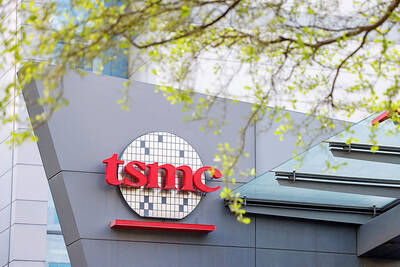
Taiwan Semiconductor Manufacturing Co (TSMC, 台積電) is expected to remain Apple Inc’s primary chip manufacturing partner despite reports that Apple could shift some orders to Intel Corp, industry experts said yesterday. The comments came after The Wall Street Journal reported on Friday that Apple and Intel had reached a preliminary agreement following more than a year of negotiations for Intel to manufacture some chips for Apple devices. Taiwan Institute of Economic Research (台灣經濟研究院) economist Arisa Liu (劉佩真) said TSMC’s advanced packaging technologies, including integrated fan-out and chip-on-wafer-on-substrate, remain critical to the performance of Apple’s A-series and M-series chips. She said Intel and Samsung
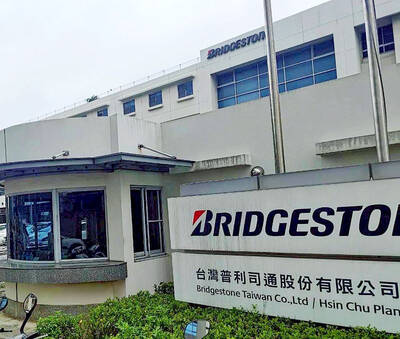
TRANSITION: With the closure, the company would reorganize its Taiwanese unit to a sales and service-focused model, Bridgestone said Bridgestone Corp yesterday announced it would cease manufacturing operations at its tire plant in Hsinchu County’s Hukou Township (湖口), affecting more than 500 workers. Bridgestone Taiwan Co (台灣普利司通) said in a statement that the decision was based on the Tokyo-based tire maker’s adjustments to its global operational strategy and long-term market development considerations. The Taiwanese unit would be reorganized as part of the closure, effective yesterday, and all related production activities would be concluded, the statement said. Under the plan, Bridgestone would continue to deepen its presence in the Taiwanese market, while transitioning to a sales and service-focused business model, it added. The Hsinchu

Taiwan Semiconductor Manufacturing Co (TSMC, 台積電) has approved a capital budget of US$31.28 billion for production expansion to meet long-term development needs during the artificial intelligence (AI) boom. The company’s board meeting yesterday approved the capital appropriation plan for purposes such as the installation of advanced technology capacity and fab construction, the world’s largest contract chipmaker said in a statement. At an earnings conference last month, TSMC forecast that its capital expenditure for this year would be at the higher end of the US$52 billion to US$56 billion range it forecast in January in response to robust demand for 5G, AI and


 RSS
RSS