


CTBC Financial Holding Co (中信金控) last year clinched 304 awards in domestic and global rankings for finance groups, with subsidiary CTBC Bank (中國信託銀行) netting five “Best Bank in Taiwan” awards from renowned international media outlets: The Banker, Global Finance, Asiamoney, FinanceAsia and Euromoney.
The financial conglomerate was also the only Taiwanese financial institution to receive the “2023 Global Finance Best Consumer Digital Bank” award, securing its leadership in the nation’s banking sector.
CTBC Bank’s performance over the past year continued a tradition of excellence in anti-fraud technology, innovation and finance sustainability.
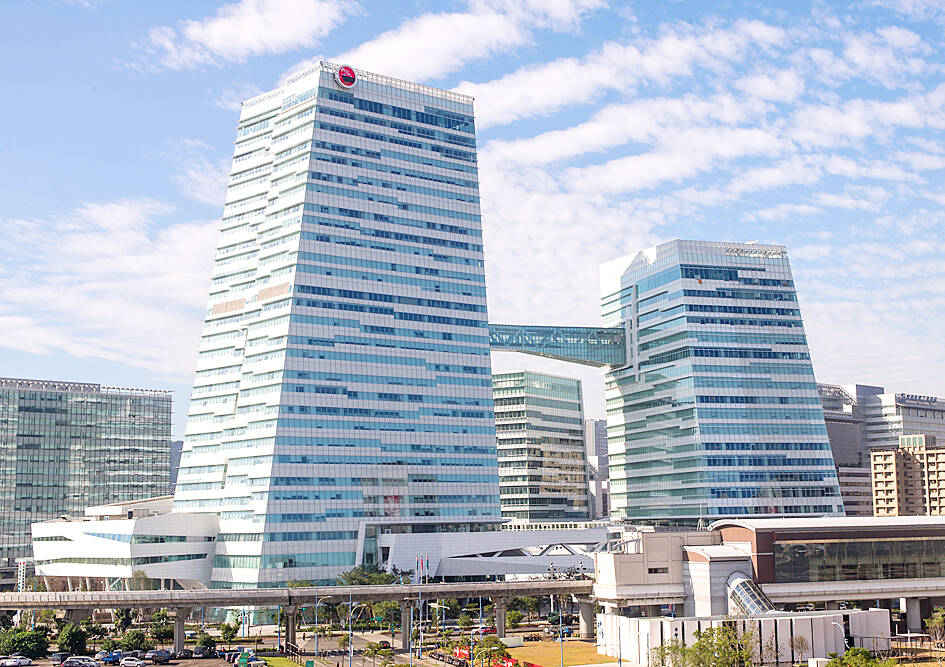
Photo courtesy of CTBC Bank Co
In collaboration with the National Police Agency, the bank installed the CTBC Smart Anti-Fraud Mule Alert System in 7,000 ATMs nationwide.
The system automatically detects and alerts the police to accounts that engage in suspicious transactions.
Additionally, the bank rolled out the “CTBC Aegis Robot,” a real-time fraud detection system that can perform 10,000 parameter and model computations within 30 milliseconds of a cardholder’s transaction, leading to the interception of NT$1 billion (US$32.23 million) of fraudulent transactions.
These accomplishments led to international accolades including the award for “Best Information Security and Fraud Management in Asia Pacific” from Global Finance.
As part of its digital innovation strategy, the bank last year released the CTBC Bank Payment Facilitating App across iOS and Android operating systems, enabling clients to use cellphones to receive credit card payments. The technology allows small merchants to overcome acquirer limits, while easing the franchising operations of larger businesses.
For this achievement, CTBC Bank won the “Gartner Eye on Innovation Award” for financial services for the Asia-Pacific.
In partnership with JGB Smart Property Co (金箍棒智慧物管), Taiwan’s only cross-country property technology innovation company, the bank additionally created a package of proptech financial services that won recognition from the International Data Corp (IDC) as the” Most Innovative Bank in Asia” last year.
Separately, CTBC Financial Holding’s subsidiary Taiwan Life Insurance Co (台灣人壽) garnered 56 digital innovation prizes including the IDC award for “Asia’s Most Resilient Insurer,” which was awarded for the creation of an artificial intelligence insurance coverage platform that streamlined the insurance claim process.

SECOND-RATE: Models distilled from US products do not perform the same as the original and undo measures that ensure the systems are neutral, the US’ cable said The US Department of State has ordered a global push to bring attention to what it said are widespread efforts by Chinese companies, including artificial intelligence (AI) start-up DeepSeek (深度求索), to steal intellectual property from US AI labs, according to a diplomatic cable. The cable, dated Friday and sent to diplomatic and consular posts around the world, instructs diplomatic staff to speak to their foreign counterparts about “concerns over adversaries’ extraction and distillation of US AI models.” Distillation is the process of training smaller AI models using output from larger, more expensive ones to lower the costs of training a powerful new

Singapore-based ride-hailing and delivery giant Grab Holdings’ planned acquisition of Foodpanda’s Taiwan operations has yet to enter the formal review stage, as regulators await supplementary documents, the Fair Trade Commission (FTC) said yesterday. Acting FTC Chairman Chen Chih-min (陳志民) told the legislature’s Economics Committee that although Grab submitted its application on March 27, the case has not been officially accepted because required materials remain incomplete. Once the filing is finalized, the FTC would launch a formal probe into the deal, focusing on issues such as cross-shareholding and potential restrictions on market competition, Chen told lawmakers. Grab last month announced that it would acquire
Shares of Taiwan Semiconductor Manufacturing Co (TSMC, 台積電) have repeatedly hit new highs, but an equity analyst said the stock’s valuation remains within a reasonable range and any pullback would likely be technical. The contract chipmaker’s historical price-to-earnings (P/E) ratio has ranged between 20 and 30, Cathay Futures Consultant Co (國泰證期) analyst Tsai Ming-han (蔡明翰) told Central News Agency. With market consensus projecting that TSMC would post earnings per share of about NT$100 (US$3.17) this year, supported by strong global demand for artificial intelligence (AI) applications, and the stock currently trading at a P/E ratio of below 25, Tsai said the valuation
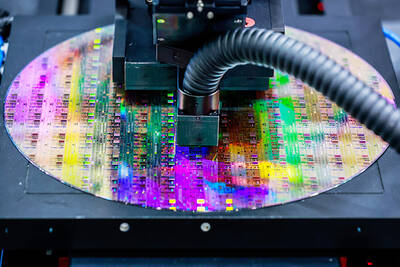
The artificial intelligence (AI) boom has triggered a seismic reshuffling of global equity markets, with Taiwan and South Korea muscling past European nations one by one. With its stock market now valued at nearly US$4.3 trillion, Taiwan surpassed the UK, Europe’s biggest market, earlier this month, data compiled by Bloomberg showed. South Korea is about US$140 billion away from doing the same. The tech-heavy Asian markets have shot past Germany and France in the past seven months. The shift is largely down to massive gains in shares of three companies that provide essential hardware for AI: Taiwan Semiconductor Manufacturing Co (TSMC, 台積電),


 RSS
RSS