


Hon Hai Precision Industry Co (鴻海精密), also known as Foxconn Technology Group (富士康科技集團), yesterday said that it has withdrawn from a US$19.5 billion semiconductor joint venture with Indian metals-to-oil conglomerate Vedanta Ltd, in a setback to Indian Prime Minister Narendra Modi’s chipmaking plans for India.
Hon Hai, the world’s largest contract electronics maker, and Vedanta signed a pact last year to set up semiconductor and display production plants in Modi’s home state of Gujarat.
“Foxconn has determined it will not move forward on the joint venture with Vedanta,” the electronics maker said in a statement, without elaborating on the reasons.
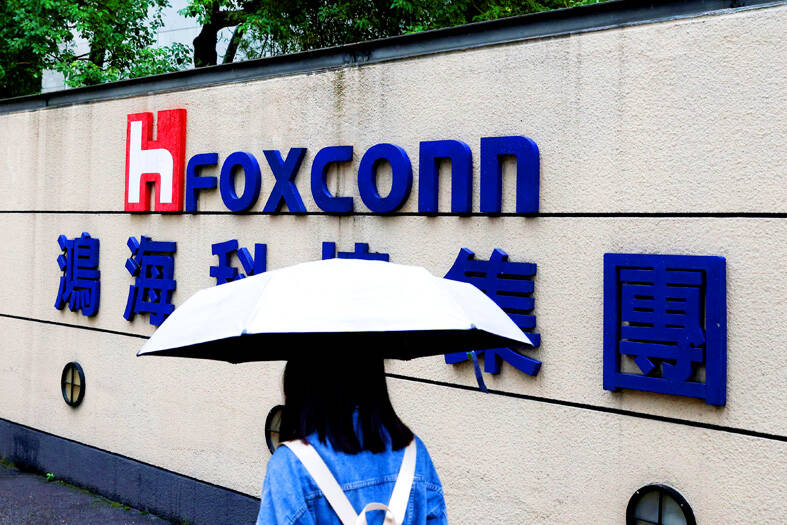
Photo: Carlos Garcia Rawlins, Reuters
It said it had worked with Vedanta for more than a year to bring “a great semiconductor idea to reality.”
However, they had mutually decided to end the joint venture and it will remove its name from what now is a fully-owned Vedanta entity, Foxconn said.
Vedanta and India's IT ministry did not reply to requests for comment.
Foxconn is best known for assembling iPhones and other Apple Inc products, but in recent years it has been expanding into chips to diversify its business.
Reuters has previously reported that Modi's plan was in trouble, with the Vedanta-Foxconn project proceeding slowly as their talks to involve European chipmaker STMicroelectronics NV as a partner were deadlocked.
Vedanta-Foxconn had got STMicro on board for licensing technology, but India's government had made clear it wanted the European company to have more "skin in the game," such as a stake in the partnership.
STMicro was not keen on that and the talks remained in limbo, a source had previously said.
India, which expects its semiconductor market to be worth US$63 billion by 2026, last year received three applications to set up plants under a US$10 billion incentive scheme.
These were from the Vedanta-Foxconn joint venture, Singapore-based IGSS Ventures Pte Ltd and global consortium ISMC, which counts Tower Semiconductor Ltd as a tech partner.
The US$3 billion ISMC project has also stalled due to Tower being acquired by Intel Corp, while another US$3 billion plan by IGSS was halted as the firm wanted to resubmit its application.

Shiina Ito has had fewer Chinese customers at her Tokyo jewelry shop since Beijing issued a travel warning in the wake of a diplomatic spat, but she said she was not concerned. A souring of Tokyo-Beijing relations this month, following remarks by Japanese Prime Minister Sanae Takaichi about Taiwan, has fueled concerns about the impact on the ritzy boutiques, noodle joints and hotels where holidaymakers spend their cash. However, businesses in Tokyo largely shrugged off any anxiety. “Since there are fewer Chinese customers, it’s become a bit easier for Japanese shoppers to visit, so our sales haven’t really dropped,” Ito

The number of Taiwanese working in the US rose to a record high of 137,000 last year, driven largely by Taiwan Semiconductor Manufacturing Co’s (TSMC, 台積電) rapid overseas expansion, according to government data released yesterday. A total of 666,000 Taiwanese nationals were employed abroad last year, an increase of 45,000 from 2023 and the highest level since the COVID-19 pandemic, data from the Directorate-General of Budget, Accounting and Statistics (DGBAS) showed. Overseas employment had steadily increased between 2009 and 2019, peaking at 739,000, before plunging to 319,000 in 2021 amid US-China trade tensions, global supply chain shifts, reshoring by Taiwanese companies and
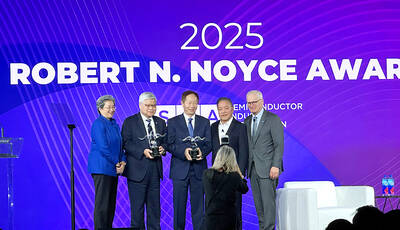
Taiwan Semiconductor Manufacturing Co (TSMC) Chairman C.C. Wei (魏哲家) and the company’s former chairman, Mark Liu (劉德音), both received the Robert N. Noyce Award -- the semiconductor industry’s highest honor -- in San Jose, California, on Thursday (local time). Speaking at the award event, Liu, who retired last year, expressed gratitude to his wife, his dissertation advisor at the University of California, Berkeley, his supervisors at AT&T Bell Laboratories -- where he worked on optical fiber communication systems before joining TSMC, TSMC partners, and industry colleagues. Liu said that working alongside TSMC
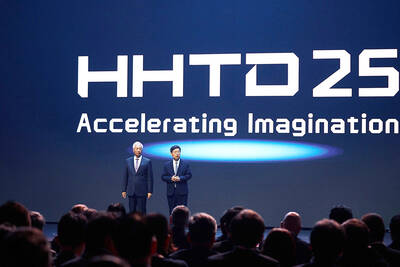
TECHNOLOGY DAY: The Taiwanese firm is also setting up a joint venture with Alphabet Inc on robots and plans to establish a firm in Japan to produce Model A EVs Manufacturing giant Hon Hai Precision Industry Co (鴻海精密) yesterday announced a collaboration with ChatGPT developer OpenAI to build next-generation artificial intelligence (AI) infrastructure and strengthen its local supply chain in the US to accelerate the deployment of advanced AI systems. Building such an infrastructure in the US is crucial for strengthening local supply chains and supporting the US in maintaining its leading position in the AI domain, Hon Hai said in a statement. Through the collaboration, OpenAI would share its insights into emerging hardware needs in the AI industry with Hon Hai to support the company’s design and development work, as well


 RSS
RSS