


Far Eastern Sogo Department Store (遠東SOGO) yesterday said that it would receive a boost in revenue later this year with the partial opening of its retail spaces next to the Taipei Dome (大巨蛋) complex.
Sogo Department Store chairwoman Sophia Huang (黃晴雯) shared the news at the company’s annual general meeting in Taipei, where shareholders approved a plan to distribute a cash dividend of NT$1.26 per share based on last year’s earnings per share of NT$1.69.
SIZE OF THREE STORES
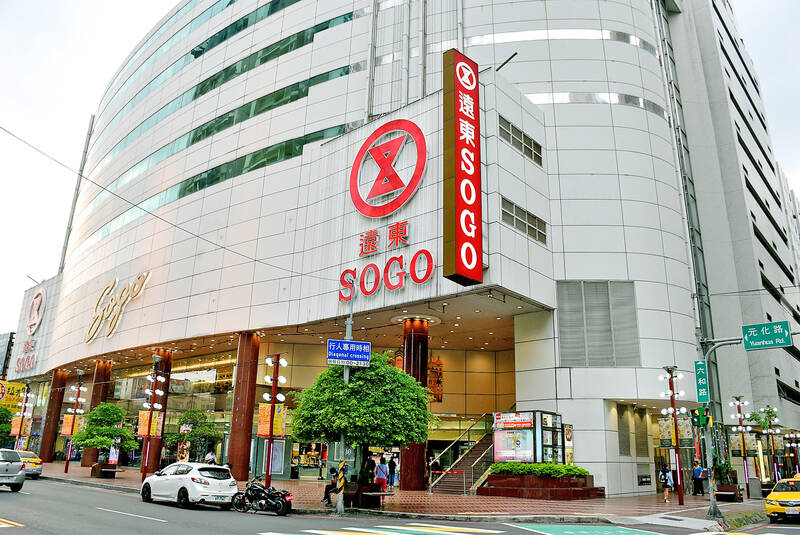
Photo: Lee Jung-ping, Taipei Times
Huang said the “D” section of the new project called Sogo City might start operations in September, along with the Taipei Dome’s soft opening.
The company announced in June last year that it would run the mixed-use complex, which has four sections and a total floor space of 38,000 ping (125,620m2) next to the Taipei Dome.
Sogo City is as large as the three existing Sogo department stores on Zhongxiao E Road, Fuxing S Road and Dunhua S Road combined, Huang said.
Business recruitment was proceeding smoothly and 14 restaurant brands have agreed to open branches in the D section, Huang said, adding that all four sections could begin operating in the first quarter of 2025 and generate an extra NT$10 billion (US$325.52 million) in annual revenue.
LINK BETWEEN DISTRICTS
Sogo City would link Taipei’s Xinyi District (信義) and Daan District (大安), and aims to inject a healthy dose of vitality into the latter, Huang said.
Toward that end, it might have longer operating hours, in conjunction with the 24-hour Eslite Book Store that is to open at Songshan Cultural and Creative Park (松山文創園區), she said, not committing to a 24-hour operation model.
The lease for Sogo Department Store’s relatively small branch on Dunhua S Road is to expire in 2025 and the company has no intention of moving it elsewhere, Huang said, adding that it would invite partners to join Sogo City — her top priority for the time being.
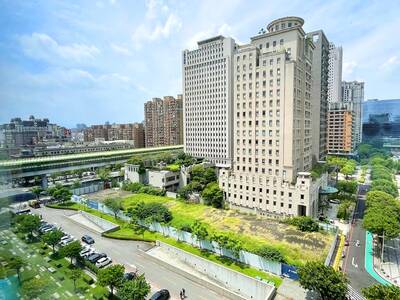
Taichung reported the steepest fall in completed home prices among the six special municipalities in the first quarter of this year, data compiled by Taiwan Realty Co (台灣房屋) showed yesterday. From January through last month, the average transaction price for completed homes in Taichung fell 8 percent from a year earlier to NT$299,000 (US$9,483) per ping (3.3m²), said Taiwan Realty, which compiled the data based on the government’s price registration platform. The decline could be attributed to many home buyers choosing relatively affordable used homes to live in themselves, instead of newly built homes in the city’s prime property market, Taiwan Realty
The government yesterday approved applications by Alphabet Inc’s Google to invest NT$27.08 billion (US$859.98 million) in Taiwan, the Ministry of Economic Affairs said in a statement. The Department of Investment Review approved two investments proposed by Google, with much of the funds to be used for data processing and electronic information supply services, as well as inventory procurement businesses in the semiconductor field, the ministry said. It marks the second consecutive year that Google has applied to increase its investment in Taiwan. Google plans to infuse NT$25.34 billion into Charter Investments Ltd (特許投資顧問) through its Singapore-based subsidiary Fructan Holdings Singapore Pte Ltd, and

Micron Technology Inc is a driving force pushing the US Congress to pass legislation that would put new export restrictions on equipment its Chinese competitors use to make their chips, according to people familiar with the matter. A US House of Representatives panel yesterday was to vote on the “MATCH Act,” a bill designed to close gaps in restrictions on chipmaking equipment. It would also pressure foreign companies that sell equipment to Chinese chipmaking facilities to align with export curbs on US companies like Lam Research Corp and Applied Materials Inc. The bill targets facilities operated by China’s ChangXin Memory Technologies Inc

Singapore-based ride-hailing and delivery giant Grab Holdings’ planned acquisition of Foodpanda’s Taiwan operations has yet to enter the formal review stage, as regulators await supplementary documents, the Fair Trade Commission (FTC) said yesterday. Acting FTC Chairman Chen Chih-min (陳志民) told the legislature’s Economics Committee that although Grab submitted its application on March 27, the case has not been officially accepted because required materials remain incomplete. Once the filing is finalized, the FTC would launch a formal probe into the deal, focusing on issues such as cross-shareholding and potential restrictions on market competition, Chen told lawmakers. Grab last month announced that it would acquire


 RSS
RSS