


Elon Musk said on Wednesday he expects a wireless brain chip developed by his company Neuralink to begin human clinical trials in six months, after the company missed earlier timelines he set.
The company is developing brain chip interfaces that it said could enable disabled patients to move and communicate again, with Musk adding on Wednesday that it might also target restoring vision.
Based in San Francisco, Neuralink has in the past few years been conducting tests on animals as it seeks approval from the US Food and Drug Administration (FDA) to begin clinical trials in people.
“We want to be extremely careful and certain that it will work well before putting a device into a human,” Musk said during a much-awaited public update on the device.
Speaking to a crowd of select invitees in a presentation at Neuralink headquarters that lasted nearly three hours, Musk emphasized the speed at which the company is developing its device.
“The progress at first, particularly as it applies to humans, will seem perhaps agonizingly slow, but we are doing all of the things to bring it to scale in parallel,” he said. “So, in theory, progress should be exponential.”
The first two human applications targeted by the Neuralink device will be in restoring vision and enabling movement of disabled muscles, Musk said.
“Even if someone has never had vision, ever, like they were born blind, we believe we can still restore vision,” he said.
The event was originally planned for Oct. 31, but Musk postponed it just days before without giving a reason.
Neuralink’s last public presentation, more than a year ago, involved a monkey with a brain chip that played a computer game by thinking alone.
Musk — who is also CEO of electric vehicle manufacturer Tesla Inc, rocket firm Space Exploration Technologies Corp and social media platform Twitter Inc — is known for lofty goals such as colonizing Mars and saving humanity. His ambitions for Neuralink, which he launched in 2016, are of the same grand scale.
He wants to develop a chip that would allow the brain to control complex electronic devices and eventually allow people with paralysis to regain motor function and treat brain diseases such as Parkinson’s, dementia and Alzheimer’s. He also talks of melding the brain with artificial intelligence.
Neuralink has repeatedly missed internal deadlines to gain FDA approval to start human trials, current and former employees have said.
Musk approached competitor Synchron earlier this year about a potential investment after he expressed frustration to Neuralink employees about their slow progress, Reuters reported in August.
Synchron crossed a major milestone in July by implanting its device in a person in the US for the first time.
It received US regulatory clearance for human trials last year and has completed studies in four people in Australia.


The domestic unit of the Chinese-owned, Dutch-headquartered chipmaker Nexperia BV will soon be able to produce semiconductors locally within China, according to two company sources. Nexperia is at the center of a global tug-of-war over critical semiconductor technology, with a Dutch court in February ordering a probe into alleged mismanagement at the company. The geopolitical tussle has disrupted supply chains, with some carmakers reportedly forced to cut production due to chip shortages. Local production would allow Nexperia’s domestic arm, Nexperia Semiconductors (China) Ltd (安世半導體中國), to bypass restrictions in place since October on the supply of silicon wafers — etched with tiny components to

Taiwan’s foreign exchange reserves fell below the US$600 billion mark at the end of last month, with the central bank reporting a total of US$596.89 billion — a decline of US$8.6 billion from February — ending a three-month streak of increases. The central bank attributed the drop to a combination of factors such as outflows by foreign institutional investors, currency fluctuations and its own market interventions. “The large-scale outflows disrupted the balance of supply and demand in the foreign exchange market, prompting the central bank to intervene repeatedly by selling US dollars to stabilize the local currency,” Department of Foreign

Taiwan is open to joining a global liquefied natural gas (LNG) program if one is created, but on the condition that countries provide delivery even in a scenario where there is a conflict with China, an energy department official said yesterday. While Taiwan’s priority is to have enough LNG at home, the nation is open to exploring potential strategic reserves in other countries such as Japan or South Korea, Energy Administration Deputy Director-General Chen Chung-hsien (陳崇憲) said. While the LNG market does not have a global reserve for emergencies like that of oil, the concept has been raised a few times —
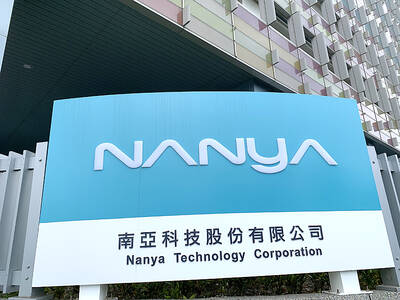
AI-FUELED DEMAND: The company has been benefiting from the skyrocketing prices for DRAM chips amid the AI frenzy, especially its core product — DDR4 DRAM chips DRAM chipmaker Nanya Technology Corp (南亞科技) yesterday reported that its revenue for the first quarter surged 582.91 percent to NT$49.09 billion (US$1.54 billion) from NT$7.19 billion a year earlier, as the supply crunch caused chip price spikes. Last quarter’s figure is the highest on record. On a quarterly basis, revenue jumped 63.14 percent from NT$30.09 billion, the company said. In January, Nanya Technology expected global DRAM supply scarcity to continue through the first half of 2028, thanks to strong demand for artificial intelligence (AI) applications. Market researcher TrendForce Corp (集邦科技) forecast prices of standard DRAM chips would rise between 58 percent and 63


 RSS
RSS