


The US Department of the Treasury has included a Taiwanese firm in its expanded list of companies and individuals facing possible sanctions for supplying or helping to finance the sale of military technology to Russia for its invasion of Ukraine.
In a statement released by the department on Monday, its Office of Foreign Assets Control (OFAC) said the additions to the list targeted a transnational network procuring technology for Russia’s military-industrial complex.
They also focused on “a global network of financial facilitators, enablers, and others associated with two key Kremlin-linked elites whose fortunes are intertwined with the West,” it said.
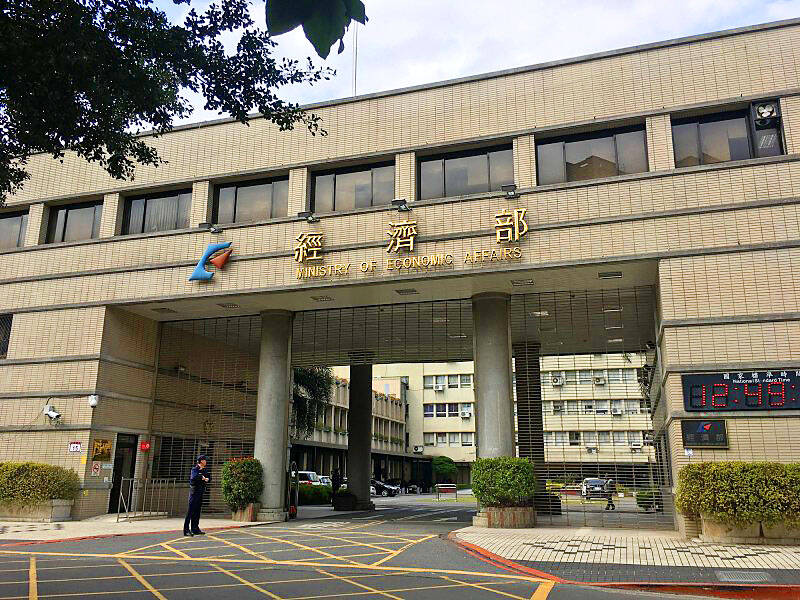
Photo: Taipei Times file photo
The new sanctions “designated 14 individuals and 28 entities,” including Taiwan’s Sharp Edge Engineering Inc (銳元科技), “and identified eight aircraft as blocked property,” the statement said.
Other individuals and entities targeted by the sanctions came from France and Switzerland, it said.
Sharp Edge, based in Taipei’s Neihu District (內湖), began operations on Dec. 13, 2016, and is an electronic components wholesaler, OFAC data showed.
The US agency said the Taiwanese firm was a front company used to purchase microelectronic components from Asian suppliers, and that employees of PKK Milandr (Milandr), a Russian microelectronics company, used a Sharp Edge account to procure equipment.
Sharp Edge was “designated ... for being owned or controlled by, or for having acted or purported to act for or on behalf of, directly or indirectly, Milandr,” the statement said.
The Ministry of Economic Affairs said in a statement yesterday that Sharp Edge is a one-person company established by a Russian national in Taiwan.
The Bureau of Foreign Trade learned about the company’s sale of semiconductors with military applications to Russia in the middle of this year, and has cooperated with the Customs Administration to strengthen controls on the firm, the ministry said.
The bureau in March imposed export curbs on Russia under the Wassenaar Arrangement after Russia invaded Ukraine on Feb. 24, and further tightened its controls over exports to Russia in April, adding 57 sensitive goods and high-tech items, such as PCs and telecom equipment, in line with Western sanctions, the ministry said.
How much the new designation affects the dealings of Sharp Edge remains to be seen, because the sanctions only freeze the assets of those on the list held under US jurisdiction, and prohibit US individuals and entities from doing business with them.
Since Russia invaded Ukraine, the US has imposed a series of sanctions against Moscow to prevent it from acquiring the military equipment and components needed to support its military, blocking US-related companies from selling equipment and components to Moscow.
“The United States will continue to expose and disrupt the Kremlin’s military supply chains and deny Russia the equipment and technology it needs to wage its illegal war against Ukraine,” US Secretary of the Treasury Janet Yellen said in the statement.


The domestic unit of the Chinese-owned, Dutch-headquartered chipmaker Nexperia BV will soon be able to produce semiconductors locally within China, according to two company sources. Nexperia is at the center of a global tug-of-war over critical semiconductor technology, with a Dutch court in February ordering a probe into alleged mismanagement at the company. The geopolitical tussle has disrupted supply chains, with some carmakers reportedly forced to cut production due to chip shortages. Local production would allow Nexperia’s domestic arm, Nexperia Semiconductors (China) Ltd (安世半導體中國), to bypass restrictions in place since October on the supply of silicon wafers — etched with tiny components to
Taiwan’s foreign exchange reserves fell below the US$600 billion mark at the end of last month, with the central bank reporting a total of US$596.89 billion — a decline of US$8.6 billion from February — ending a three-month streak of increases. The central bank attributed the drop to a combination of factors such as outflows by foreign institutional investors, currency fluctuations and its own market interventions. “The large-scale outflows disrupted the balance of supply and demand in the foreign exchange market, prompting the central bank to intervene repeatedly by selling US dollars to stabilize the local currency,” Department of Foreign

Taiwan is open to joining a global liquefied natural gas (LNG) program if one is created, but on the condition that countries provide delivery even in a scenario where there is a conflict with China, an energy department official said yesterday. While Taiwan’s priority is to have enough LNG at home, the nation is open to exploring potential strategic reserves in other countries such as Japan or South Korea, Energy Administration Deputy Director-General Chen Chung-hsien (陳崇憲) said. While the LNG market does not have a global reserve for emergencies like that of oil, the concept has been raised a few times —
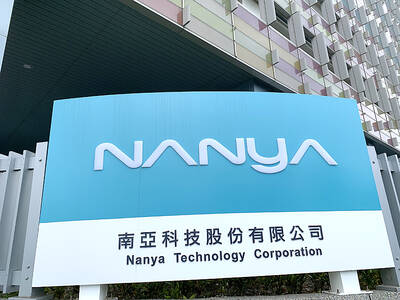
AI-FUELED DEMAND: The company has been benefiting from the skyrocketing prices for DRAM chips amid the AI frenzy, especially its core product — DDR4 DRAM chips DRAM chipmaker Nanya Technology Corp (南亞科技) yesterday reported that its revenue for the first quarter surged 582.91 percent to NT$49.09 billion (US$1.54 billion) from NT$7.19 billion a year earlier, as the supply crunch caused chip price spikes. Last quarter’s figure is the highest on record. On a quarterly basis, revenue jumped 63.14 percent from NT$30.09 billion, the company said. In January, Nanya Technology expected global DRAM supply scarcity to continue through the first half of 2028, thanks to strong demand for artificial intelligence (AI) applications. Market researcher TrendForce Corp (集邦科技) forecast prices of standard DRAM chips would rise between 58 percent and 63


 RSS
RSS