


Lenovo Group Ltd’s (聯想) earnings climbed 6 percent after China’s top PC maker relied on cost reductions and new businesses to weather an unprecedented slump in global computing demand.
Net income rose to US$541 million in the previous quarter, the company said yesterday.
The average analyst estimate was US$473 million. Sales declined for the first time in more than two years to US$17.1 billion, but still beat the US$16.8 billion analysts predicted.
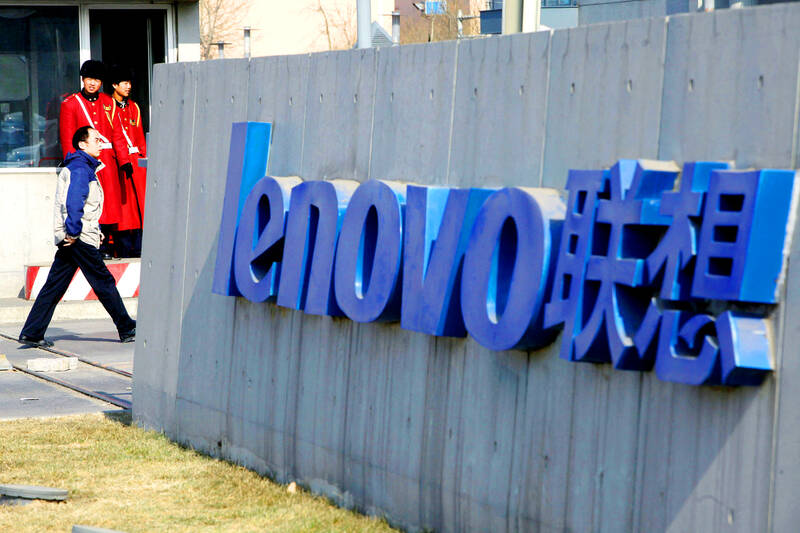
Photo: Reuters
Lenovo and rivals Dell Technologies Inc and HP Inc are struggling with a global PC market that saw its steepest quarterly drop on record — the fourth straight decline in shipments. In Lenovo’s home market, Beijing appears to be prioritizing a “zero COVID” strategy over the economy, triggering lockdowns in major cities, smothering retail demand and disrupting manufacturing.
Lenovo could not sell some of its most advanced computers to clients in China because of the latest US chip curbs, chairman Yang Yuanqing (楊元慶) said.
The effect on Lenovo’s sales is limited because such products are only a small part of the company’s business in China, Yang said.
“It will not impact our general-purpose server, storage or other infrastructure sales,” he said, adding that cost management is to be a priority for Lenovo in the coming quarters.
Lenovo last quarter lowered spending on research and development as well as advertising and promotions to support its profit margins. It also spent less on employee benefits and rent.
However, Lenovo is not contemplating large-scale layoffs, Yang said.
“We must ensure the competitiveness of our business. We must ensure the expense to revenue is competitive,” he said.
The company has been counting on growth from businesses beyond its core division — such as in servers, cloud computing and data storage — to help offset worsening PC sales.
However, its main division still yields about 80 percent of revenue.
“Demand cracks are spreading to enterprise hardware end-markets, including PCs and data center infrastructure,” Morgan Stanley analysts wrote this month.

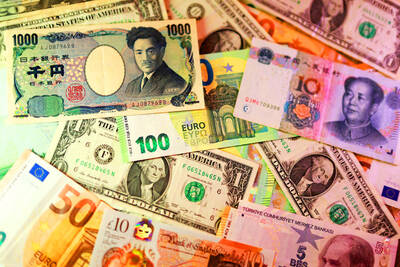
Taiwan’s foreign exchange reserves fell below the US$600 billion mark at the end of last month, with the central bank reporting a total of US$596.89 billion — a decline of US$8.6 billion from February — ending a three-month streak of increases. The central bank attributed the drop to a combination of factors such as outflows by foreign institutional investors, currency fluctuations and its own market interventions. “The large-scale outflows disrupted the balance of supply and demand in the foreign exchange market, prompting the central bank to intervene repeatedly by selling US dollars to stabilize the local currency,” Department of Foreign

Intel Corp is joining Elon Musk’s long-shot effort to develop semiconductors for Tesla Inc, Space Exploration Technologies Corp and xAI, marking a surprising twist in the chipmaker’s comeback bid. Intel would help the Terafab project “refactor” the technology in a chip factory, the company said on Tuesday in a post on X, Musk’s social media platform. That is a stage in the development process that typically helps make chips more powerful or reliable. The chipmaker’s shares jumped 4.2 percent to US$52.91 in New York trading on Tuesday. The Terafab project is a grand plan by Musk to eventually manufacture his own chips for

Some robotaxi passengers were left stranded in the middle of fast-moving traffic in a major Chinese city after their driverless vehicles stopped running, according to police and media reports on Wednesday. A preliminary investigation indicates more than 100 robotaxis came to a halt because of a “system malfunction,” police in the city of Wuhan said in a statement, without elaborating. No injuries were reported. One passenger told Chinese media that their robotaxi stopped after turning a corner. An instruction on a screen read: “Driving system malfunction. Staff are expected to arrive in 5 minutes.” After no one showed up, the passenger pushed
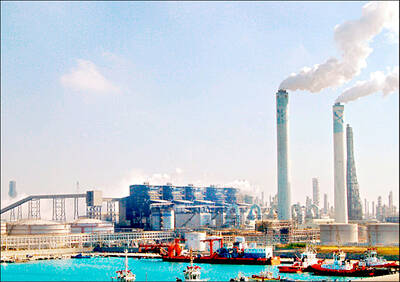
Taiwan Power Co (Taipower, 台電) yesterday said it plans to resume operations at two coal-fired power generators for three months to boost security of electricity supply as liquefied natural gas (LNG) supply risks are running high due to the Middle East conflict. The two coal-fired power generators are at Mailiao Power Plant in Yunlin County’s Mailiao Township (麥寮). The plant, operated by Formosa Plastics Group (台塑集團), supplied electricity to Taipower’s power grid until the end of last year. Taipower’s decision came about one month after Minister of Economic Affairs Kung Ming-hsin (龔明鑫) on March 10 said that the nation had no imminent


 RSS
RSS