


The number of small and medium-sized enterprises (SMEs) in Taiwan hit a new high last year, up 3.03 percent to 1.596 million from a year earlier, the Ministry of Economic Affairs said in a white paper on Friday.
SMEs are defined as companies with paid-in capital of no more than NT$100 million (US$3.1 million) or fewer than 200 regular employees. The companies accounted for 98.92 percent of Taiwan’s total 1.613 million enterprises last year, the ministry said.
About 80 percent of SMEs were in the service sector, with 46.18 percent in the wholesale or retail businesses, the white paper said.

Photo: Taipei Times file photo
The ministry said that 117,112 SMEs had been in operation for less than a year, making up 7.34 percent of the total, while 30.01 percent had been in operation for less than five years and 48.52 percent for less than 10 years.
The combined workforce of SMEs reached about 9.2 million employees last year, down 1.19 percent from a year earlier, representing 80.37 percent of Taiwan’s total workforce. Manufacturing, wholesale and retail, and construction were the top three sectors among SMEs, it said.
The white paper said that the number of employees aged 45 or older at SMEs has increased in the past few years, while high-school, college and university graduates were among the top three employee categories.
The number of SMEs owned by women was 586,304, or 37.16 percent of the total, it said.
Revenue generated by SMEs totaled NT$26.62 trillion, up 13.01 percent from a year earlier, representing 52.51 percent of revenue posted by all enterprises, it said, adding that almost 90 percent of SMEs’ sales were generated in the local market, totaling NT$2.32 trillion, up 11.49 percent from last year.
The ministry said the owners of SMEs were faced with a lack of digital talent and encouraged the owners to participate in training provided by the government to take on growth challenges.
Many SMEs are hoping to assign their resources to advanced business development, such as data analysis and cloud technology-based applications, to boost their competitive edge, it said.
The government is determined to provide assistance, including financing, export promotions, courses for start-ups, technology research and development, it said.


Taiwan’s foreign exchange reserves fell below the US$600 billion mark at the end of last month, with the central bank reporting a total of US$596.89 billion — a decline of US$8.6 billion from February — ending a three-month streak of increases. The central bank attributed the drop to a combination of factors such as outflows by foreign institutional investors, currency fluctuations and its own market interventions. “The large-scale outflows disrupted the balance of supply and demand in the foreign exchange market, prompting the central bank to intervene repeatedly by selling US dollars to stabilize the local currency,” Department of Foreign

Intel Corp is joining Elon Musk’s long-shot effort to develop semiconductors for Tesla Inc, Space Exploration Technologies Corp and xAI, marking a surprising twist in the chipmaker’s comeback bid. Intel would help the Terafab project “refactor” the technology in a chip factory, the company said on Tuesday in a post on X, Musk’s social media platform. That is a stage in the development process that typically helps make chips more powerful or reliable. The chipmaker’s shares jumped 4.2 percent to US$52.91 in New York trading on Tuesday. The Terafab project is a grand plan by Musk to eventually manufacture his own chips for

Some robotaxi passengers were left stranded in the middle of fast-moving traffic in a major Chinese city after their driverless vehicles stopped running, according to police and media reports on Wednesday. A preliminary investigation indicates more than 100 robotaxis came to a halt because of a “system malfunction,” police in the city of Wuhan said in a statement, without elaborating. No injuries were reported. One passenger told Chinese media that their robotaxi stopped after turning a corner. An instruction on a screen read: “Driving system malfunction. Staff are expected to arrive in 5 minutes.” After no one showed up, the passenger pushed
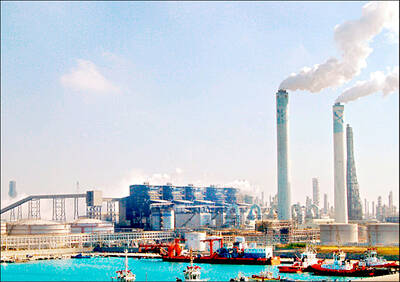
Taiwan Power Co (Taipower, 台電) yesterday said it plans to resume operations at two coal-fired power generators for three months to boost security of electricity supply as liquefied natural gas (LNG) supply risks are running high due to the Middle East conflict. The two coal-fired power generators are at Mailiao Power Plant in Yunlin County’s Mailiao Township (麥寮). The plant, operated by Formosa Plastics Group (台塑集團), supplied electricity to Taipower’s power grid until the end of last year. Taipower’s decision came about one month after Minister of Economic Affairs Kung Ming-hsin (龔明鑫) on March 10 said that the nation had no imminent


 RSS
RSS