


Sugar makers in India are signing deals with traders and exporters on optimism that the government would soon announce overseas sales quotas for the season that starts this month.
Mills in the South Asian country, which vies with Brazil as the world’s top sugar producer, have so far contracted to export about 1.2 million tonnes and aim to ship as much as 8 million tonnes in the 2022-2023 year, Meir Commodities India Pvt managing director Rahil Shaikh said.
“The golden opportunity for us is to export between November and May amid a lower crop in Brazil,” said Shaikh, whose company traded about 500,000 tonnes of sugar in the domestic and overseas markets in the 2021-2022 season. “There is a shortage of white sugar and the market is tight globally.”
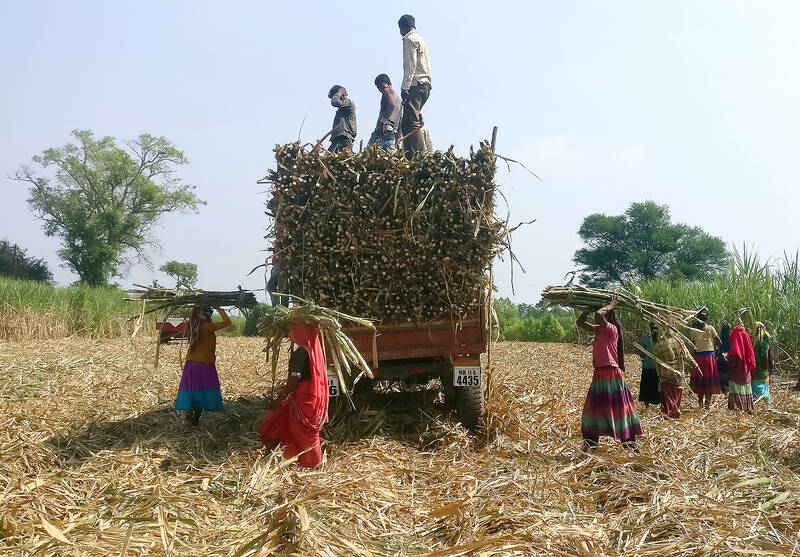
Photo: Reuters
Indian producers are seeking to take advantage of the rally in benchmark futures amid concerns supplies would tighten, mainly in top exporter Brazil. Rain in the center-south region of the South American nation, the main growing area, has slowed the pace of cane crushing potentially, boosting prices.
Exporters are offering Indian mills about 35 rupees (US$0.42) per kilogram for low quality white sugar compared with the domestic price of 33 rupees, while raw sugar is attracting a price of 33.5 rupees from international buyers, Shaikh said.
The refined variety is fetching 38.5 rupees from overseas buyers compared with a local market rate of 36 rupees, he said.
Among destinations for raw sugar are Indonesia and Bangladesh, while low quality white sugar can be sold to the Horn of Africa region, Sri Lanka and Afghanistan for direct consumption, with good demand now, Shaikh said.
The refined variety can be sold to Sudan, Somalia and the Middle East, he said.
Domestic sugar production is forecast at 35.5 million tonnes this year, while consumption is seen at 27.5 million, the Indian Sugar Mills Association said.
Meanwhile, the cost of candy and chewing gum in the US rose 13.1 percent last month from last year, the most ever, US inflation data showed, as US refined sugar prices have soared this year after drought hurt beet-sugar crops in northern states.
The sharp rise comes just as the biggest holiday in the US for candy, Halloween, is about to start.
Chocolate has also been hit by inflation in the past few months, partly because of higher costs for chocolate makers. Supply chain chaos caused by the COVID-19 pandemic and then the war in Ukraine have been spilling over into cocoa markets.
In other commodities, gold for December delivery fell US$28.10 to US$1,648.90 per ounce, down 2.72 percent weekly, while silver for December delivery fell US$0.85 to US$18.07 per ounce, down 10.28 percent for the week.
Additional reporting by AP

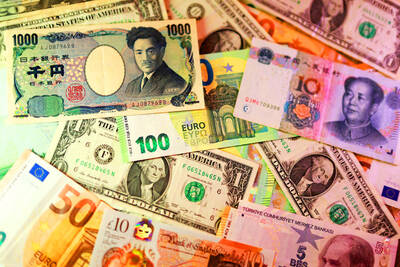
Taiwan’s foreign exchange reserves fell below the US$600 billion mark at the end of last month, with the central bank reporting a total of US$596.89 billion — a decline of US$8.6 billion from February — ending a three-month streak of increases. The central bank attributed the drop to a combination of factors such as outflows by foreign institutional investors, currency fluctuations and its own market interventions. “The large-scale outflows disrupted the balance of supply and demand in the foreign exchange market, prompting the central bank to intervene repeatedly by selling US dollars to stabilize the local currency,” Department of Foreign

Intel Corp is joining Elon Musk’s long-shot effort to develop semiconductors for Tesla Inc, Space Exploration Technologies Corp and xAI, marking a surprising twist in the chipmaker’s comeback bid. Intel would help the Terafab project “refactor” the technology in a chip factory, the company said on Tuesday in a post on X, Musk’s social media platform. That is a stage in the development process that typically helps make chips more powerful or reliable. The chipmaker’s shares jumped 4.2 percent to US$52.91 in New York trading on Tuesday. The Terafab project is a grand plan by Musk to eventually manufacture his own chips for
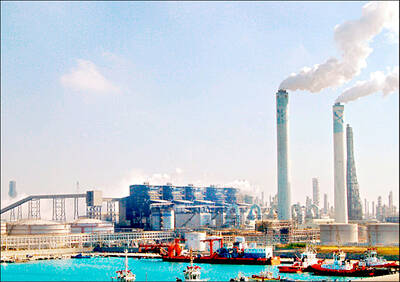
Taiwan Power Co (Taipower, 台電) yesterday said it plans to resume operations at two coal-fired power generators for three months to boost security of electricity supply as liquefied natural gas (LNG) supply risks are running high due to the Middle East conflict. The two coal-fired power generators are at Mailiao Power Plant in Yunlin County’s Mailiao Township (麥寮). The plant, operated by Formosa Plastics Group (台塑集團), supplied electricity to Taipower’s power grid until the end of last year. Taipower’s decision came about one month after Minister of Economic Affairs Kung Ming-hsin (龔明鑫) on March 10 said that the nation had no imminent

Some robotaxi passengers were left stranded in the middle of fast-moving traffic in a major Chinese city after their driverless vehicles stopped running, according to police and media reports on Wednesday. A preliminary investigation indicates more than 100 robotaxis came to a halt because of a “system malfunction,” police in the city of Wuhan said in a statement, without elaborating. No injuries were reported. One passenger told Chinese media that their robotaxi stopped after turning a corner. An instruction on a screen read: “Driving system malfunction. Staff are expected to arrive in 5 minutes.” After no one showed up, the passenger pushed


 RSS
RSS