


Taipei Fubon Commercial Bank (台北富邦銀行) and six other local banks have offered Chailease Holding Co’s (中租控股) Vietnamese subsidiary a syndicated loan of US$90 million, the first social loan in Taiwan and Vietnam whose proceeds would be used to support small business in the Southeast Asian country.
Chailease International Leasing Co Ltd (仲利國際租賃), a leading leasing service provider in Vietnam, would use the loan to provide micro-financing to Vietnam’s small and medium-sized enterprises (SME) operating in urban and suburban areas, Taipei Fubon said yesterday
The Vietnamese government last year implemented strict quarantine measures to curb the spread of COVID-19, which weighed on the nation’s economy and reduced GDP growth to 2.58 percent, the lowest in three decades, the bank said.
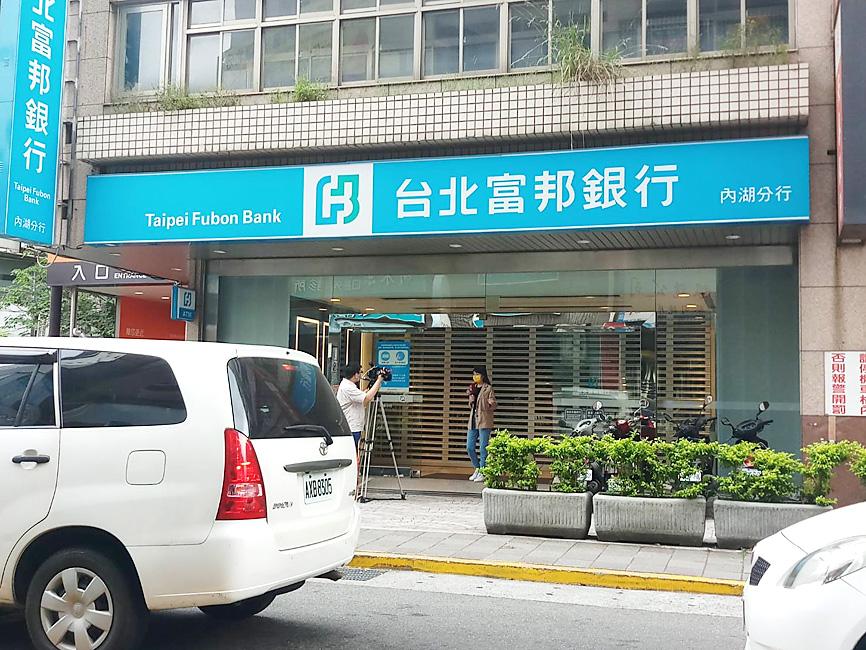
Photo: Yang Hsin-hui, Taipei Times
The Vietnamese government offered SMEs a total of US$10.7 billion in financial relief, but many businesses could not secure bank loans because they do not have properties or other assets to serve as collateral, Taipei Fubon said.
The Vietnamese government said the number of unemployed people there reached 1.4 million last year, it added.
The syndicated loan is the first that meets the social loan principles of the Asia Pacific Loan Market Association and has been verified by a third-party agency, Taipei Fubon said.
Chailease International would regularly review the number of SMEs that are to benefit from the syndicated loan and how many employees they have hired, Taipei Fubon said, adding that the leasing firm has a 40 percent market share in Vietnam.
State-run Mega International Commercial Bank (兆豐銀行), Hua Nan Commercial Bank (華南銀行) and Land Bank of Taiwan (土地銀行) are colead arrangers of the loan, while Taiwan Cooperative Bank (合庫銀行), the Export-Import Bank of ROC (輸出入銀行) and Bank of Panhsin (板信銀行) are participants, Taipei Fubon said.
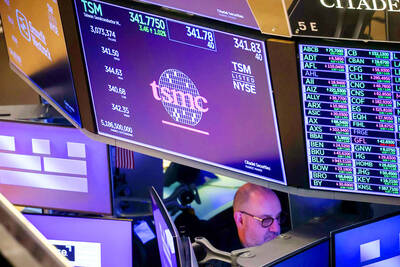
STRONG INTEREST: Analysts have pointed to optimism in TSMC’s growth prospects in the artificial intelligence era as the cause of the rising number of shareholders The number of people holding shares of chipmaker Taiwan Semiconductor Manufacturing Co (TSMC, 台積電) hit a new high last week despite a decline in its stock price, the Taiwan Depository and Clearing Corp (TDCC, 台灣集保) said. The number of TSMC shareholders rose to 2.46 million as of Friday, up 75,536 from a week earlier, TDCC data showed. The stock price fell 1.34 percent during the same week to close at NT$1,840 (US$57.55). The decline in TSMC’s share price resulted from volatility in global tech stocks, driven by rising international crude oil prices as the war against Iran continues. Dealers said
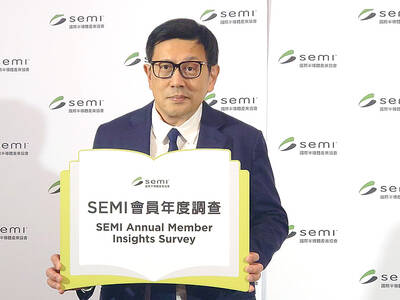
PRICE HIKES: The war in the Middle East would not significantly disrupt supply in the short term, but semiconductor companies are facing price surges for materials Taiwan’s semiconductor companies are not facing imminent supply disruptions of essential chemicals or raw materials due to the war in the Middle East, but surges in material costs loom large, industry association SEMI Taiwan said yesterday. The association’s comments came amid growing concerns that supplies of helium and other key raw materials used in semiconductor production could become a choke point after Qatar shut down its liquefied natural gas (LNG) production and helium output earlier this month due to the conflict. Qatar is the second-largest LNG supplier in the world and accounts for about 33 percent of global helium output. Helium is
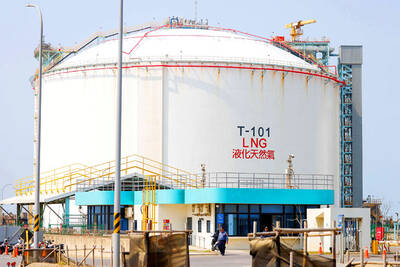
Taiwan’s natural gas supply remains stable through the end of May, despite rising concerns about potential disruptions to Qatari liquefied natural gas (LNG) supplies due to escalating conflicts in the Middle East, the Ministry of Economic Affairs said yesterday. The ministry in a statement said that Taiwan has completed preparations for natural gas supply and shipping schedules through the end of May. It has also made plans to increase natural gas imports from regions outside the Middle East in June to ensure a stable supply, it added. Taiwan sources natural gas from 14 countries and is not solely dependent on the Middle East,

China is clamping down on fertilizer exports to protect its domestic market, industry sources said, putting an additional strain on global markets that were already grappling with shortages caused by the US-Israeli war on Iran. China is among the largest fertilizer exporters — shipping more than US$13 billion of it last year — and it has a history of controlling exports to keep prices low for farmers. Shipments through the war-blocked Strait of Hormuz account for about one-third of the sea-borne supply. This month, Beijing banned exports of nitrogen-potassium fertilizer blends and certain phosphate varieties, sources said. The ban, which has not


 RSS
RSS