


Meta Platforms Inc’s second-most powerful executive, Sheryl Sandberg, on Wednesday made the shock announcement that she would leave after a 14-year tenure that included helping steer scandal-prone Facebook to advertising dominance.
Sandberg, 52, has been one of the most influential women in Silicon Valley, and her departure comes as the social media juggernaut faces an uncertain future and fierce competition.
The chief operating officer’s exit from the Facebook parent would be effective in the fall, she wrote on the platform, adding that she would remain on its board.
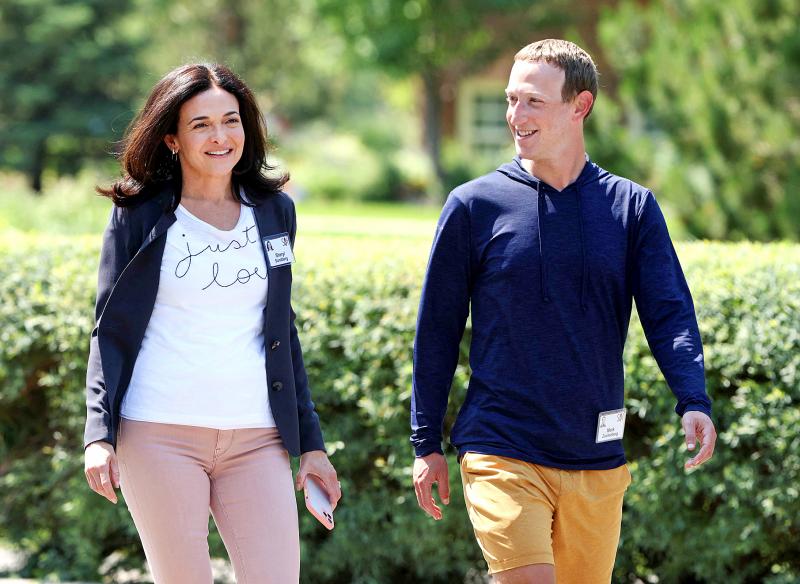
Photo: AFP
Among the Silicon Valley tech elite, Sandberg offered a steadier hand as a result of her background working for former US secretary of the treasury Larry Summers and the philanthropic arm of Google.
A Harvard University-educated executive, Sandberg joined Facebook in 2008 when it was still just a start-up, playing a formative role in its development into a multi-billion- dollar advertising empire.
“Fourteen years later, it is time for me to write the next chapter of my life,” Sandberg said. “I am not entirely sure what the future will bring — I have learned no one ever is.”
Her job made her not just a recognizable face in tech, but also a household name, particularly thanks to her 2013 book Lean In: Women, Work, and the Will to Lead.
The best-seller encouraged women to “lean in” to their careers to reach their full potential and overcome workforce obstacles.
It has drawn applause from admirers for articulating a new modern feminist vision and sharp criticism from detractors who say that her lofty position has made her out of touch with the grueling personal cost of combining career and family.
The social network last year rebranded itself in a pivot toward the belief that the Internet is headed toward becoming an immersive virtual world, referred to as the metaverse.
The Silicon Valley colossus has seen its image tainted by accusations that it has put profit over user privacy and even the good of society.
“Sandberg leaves Meta and the social media environment that Facebook helped create in a far worse place than she found it,” Media Matters for America president Angelo Carusone said. “Hers is a legacy of enabling trolling, harassment and abuse.”
Meanwhile, the likes of TikTok, LinkedIn Corp, Pinterest Inc, Twitter Inc and even Apple Inc now vie with Meta for people’s online attention as the Facebook platform is increasingly seen as a place for older people.
Meta CEO Mark Zuckerberg said that the role Sandberg held at the company would be reshaped, with Javier Olivan succeeding her as chief operating officer.
Olivan’s role would be more traditional, different from the close second-in-command status Sandberg holds, Zuckerberg said.
“She has taught me so much and she has been there for many of the important moments in my life, both personally and professionally,” Zuckerberg wrote on Facebook. “I’m going to miss running this company with Sheryl.”
Meta shares fell more than 2 percent on word that Sandberg was leaving, another blow to a stock value that has plummeted on worries that the company’s regular growth was coming to an end.
Facebook was about four years old when Sandberg came on board as a mature, guiding hand at the tech firm, which at the time promoted “move fast and break things” as its motto.
Sandberg, long seen as the “adult” at the youthfully managed firm, has found herself the center of controversy over her role in pushing back at criticism of the social media giant.
Sandberg in particular drew fire over an embarrassing effort to probe billionaire investor George Soros after he assailed the online network as a “menace to society.”
Facebook has acknowledged that Sandberg asked her staff to conduct research on the Hungarian-born billionaire following his remarks, out of concern that he held a “short” position that would profit from a decline in the shares.

SECOND-RATE: Models distilled from US products do not perform the same as the original and undo measures that ensure the systems are neutral, the US’ cable said The US Department of State has ordered a global push to bring attention to what it said are widespread efforts by Chinese companies, including artificial intelligence (AI) start-up DeepSeek (深度求索), to steal intellectual property from US AI labs, according to a diplomatic cable. The cable, dated Friday and sent to diplomatic and consular posts around the world, instructs diplomatic staff to speak to their foreign counterparts about “concerns over adversaries’ extraction and distillation of US AI models.” Distillation is the process of training smaller AI models using output from larger, more expensive ones to lower the costs of training a powerful new
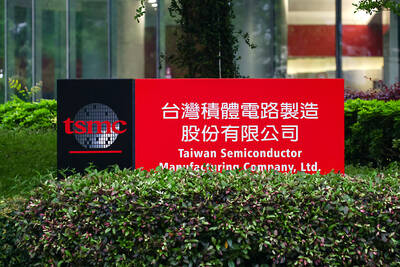
Shares of Taiwan Semiconductor Manufacturing Co (TSMC, 台積電) have repeatedly hit new highs, but an equity analyst said the stock’s valuation remains within a reasonable range and any pullback would likely be technical. The contract chipmaker’s historical price-to-earnings (P/E) ratio has ranged between 20 and 30, Cathay Futures Consultant Co (國泰證期) analyst Tsai Ming-han (蔡明翰) told Central News Agency. With market consensus projecting that TSMC would post earnings per share of about NT$100 (US$3.17) this year, supported by strong global demand for artificial intelligence (AI) applications, and the stock currently trading at a P/E ratio of below 25, Tsai said the valuation
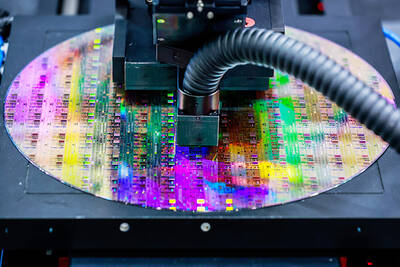
The artificial intelligence (AI) boom has triggered a seismic reshuffling of global equity markets, with Taiwan and South Korea muscling past European nations one by one. With its stock market now valued at nearly US$4.3 trillion, Taiwan surpassed the UK, Europe’s biggest market, earlier this month, data compiled by Bloomberg showed. South Korea is about US$140 billion away from doing the same. The tech-heavy Asian markets have shot past Germany and France in the past seven months. The shift is largely down to massive gains in shares of three companies that provide essential hardware for AI: Taiwan Semiconductor Manufacturing Co (TSMC, 台積電),

The US Department of Commerce last week ordered multiple chip equipment companies to halt shipments of certain tools to China’s second-largest chipmaker, Hua Hong Semiconductor Ltd (華虹半導體), its latest action to slow the country’s development of advanced chips, two people familiar with the matter said. The department sent letters to at least a handful of companies informing them of restrictions on tools and other materials destined for two Hua Hong facilities US officials believe make China’s most sophisticated chips, the people said. Top US chip equipment companies Lam Research Corp, Applied Materials Inc and KLA Corp, each of which has significant


 RSS
RSS