


It is about time investors were hit with the reality about electric vehicle (EV) start-ups, but what do tanking shares mean for the much-hyped, cheap capital-sucking EV makers that took the market by storm last year?
Stocks of EV upstarts, from New York-listed Chinese firms such as Nio Inc (蔚來汽車), Xpeng Inc (小鵬) and Li Auto Inc (理想汽車) to their US peers Rivian Automotive Inc and Lordstown Motors Corp, have lost their sheen in recent weeks, exacerbated by a broader turn in sentiment and rising rates. Turns out making fancy, future-forward cars is kind of hard.
It is even tougher when costs to produce vehicles are surging. Manufacturers cannot get their hands on parts and sales have been underwhelming. Adding pressure, those Chinese companies that trade in the US are getting caught up in the regulatory tit-for-tat between Washington and Beijing.
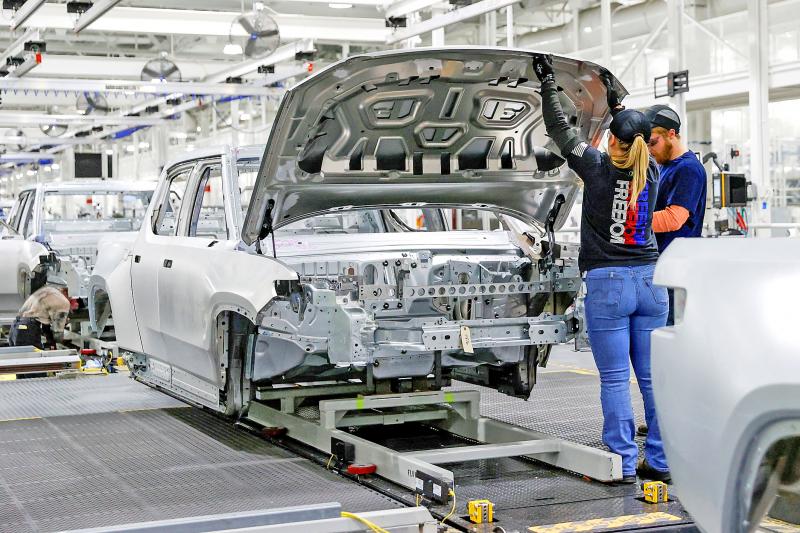
Photo: Reuters
Until now, raising capital had been the easy part. Investors rushed to check off their ESG (environmental, social and corporate governance)-friendly holdings, happily backing anything that seemed techy and green. All the while they appeared to ignore the basic requirement of a manufacturing company: Can it actually make the product? And is it being produced at scale? How quickly will it go from prototype to mass production?
Many upstart EV makers boasted all sorts of artificial intelligence and smart-driving systems. Still, they needed to source integral parts from other firms, especially the core component — batteries. They put out big production forecasts, based on unlimited consumer demand and the inevitable need for companies to bow to regulatory pressure around emissions. Several even went with an asset-light model, contracting out the vehicle-making part.
Most investors loved the rhetoric. Now, pulling in cash is getting tougher as rates are rising. Investors will soon be forced to face another reality: Production and manufacturing matter.
It is not just about the ability to bulk up coffers; putting capital to work will need to go beyond talk of adding fancy gadgets, software systems and speccing out vehicles. Meanwhile, even though car buyers are keen on EVs, hobbled supply and high prices risk denting demand. The average cost of a new EV in the US is US$65,000, according to Kelley Blue Book estimates.
Barriers to entry are rising, too. EV and battery companies that cannot produce or show a viable products will become the laggards — if they can survive at all. In the past few weeks, these firms seem to have gotten realistic with their plans.
Struggling firm Lordstown recently sold its factory to iPhone contract assembler Foxconn Technology Group (富士康科技集團) for US$230 million to raise cash, and said its ability to stay in business depends on getting more funding. Earlier this month, it struck a joint venture deal with the assembler to make vehicles. When it went public almost two years ago, it had hoped to make 2,000 pickups and then 32,000 in the following full year. Now, it plans to make 500.
A production deal does not necessarily speed up the manufacturing process, either. Foxconn has also partnered with Lordstown competitor Fisker Inc to make vehicles. That is in addition to Fisker’s existing agreement with another large contract manufacturer, Magna International Inc. However, even with pros by its side, the company only expects to make vehicles by the end of this year.
In Fisker’s public offering document, one of the risk factors stated was that the company’s “business model relies on outsourced manufacturing of its vehicles. The cost of tooling a manufacturing facility with a collaboration partner is high, but such cost will not be known until Fisker enters into a vehicle manufacturing agreement.”
The EV company even stated clearly that “investors should not place undue reliance on Fisker’s statements about its production plans or their feasibility in the time frame anticipated, or at all.”
Yet investors seemed confident; EVs were about to roll off production lines. Blame COVID-19 or supply chains or geopolitics — the reality is, there are not many EVs on roads this year.
Even EV firms with big backers and policy support have not had it that easy, and are only now coming around to ramping up production and sales.
Nio, XPeng and Li Auto are producing just thousands of units per month. Elsewhere in the world, Lucid Group Inc, which is backed by Saudi Arabia’s sovereign wealth fund, is setting up production in the kingdom and has inked a purchase agreement with the government for up to 100,000 vehicles.
EV companies will no doubt face growing pains and it is obviously good to have bold plans, but someone has got to make sure they are delivering on those promises.
The danger now is that the hype dies off and takes demand with it, as consumers give up their hopes. In that case, we would end up where we started. Investors need to peel past the promises and pressure manufacturers to produce — at scale, and soon.
Anjani Trivedi is a Bloomberg Opinion columnist covering industrial companies in Asia. Previously, she was a reporter for the Wall Street Journal.
This column does not necessarily reflect the opinion of the editorial board or Bloomberg LP and its owners.

DAMAGE REPORT: Global central banks are assessing war-driven inflation risks as the law of unintended consequences careens around the world, spiking oil prices Central banks from Washington to London and from Jakarta to Taipei are about to make their first assessments of economic damage after more than two weeks of conflict between the US and Iran. Decisions this week encompassing every member of the G7 and eight of the world’s 10 most-traded currency jurisdictions are likely to confirm to investors that the specter of a new inflation shock is already worrying enough to prompt heightened caution. The US Federal Reserve is widely expected to do exactly what everyone anticipated weeks ahead of its March 17-18 policy gathering: hold rates steady. The narrative surrounding that

Taiwan Semiconductor Manufacturing Co’s (TSMC, 台積電) share of the global foundry market rose to almost 70 percent last year amid booming demand for artificial intelligence (AI), market information advisory firm TrendForce Corp (集邦科技) said on Thursday. The contract chipmaker posted US$122.54 billion in revenue, up 36.1 percent from a year earlier, accounting for 69.9 percent of the global market, TrendForce said. Its share was up from 64.4 percent in 2024, it said. TSMC’s closest rival, Samsung Electronics, was a distant second, posting US$12.63 billion in sales, down 3.9 percent from a year earlier, for a 7.2 percent share of the global market. In the
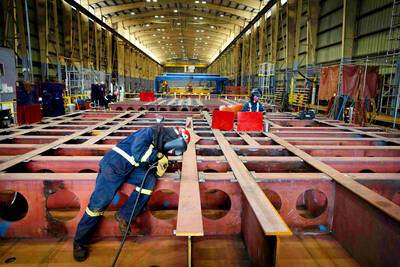
At a massive shipyard in North Vancouver, Canadian workers grind metal beams for a powerful new icebreaker crucial to cementing the country’s presence in the increasingly contested arctic. Icebreakers are specialized, expensive vessels able to navigate in the frozen far north. And “this is the crown jewel,” said Eddie Schehr, vice president of production at the Seaspan shipyard. For Canadian Prime Minister Mark Carney, who heads to Norway next Friday to observe arctic defense drills involving troops from 14 NATO states, Canada’s extreme north has emerged as a strategic priority. “Canada is and forever will be an Arctic nation,” he said ahead of

Chinese entrepreneur Frank Gao used to spend long hours running his social media accounts but now outsources the chore to artificial intelligence (AI) agent tool OpenClaw, which is taking China by storm despite official warnings over cybersecurity. OpenClaw, created in November by an Austrian coder, differs from bots such as ChatGPT because it can execute real-life tasks such as sending e-mails, organizing files or even booking flight tickets. “Since January, I’ve spent hours on the lobster every day,” Gao said in an interview, referring to OpenClaw’s red crustacean mascot. “We’re family.” After downloading OpenClaw, users connect it to artificial intelligence models of their


 RSS
RSS