


Microsoft Corp’s LinkedIn is shuttering a localized version of its professional networking platform in China, becoming the last major US social media provider to pull out of the country and marking the demise of a rare US tech success there.
LinkedIn said it made the decision in light of “a significantly more challenging operating environment and greater compliance requirements in China.” The company is to close the current version later this year, LinkedIn said on Thursday in a blog post.
After entering China in 2014, LinkedIn seemed to offer a model for US Internet companies in the country. In exchange for being allowed to operate, the company agreed to restrict some content to adhere to state censorship rules. The service had about 52 million users in China. Other US-based social media platforms such as Twitter Inc and Facebook Inc have long been banned.

Signs of turbulence for Microsoft emerged in March. LinkedIn said then that it had paused sign-ups for new members in China while it worked to ensure compliance with local laws. Earlier that month, China’s internet regulator reprimanded LinkedIn executives for failing to control political content, the New York Times reported.
In May, a prominent critic of China based in the UK said LinkedIn froze his account and removed content criticizing the country’s government, the latest in a series of allegations that the networking website had censored users — even outside its borders — to appease authorities in Beijing.
The greater regulatory scrutiny of LinkedIn in China echoes a broader crackdown on technology companies in the country. The government has stiffened oversight of its biggest tech firms, including Alibaba Group Holding Ltd (阿里巴巴), Tencent Holdings Ltd (騰訊) and Didi Global Inc (滴滴出行), seeking to reduce their growing influence.
Chinese President Xi Jinping (習近平) has called on officials to strengthen antitrust work to ensure fair competition, part of his broader vision of achieving “common prosperity” and leveling the inequalities that have soared in recent decades. Curbing the tech companies has been seen as a crucial element of those efforts, given the power and insight accumulated by Alibaba and Tencent, among others, in the world’s largest internet sector.
Even Apple Inc, which has successfully navigated the Chinese regulatory system to produce and sell the company’s devices, is facing greater pressure. Last month, China’s top court effectively granted consumers the right to sue Apple for alleged abuse of market power.
LinkedIn said its new strategy for China is to focus on helping local professionals find jobs in the nation and Chinese companies discover quality candidates. Later this year, the company plans to introduce InJobs, a new standalone jobs application for the country. The site will not include a social feed or the ability to share posts or articles.
LinkedIn, which entered the Chinese market under the name Lingying, had been the only US social media network allowed to operate in the country. In order to do that, it complied with the government’s restrictions on certain kinds of content for users in China. Microsoft bought LinkedIn in 2016.
Microsoft’s several decades in China have been marked with challenges, as well as rare successes. The company maintains a large research lab in Beijing, sells cloud services through joint ventures with Chinese firms and was the first to market a video game console in the country.
However, Microsoft has struggled to generate a significant amount of sales in China and has faced investigations by the government. The company has also been caught up in trade tensions between the US and China, including around partner Huawei Technologies Co (華為).


The domestic unit of the Chinese-owned, Dutch-headquartered chipmaker Nexperia BV will soon be able to produce semiconductors locally within China, according to two company sources. Nexperia is at the center of a global tug-of-war over critical semiconductor technology, with a Dutch court in February ordering a probe into alleged mismanagement at the company. The geopolitical tussle has disrupted supply chains, with some carmakers reportedly forced to cut production due to chip shortages. Local production would allow Nexperia’s domestic arm, Nexperia Semiconductors (China) Ltd (安世半導體中國), to bypass restrictions in place since October on the supply of silicon wafers — etched with tiny components to
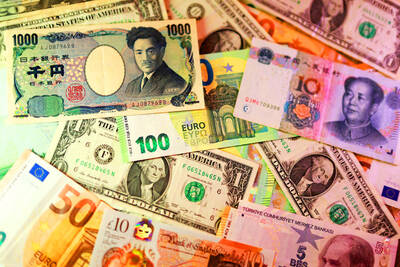
Taiwan’s foreign exchange reserves fell below the US$600 billion mark at the end of last month, with the central bank reporting a total of US$596.89 billion — a decline of US$8.6 billion from February — ending a three-month streak of increases. The central bank attributed the drop to a combination of factors such as outflows by foreign institutional investors, currency fluctuations and its own market interventions. “The large-scale outflows disrupted the balance of supply and demand in the foreign exchange market, prompting the central bank to intervene repeatedly by selling US dollars to stabilize the local currency,” Department of Foreign
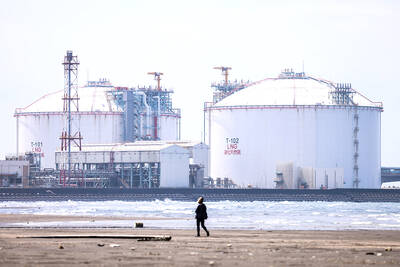
Taiwan is open to joining a global liquefied natural gas (LNG) program if one is created, but on the condition that countries provide delivery even in a scenario where there is a conflict with China, an energy department official said yesterday. While Taiwan’s priority is to have enough LNG at home, the nation is open to exploring potential strategic reserves in other countries such as Japan or South Korea, Energy Administration Deputy Director-General Chen Chung-hsien (陳崇憲) said. While the LNG market does not have a global reserve for emergencies like that of oil, the concept has been raised a few times —
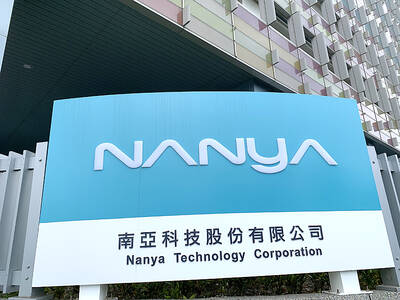
AI-FUELED DEMAND: The company has been benefiting from the skyrocketing prices for DRAM chips amid the AI frenzy, especially its core product — DDR4 DRAM chips DRAM chipmaker Nanya Technology Corp (南亞科技) yesterday reported that its revenue for the first quarter surged 582.91 percent to NT$49.09 billion (US$1.54 billion) from NT$7.19 billion a year earlier, as the supply crunch caused chip price spikes. Last quarter’s figure is the highest on record. On a quarterly basis, revenue jumped 63.14 percent from NT$30.09 billion, the company said. In January, Nanya Technology expected global DRAM supply scarcity to continue through the first half of 2028, thanks to strong demand for artificial intelligence (AI) applications. Market researcher TrendForce Corp (集邦科技) forecast prices of standard DRAM chips would rise between 58 percent and 63


 RSS
RSS