


A British start-up’s innovation to tackle plastic pollution by decomposing the material into a wax that is digested by nature is making inroads in Asia.
Polymateria Ltd, which has a lab on Imperial College London’s campus, has struck a deal with a supplier to 7-Eleven convenience stores in Taiwan, Polymateria CEO Niall Dunne said in an interview.
The company has also inked a deal of up to US$100 million to license its technology to Formosa Plastics Corp (台塑), one of the world’s biggest petrochemical manufacturers.
“We’re targeting the type of plastic that’s most likely to wind up in nature with a solution that doesn’t need any composting technologies to biodegrade or capital expenditure,” Dunne said. “We’re focused on Asia since that’s where a lot of the fugitive plastic is coming from and there aren’t massive waste management systems in place.”
Godrej Consumer Products Ltd in India is also to start using Polymateria’s packaging beginning later this year, he said.
The start-up also has licensing agreements with other plastics producers in the Philippines and Malaysia.
The deals are part of the London start-up’s plan to tackle one of the world’s biggest waste problems: so-called fugitive plastic from snack wrappers, cups and shopping bags that finds its way into oceans and landfills.
The company says it is the first to offer a fully biodegradable solution that leaves no microplastics behind and does not require any special equipment to manufacture or biodegrade. Still, the technology is not without controversy, with some scientists calling for an approach that is based on reducing the use of plastics and recycling instead.
Polymateria’s technology uses about a dozen different chemicals, including rubbers, oils and desiccants, that are added to plastic during the manufacturing process. The additives can be adjusted to create thin films that cover food products or more rigid materials to make cups or drink pouches.
The products can be customized to essentially self-destruct after a certain time. The additives help break down plastic polymers and turn the plastic into a wax that is fully digested by natural bacteria and fungi.
The thinner packing materials can decompose in as little as 226 days in tests, Dunne said, and since the products use plastics that are processed by recycling plants today, they can also be reused.
By comparison, it takes about 1,000 years for a plastic bag to degrade in landfills.
In Taiwan, several 7-Eleven stores are now carrying cheese-baked rice meals in Polymateria’s disposable packaging. President Chain Store Corp (統一超商), which operates the outlets, plans to cut its use of disposable plastics to less than 20 percent of packaging by 2023, it said on its Web site.
Polymateria’s agreement with Formosa Plastics is more about tackling the problem at its source. The Taipei-based group is to use the technology to make resin pellets of food-grade polypropylene, a type of polymer used in consumer products, in its plants.
Formosa Plastics eventually plans to manufacture hundreds of thousands of tonnes of biodegradable resin that would be transformed into packaging materials starting from next year.
It is a key pillar of company’s plan to make all its polypropylene resins for packaging biodegradable by 2025, it said.
For Polymateria, which was founded in 2015, working with one of the world’s biggest petrochemical producers and its downstream suppliers is a must if it wants to get biodegradable products into consumers’ hands.
“You’re not going to see every petrochemical company committed to sustainable products and innovation. You need to make a judgement call on who is,” Dunne said. “We were impressed by their commitment by 2025 to have all their food-grade packaging transition to biodegradable materials. That’s a very strong statement that says they’re ready to change.”
Still, not everyone in the scientific community is convinced biodegradable plastics is the answer.
A group of independent scientific advisers to the European Commission released a report in December last year that concluded “biodegradable plastics aren’t a silver bullet,” while other scientists are concerned biodegradable plastics could even encourage littering.
Dunne said that while he agrees with the goal of reducing, reusing and recycling, Polymateria’s solution addresses an immediate problem that is not going away.
Moreover, retailers, swayed by customer sentiment, are demanding it, said Tosho Wang (王東章), CEO of South Plastic Industry Co (南部化成), which is supplying 7-Eleven with some of the disposable packaging.
“Recycling is our ultimate goal,” Wang said. “But if there are fish that escape the net, these products can still decompose in nature. Educating consumers to form habits to recycle will take time.”

Shares of contract chipmaker Taiwan Semiconductor Manufacturing Co (TSMC, 台積電) came under pressure yesterday after a report that Apple Inc is looking to shift some orders from the Taiwanese company to Intel Corp. TSMC shares fell NT$55, or 2.4 percent, to close at NT$2,235 on the local main board, Taiwan Stock Exchange data showed. Despite the losses, TSMC is expected to continue to benefit from sound fundamentals, as it maintains a lead over its peers in high-end process development, analysts said. “The selling was a knee-jerk reaction to an Intel-Apple report over the weekend,” Mega International Investment Services Corp (兆豐國際投顧) analyst Alex Huang
Taiwan Semiconductor Manufacturing Co (TSMC, 台積電) is expected to remain Apple Inc’s primary chip manufacturing partner despite reports that Apple could shift some orders to Intel Corp, industry experts said yesterday. The comments came after The Wall Street Journal reported on Friday that Apple and Intel had reached a preliminary agreement following more than a year of negotiations for Intel to manufacture some chips for Apple devices. Taiwan Institute of Economic Research (台灣經濟研究院) economist Arisa Liu (劉佩真) said TSMC’s advanced packaging technologies, including integrated fan-out and chip-on-wafer-on-substrate, remain critical to the performance of Apple’s A-series and M-series chips. She said Intel and Samsung
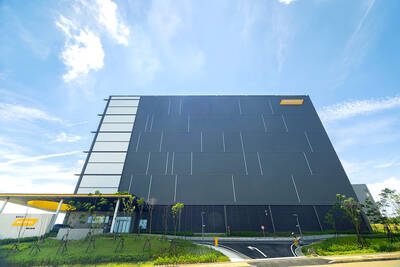
POWER BUILDUP: Powered by Nvidia’s B200 Blackwell chips, the data center would support MediaTek’s computing power demand and business growth, the company said Smartphone chip designer MediaTek Inc (聯發科) yesterday launched a new artificial intelligence (AI) data center with a maximum capacity of 45 megawatts to meet its rising demand for computing power required to develop new advanced chips for AI applications. The company has completed the first-phase computing power buildup at the data center in Miaoli County’s Tongluo Township (銅鑼), providing 15 megawatts of capacity to support its research and development (R&D) capabilities, despite an industrywide shortage of key components, MediaTek said. Supply constraints have plagued a wide range of key components, including memory chips, solid-state drives, power supply units and central
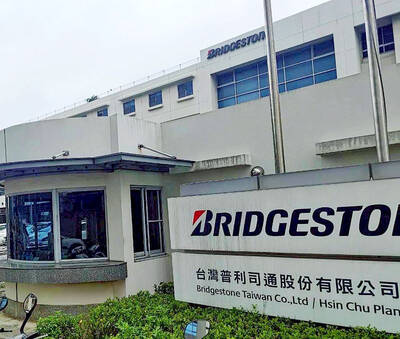
TRANSITION: With the closure, the company would reorganize its Taiwanese unit to a sales and service-focused model, Bridgestone said Bridgestone Corp yesterday announced it would cease manufacturing operations at its tire plant in Hsinchu County’s Hukou Township (湖口), affecting more than 500 workers. Bridgestone Taiwan Co (台灣普利司通) said in a statement that the decision was based on the Tokyo-based tire maker’s adjustments to its global operational strategy and long-term market development considerations. The Taiwanese unit would be reorganized as part of the closure, effective yesterday, and all related production activities would be concluded, the statement said. Under the plan, Bridgestone would continue to deepen its presence in the Taiwanese market, while transitioning to a sales and service-focused business model, it added. The Hsinchu


 RSS
RSS