


Win Semiconductors Corp (穩懋半導體), the world’s largest pure-play gallium arsenide foundry, on Friday said its board of directors had approved a plan to invest NT$10 billion (US$358.3 million) to build a fab at the Southern Taiwan Science Park’s (南部科學工業園) branch campus in Kaohsiung’s Lujhu District (路竹) over the next three years.
“To meet the needs of long-term operation and growth, the company planned to build the plant in Southern Taiwan Science Park located in Kaohsiung,” the Linkou District (林口), New Taipei City-based firm wrote in a regulatory filing.
“Excluding the payment for the construction of the first phase of the plant approved by the company’s board of directors on Dec. 25 in 2020, NT$10 billion is expected to be invested,” the company wrote. “The investment will be divided into several stages and [start] from 2021.”
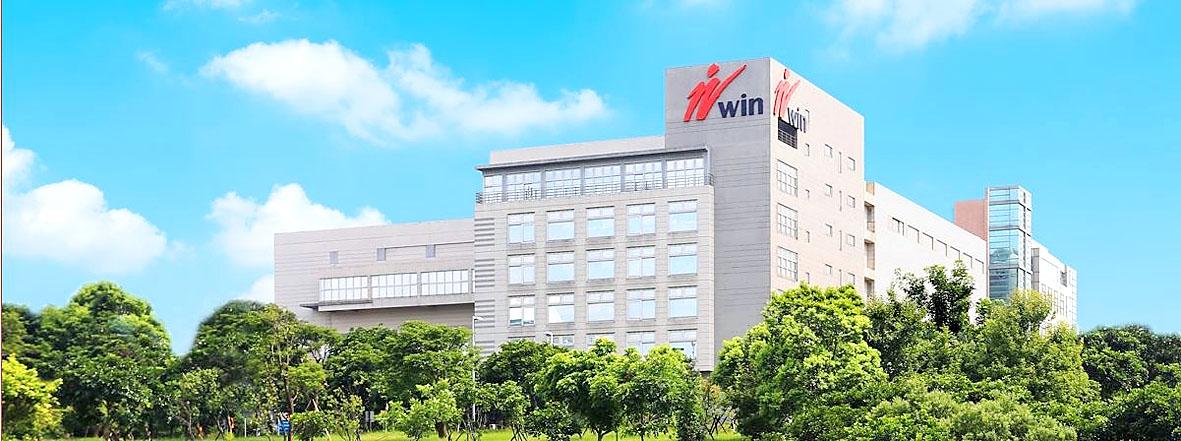
Photo: Screen grab from the Win Semiconductors Corp Web site
Win Semiconductors said it would use its own capital or bank loans to fund the investment.
The new fab is expected to begin mass production in 2024, the company said.
Win Semiconductors provides foundry services for pure-play gallium arsenide components, such as power amplifier chips and switches used in communications devices.
A company revenue breakdown by applications showed that power amplifier chips for handsets accounted for 45 to 50 percent of its total sales in the first quarter, communications infrastructure-related orders accounted for 15 to 20 percent and Wi-Fi components 15 to 20 percent.
Win Semiconductors posted net profit of NT$1.15 billion for the January-to-March period, down 11.12 percent quarter-on-quarter and 27.61 percent year-on-year.
First-quarter earnings per share were NT$2.72, compared with NT$3.07 the previous quarter and NT$3.76 a year earlier.
The firm’s revenue declined 12 percent quarter-on-quarter and 1 percent year-on-year to NT$6.01 billion, while gross margin and operating margin fell to 33.5 percent and 19.9 percent respectively, which it attributed to changes in its product mix and a decline in its capacity utilization rate.
Win Semiconductors said that it expects sales this quarter to grow by a low single-digit percentage from last quarter, while gross margin is likely to be around the low-30s, a company conference call document showed.
“Given robust global handset power amplifier chip demand, we expect cellular products to be the main growth driver for the second quarter of 2021,” Yuanta Securities Investment Consulting Co (元大投顧) said in a note last week.
However, the company would face headwinds in the infrastructure product segment this year as clients continue to digest their inventories, Yuanta said.


Taiwan’s foreign exchange reserves fell below the US$600 billion mark at the end of last month, with the central bank reporting a total of US$596.89 billion — a decline of US$8.6 billion from February — ending a three-month streak of increases. The central bank attributed the drop to a combination of factors such as outflows by foreign institutional investors, currency fluctuations and its own market interventions. “The large-scale outflows disrupted the balance of supply and demand in the foreign exchange market, prompting the central bank to intervene repeatedly by selling US dollars to stabilize the local currency,” Department of Foreign

Intel Corp is joining Elon Musk’s long-shot effort to develop semiconductors for Tesla Inc, Space Exploration Technologies Corp and xAI, marking a surprising twist in the chipmaker’s comeback bid. Intel would help the Terafab project “refactor” the technology in a chip factory, the company said on Tuesday in a post on X, Musk’s social media platform. That is a stage in the development process that typically helps make chips more powerful or reliable. The chipmaker’s shares jumped 4.2 percent to US$52.91 in New York trading on Tuesday. The Terafab project is a grand plan by Musk to eventually manufacture his own chips for
Taiwan Power Co (Taipower, 台電) yesterday said it plans to resume operations at two coal-fired power generators for three months to boost security of electricity supply as liquefied natural gas (LNG) supply risks are running high due to the Middle East conflict. The two coal-fired power generators are at Mailiao Power Plant in Yunlin County’s Mailiao Township (麥寮). The plant, operated by Formosa Plastics Group (台塑集團), supplied electricity to Taipower’s power grid until the end of last year. Taipower’s decision came about one month after Minister of Economic Affairs Kung Ming-hsin (龔明鑫) on March 10 said that the nation had no imminent

Some robotaxi passengers were left stranded in the middle of fast-moving traffic in a major Chinese city after their driverless vehicles stopped running, according to police and media reports on Wednesday. A preliminary investigation indicates more than 100 robotaxis came to a halt because of a “system malfunction,” police in the city of Wuhan said in a statement, without elaborating. No injuries were reported. One passenger told Chinese media that their robotaxi stopped after turning a corner. An instruction on a screen read: “Driving system malfunction. Staff are expected to arrive in 5 minutes.” After no one showed up, the passenger pushed


 RSS
RSS