


Presale and new housing projects in the nation’s major municipalities have reached NT$542.89 billion (US$18.48 billion) in the autumn sales season, as real demand is supporting the property market despite the COVID-19 pandemic, the online housing unit of Addcn Technology Co Ltd (數字科技) said in a report.
The volume represents a minor drop of 4 percent year-on-year for the post-Ghost Month sales season, when developers and builders seek to reboot sales after lying low, the newhouse.591.com (591新建案) unit said in the report.
New Taipei City accounts for the biggest share, an estimated NT$165.9 billion of presale and new housing projects, primarily in Banciao (板橋), Sanchong (三重), Sindian (新店), Linkou (林口) and Sinjhuang (新莊) districts, the report said.
New housing projects total NT$25 billion in Banciao’s rezoning area, where major players such as Ruentex Industries Co (潤泰全球), I Sunny Co (愛山林建設) and the development arm of Sinyi Realty Inc (信義房屋) have projects, it said.
Hahuan Group’s (合環建設機構) urban renewal project, which makes up another NT$20 billion, offers apartments of 29 ping (95.87m2) to 76 ping on a 2,000 ping plot of land on Sindian’s Baociao Road, the report said, adding that asking prices could reach NT$800,000 per ping.
Taiwan’s quick control of the COVID-19 outbreak has given land developers and real-estate builders the confidence to launch new products, while their peers elsewhere have adopted a conservative strategy, the report said.
Among major municipalities, Taipei, with only NT$50 billion in new housing projects offered — a 20 percent decline from a year earlier — appears more cautious, it said.
Only one project in the city, near Beitou MRT Station, has a total sales volume of more than NT$6 billion, it added.
New housing projects in Taichung rose 20 percent to NT$96.83 billion, as presale apartments priced at NT$8 million have rapidly become popular, the report said.
Sales strategies that highlight low down payments of NT$30,000 per unit and low mortgage responsibilities of NT$5,000 per month have helped to motivate potential buyers in the Taichung area, it said, citing local real-estate agents.
New housing projects reached NT$95.9 billion in Taoyuan and NT$45.9 billion in Hsinchu, with apartments priced at NT$15 million proving the most attractive, while the market in Kaohsiung has remained stable, edging up 3 percent to NT$66.84 billion, the report said.
An office building that is to be constructed by King’s Town Construction Co (京城建設), which is seeking to sell to Taiwanese firms returning from China to avoid US-China trade tensions, underpins the uptick in Kaohsiung, it said.


The domestic unit of the Chinese-owned, Dutch-headquartered chipmaker Nexperia BV will soon be able to produce semiconductors locally within China, according to two company sources. Nexperia is at the center of a global tug-of-war over critical semiconductor technology, with a Dutch court in February ordering a probe into alleged mismanagement at the company. The geopolitical tussle has disrupted supply chains, with some carmakers reportedly forced to cut production due to chip shortages. Local production would allow Nexperia’s domestic arm, Nexperia Semiconductors (China) Ltd (安世半導體中國), to bypass restrictions in place since October on the supply of silicon wafers — etched with tiny components to

Taiwan’s foreign exchange reserves fell below the US$600 billion mark at the end of last month, with the central bank reporting a total of US$596.89 billion — a decline of US$8.6 billion from February — ending a three-month streak of increases. The central bank attributed the drop to a combination of factors such as outflows by foreign institutional investors, currency fluctuations and its own market interventions. “The large-scale outflows disrupted the balance of supply and demand in the foreign exchange market, prompting the central bank to intervene repeatedly by selling US dollars to stabilize the local currency,” Department of Foreign
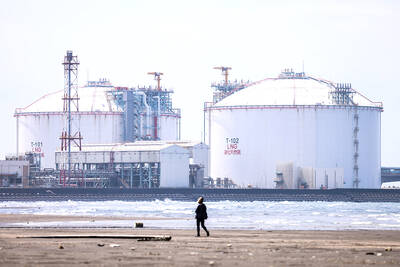
Taiwan is open to joining a global liquefied natural gas (LNG) program if one is created, but on the condition that countries provide delivery even in a scenario where there is a conflict with China, an energy department official said yesterday. While Taiwan’s priority is to have enough LNG at home, the nation is open to exploring potential strategic reserves in other countries such as Japan or South Korea, Energy Administration Deputy Director-General Chen Chung-hsien (陳崇憲) said. While the LNG market does not have a global reserve for emergencies like that of oil, the concept has been raised a few times —
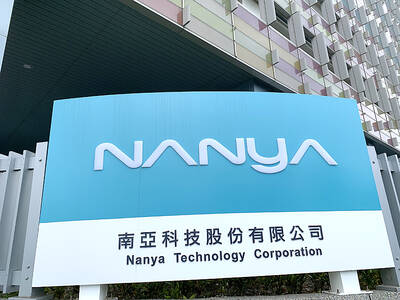
AI-FUELED DEMAND: The company has been benefiting from the skyrocketing prices for DRAM chips amid the AI frenzy, especially its core product — DDR4 DRAM chips DRAM chipmaker Nanya Technology Corp (南亞科技) yesterday reported that its revenue for the first quarter surged 582.91 percent to NT$49.09 billion (US$1.54 billion) from NT$7.19 billion a year earlier, as the supply crunch caused chip price spikes. Last quarter’s figure is the highest on record. On a quarterly basis, revenue jumped 63.14 percent from NT$30.09 billion, the company said. In January, Nanya Technology expected global DRAM supply scarcity to continue through the first half of 2028, thanks to strong demand for artificial intelligence (AI) applications. Market researcher TrendForce Corp (集邦科技) forecast prices of standard DRAM chips would rise between 58 percent and 63


 RSS
RSS