


Cathay United Bank (China) Co Ltd (國泰世華銀行中國) on Friday signed an investment agreement to acquire a 10 percent stake in a new consumer finance company in China, parent company Cathay Financial Holding Co (國泰金控) said in a Taiwan Stock Exchange filing.
The agreement with Ant Technology Group Co Ltd (螞蟻科技集團) to invest 800 million yuan (US$115.62 million) in the company, tentatively named Chongqing Ant Consumer Finance Ltd (重慶螞蟻消費金融), would help Cathay United Bank China deepen its operations and capture new business in consumer financing, Cathay Financial spokesman Daniel Teng (鄧崇儀) told the Taipei Times by telephone.
Cathay United Bank China, Cathay Financial’s Chinese subsidiary, focuses on corporate financing, investment banking and financial transactions.
“Given the considerable number of consumers in China, it is not likely for banks to provide services meeting their demands just by setting up a few branches in different regions,” Teng said. “We might learn a new method to offer satisfying services for Chinese consumers by investing in this new company, which is to be led by Ant Technology Group, a Chinese technology titan.”
The lender would conduct the capital injection in the Chinese company after obtaining approval from regulators in Taiwan and China, Cathay Financial said in the filing.
Ant Technology Group would hold a 50 percent stake in the new company, with other investors to include Chinese financial, technology and medical equipment companies, according to Chinese media reports.
Companies in Taiwan’s financial sector plan to invest NT$18.88 billion (US$639.74 million) in financial technology (fintech) this year to improve their online services and competitiveness, the Financial Supervisory Commission said on Thursday.
That would represent 14 percent growth from NT$16.51 billion last year, but the pace of investment is lower than annual rises of 40 and 49 percent in the past two years respectively, Department of Planning Director-General Lin Chih-hsien (林志憲) said.
Banks plan to invest NT$11.89 billion in fintech this year, ranking first among local financial industries, followed by insurers with NT$3.4 billion and securities and futures firms with NT$960 million, Lin said.
While banks focus on electric payment, big data, anti-money laundering and know-your-customer guidelines, securities, futures and asset management companies concentrate on information security and robot wealth management, while insurers focus on insurance technology, he said.

Cairo’s new monorail slices across the city skyline, running above the familiar chaos of blaring horns and aging buses’ exhaust fumes that mark rush hour below. The US$4.5 billion monorail, opened this month, is among Egypt’s most prominent new transport projects, part of a debt-funded infrastructure drive criticized for sapping state finances while bringing limited benefits to most of the country’s 109 million people. “It feels like you’re in a different country,” said Ramy Sayed, a restaurant manager, aboard a driverless Innovia 300 train. “No noise, no traffic, we’re not used to this.” The eastern line runs 56km from the bustling middle-class

Taiwanese firms have increased investment in the Philippines in recent years as Manila’s ties with Washington deepen and global supply chains continue to shift away from China, an expert at the Chung-Hua Institution for Economic Research (CIER, 中華經濟研究院) said yesterday. The Philippines had not been among Taiwanese investors’ top choices in Southeast Asia, CIER Taiwan ASEAN Studies Center director Kristy Hsu (徐遵慈) said at a seminar in Taipei. However, Taiwan’s investment in the country has grown significantly since the COVID-19 pandemic, reaching US $257 million last year, a high in recent years, she said. Although Taiwan’s total investment in the Philippines still lags

Intel Corp regards Taiwan Semiconductor Manufacturing Co (TSMC, 台積電) as a longstanding partner, as the US chipmaker would continue outsourcing production of advanced chips to TSMC, Intel chief executive officer Lip-Bu Tan (陳立武) said yesterday. “I don’t look at people as competitors. I look at the collaboration... Nvidia is also, you know, a good friend,” Tan told a news conference following his keynote speech at the Computex trade show in Taipei. “It’s a very trusted partnership for us... We are a big, top customer for them, and we’re going to continue doing that,” he said, referring to TSMC, the world’s largest foundry
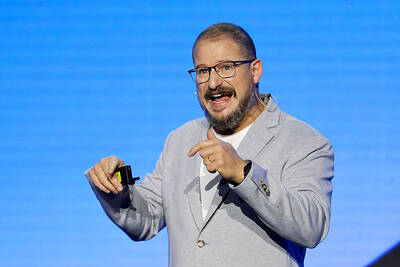
Artificial intelligence (AI) agents would supplant smartphones as the center of people’s digital lives, fundamentally reshaping personal devices and driving a major computing upgrade cycle, Qualcomm Inc CEO Cristiano Amon said yesterday. In his keynote speech for this year’s Computex trade show in Taipei, Amon said that the rise of "agentic AI" — AI systems capable of reasoning, planning and carrying out tasks autonomously — would transform how people interact with technology across phones, PCs, vehicles and wearable devices. Describing the technology as the next major evolution in computing, Amon said that "2026 is the year of agents.” For decades, smartphones have sat


 RSS
RSS