

Taiwan Semiconductor Manufacturing Co (TSMC, 台積電), a major chipmaker for Apple Inc and Huawei Technologies Co (華為), has recruited rival Intel Corp’s former top lobbyist Peter Cleveland to spearhead an unprecedented effort in Washington to mitigate the effect of US-Chinese trade tensions.
The world’s biggest contract chipmaker joins a growing number of companies with Chinese business interests that are stepping up US lobbying, aiming to gauge and lessen the fallout from Washington’s ongoing dispute with Beijing.
TSMC said in July that it was considering starting government relations operations in the US.
Cleveland, who headed Intel’s lobbying effort for more than a decade, updated his LinkedIn profile this month to reflect new responsibilities including representing TSMC on policy, legislative and regulatory matters.
There has been speculation that US sanctions could affect TSMC’s shipments to Huawei, but the Taiwanese chipmaker has publicly quashed talk of US pressure for it to stop supplying its No. 2 customer, which Washington blacklisted and views as a national security threat.
“Peter Cleveland is helping TSMC enhance communications with stakeholders, including government officials at a global level,” TSMC spokeswoman Nina Kao (高孟華) said by telephone.
While there have previously been TSMC staffers tasked with similar responsibilities, Cleveland’s arrival coalesces the effort under one independent position, Kao said.
Huawei is TSMC’s largest customer after Apple, contributing about 10 percent of its revenue, Bloomberg supply chain data showed.
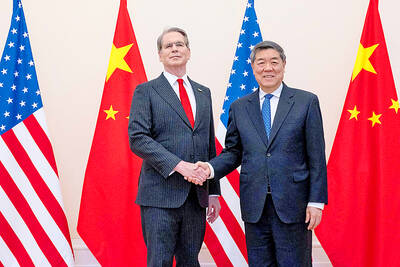
MINIMAL EXPECTATIONS: Analysts think that the two sides are likely to aim for ‘status quo’-level agreements, maintaining civility, without major trade breakthroughs US Secretary of the Treasury Scott Bessent and Chinese Vice Premier He Lifeng (何立峰) were set to meet yesterday to try to set up potential agreements on artificial intelligence (AI), tariffs and critical minerals for a summit in Washington this week between US President Donald Trump and Chinese President Xi Jinping (習近平). The meetings at JPMorgan Chase & Co’s headquarters in Manhattan, which included US Trade Representative Jamieson Greer, were due to start at about 10:30am on Sunday morning and were expected to run all day. Key topics would be the status of a US-China trade truce that is set to expire

MORE DATA CENTERS: Microsoft’s Taiwan-area general manager said the corporation is looking to add two more data centers in northern Taiwan over the next few years Microsoft Corp plans to double its data centers in Taiwan from two facilities to four, Microsoft Taiwan general manager Sean Pien (卞志祥) said yesterday. “Over the past two to three years, we have consistently seen demand outstrip supply, and we expect that situation to continue over the next two to three years,” Pien said on the sidelines of a news conference in Taipei. The data center sites would mainly be in northern Taiwan to meet customer demand and reduce the risk of operational disruptions caused by a single event, he said, without saying their exact locations. Microsoft enabled the first phase of
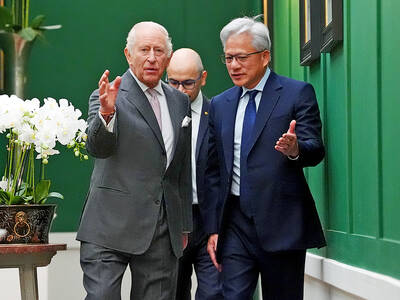
SAFEGUARDING AI: Nvidia CEO Jensen Huang maintained a bullish stance despite concerns about artificial intelligence safety and growing calls for an industry slowdown Nvidia Corp chief executive officer Jensen Huang (黃仁勳) expects to sell twice as many chips in the coming year, fueled by the spread of artificial intelligence (AI) across different industries. AI is of great benefit to a variety of sectors, Huang told reporters on the sidelines of an event convened by King Charles III in Scotland on Thursday. Nvidia is the top seller of AI accelerators, chips used to develop and run AI models. Huang is maintaining his bullish stance at a time when concerns are growing about AI. Industry leaders have discussed slowing down development of the technology over fears that
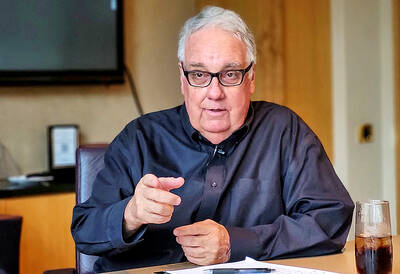
Berkshire Hathaway Inc has been synonymous with Warren Buffett. It falls to his oldest son, Howard Buffett, to keep the conglomerate’s “culture” alive. Friday’s announcement that Warren Buffett, 96, stepped down as chairman means the longtime investor would no longer have a management role at the company he took over in 1965, or be a regular sounding board for Greg Abel, who succeeded him as chief executive officer in January. Howard Buffett, 71, is assuming a different role as non-executive chairman, focused on preserving Berkshire’s culture and values. It is the latest move in a years-long leadership transition. “This one is really about


 RSS
RSS