


Japan’s curbs on exports of high-tech materials to South Korea could backfire in the long run, eroding its dominance over a key link in the global chip supply chain, suppliers and experts say.
Japan last month tightened restrictions on exports of three chipmaking materials to South Korea, home to memorychip titans Samsung and SK Hynix, threatening to disrupt the global tech supply chain, as it provides about 70 percent or more of the restricted products to the world.
While the move highlights Japan Inc’s firm place in the industry even after its once-mighty giants like Sony lost out to nimble Chinese and South Korean rivals, it has fueled concerns that its grip on the niche market for fluorinated polyimides, photoresists and hydrogen fluoride could loosen.
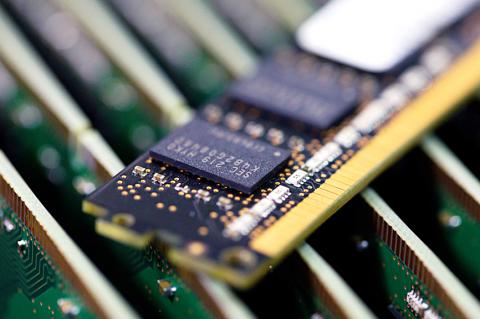
Photo: Bloomberg
“South Korean companies cite quality and stable supply as reasons for choosing Japanese materials, but this has made them aware of the need for change and they are already taking action,” a source at a Japanese materials supplier said. “This will hit us like a body blow.”
Samsung, for instance, has stepped up testing of non-Japanese photoresists and hydrogen fluoride, several sources familiar with the chip supply chain said.
Soulbrain, a supplier of hydrogen fluoride to the Samsung and Hynix — the world’s No. 1 and No. 3 chip vendors respectively — is aiming to match the purity of Japanese hydrogen fluoride at a plant that is still under construction.
However, industry experts say that it would take time for South Korean firms to move up the value chain, as the three high-tech materials are not easy to replicate.
Japanese suppliers “have built up their capabilities through decades-long experience of developing products,” Citigroup analyst Atsushi Ikeda said.
“The accumulation is just too big for new players,” Ikeda said.
Top photoresist supplier Tokyo Ohka Kogyo says it takes up to two years to develop new resists.
From South Korea, the curbs are likely to elicit a response similar to Japan’s during the “rare earth shock” nearly a decade ago, when China’s restriction on exports of rare earth minerals used in electronic devices forced Japan Inc to find alternate supplies, industry participants said.
“Under the circumstances, anyone would do that,” the source at the Japanese supplier that has been hit by the curbs said.
Seoul has already pledged to subsidize the domestic chip supply chain to accelerate the buildup of knowledge needed for firms to catch up in more advanced fields.
A senior executive at Soulbrain said that the South Korean government had expedited paperwork so its new plant could be completed faster.
Soulbrain is looking to complete the construction by the end of next month and run tests to see if it can mass produce high-purity hydrogen fluoride, the executive said.
In photoresists, Samsung is trying to curb its reliance on Japan for advanced material, although sources say it faces high hurdles.
However, the company uses material from local supplier Dongjin Semichem for photoresists used in chips with less-fine circuit patterns, Japanese supply chain sources said.
Only three Japanese firms, Tokyo Ohka, JSR and Shin-Etsu Chemical, currently supply high-quality materials used in advanced chip production technology known globally as extreme ultraviolet lithography.
Tokyo Ohka and other materials makers grew hand in hand with electronics conglomerates NEC, Toshiba and Hitachi, the world’s top chipmakers in the late 1980s.
Even after Japanese chipmakers lost ground to South Korea, the suppliers continued to thrive, thanks to early inroads in overseas markets and the strength of their local supply chains.
However, in the wake of the latest curbs, prompted by a decades-old row between the Asian nations over compensations for forced South Korean laborers at Japanese firms during World War II, suppliers in Japan are having to deal with repercussions beyond the three restricted materials, industry sources said.
South Korean chipmakers are now asking Japanese suppliers to front-load shipments of materials that Japan has large market shares of, from silicon wafers to polishing slurries, for fear of further restrictions, the sources said.
Japanese suppliers have so far refrained from directly commenting on how the curb will affect their businesses, claiming they had no inkling of Tokyo’s decisions beforehand.
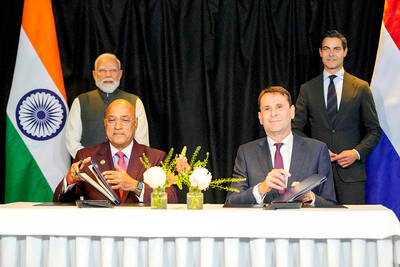
NEW MARKET: The partnership opens up India to the Dutch company, which already has a strong hold in the semiconductor market of South Korea, Taiwan and China ASML Holding NV entered into a partnership agreement with Tata Electronics Pvt Ltd aimed at ramping up India’s goal to develop domestic chip-manufacturing capabilities. The Dutch company’s technology would help power Tata Electronics’ planned 300 millimeter (mm) semiconductor foundry in Gujarat, according to a joint statement from the two companies on Saturday. The signing of a memorandum of understanding coincides with a visit by Indian Prime Minister Narendra Modi to the Netherlands, which is looking to deepen bilateral relations with New Delhi. ASML, whose top customers include Taiwan Semiconductor Manufacturing Co (台積電) and Samsung Electronics Co, makes lithography machines that can print
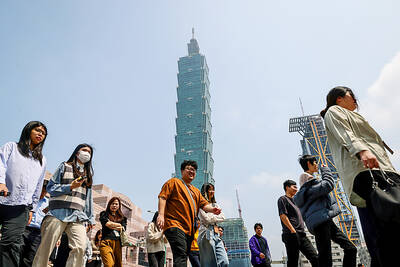
TECH RELIANCE: Growth is increasingly reflecting an unequal K-shaped distribution, where technology sectors outperform and other industries struggle, an expert said Standard Chartered Bank has significantly raised its forecast for Taiwan’s economic growth to 9.5 percent this year, up from 7.6 percent previously, citing surging artificial intelligence (AI) demand driving exports, semiconductor production and investment. The upgrade reflects a sustained AI supercycle that continues to fuel demand for advanced chips and technology infrastructure, which form the backbone of Taiwan’s exports, the bank said in a report this week. “We raise our 2026 growth forecast to reflect a much stronger-than-expected first-quarter GDP figure,” Standard Chartered senior economist for greater China and Asia Tommy Wu (胡東安) said in the report. Driven largely by a 35.3 percent
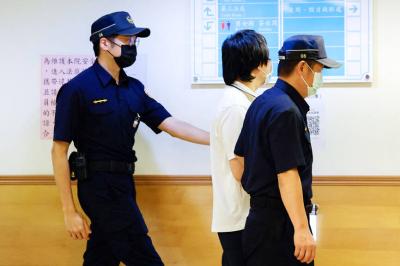
Tokyo Electron's Taiwan unit today said in a written response that it respects the judicial process, takes the court ruling seriously and would not appeal in the Taiwan Semiconductor Manufacturing Co (TSMC, 台積電) trade secrets case. Last month, a court fined the Taiwan unit of Japan's Tokyo Electron NT$150 million (US$4.74 million) in a case involving trade secrets related to TSMC's sensitive chip technology.
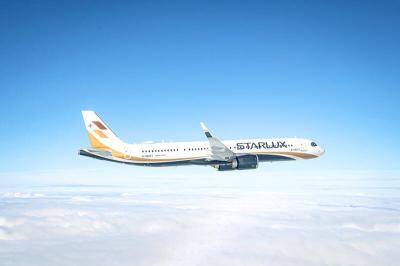
Two of Taiwan’s international carriers, Starlux Airlines Co (星宇航空) and EVA Airways Corp (長榮航空), have retained the five-star airline rating awarded by international airline review organization Skytrax. Starlux was awarded the distinction for a second consecutive year, while EVA Air received it for the 11th straight year, Skytrax said in statements released yesterday and on Thursday last week, respectively. The five-star rating is considered one of the airline industry's highest honors and is awarded following professional audits of airline product and frontline service standards, Skytrax said. The ratings are based on in-depth assessments using unified global quality standards rather than customer review scores


 RSS
RSS