


The world’s top six smartphone brands are expected to hold their positions in the market next year, even though the overall market has declined for four consecutive quarters and could remain sluggish over the next few quarters, Yuanta Securities Investment Consulting Co (元大投顧) said in a report last week.
Samsung Electronics Co is expected to remain the market leader, with shipments next year increasing 2 percent year-on-year to 300 million units, Yuanta said on Tuesday.
Huawei Technologies Co (華為) is expected to extend its lead over Apple Inc in smartphones, ranking second with shipments growing 12.5 percent to 225 million units, it said.
Among the top six brands, Apple is the only one expected to see shipments decline annually next year, down 4 percent to 203 million units, while Xiaomi Corp (小米), Oppo Mobile Telecommunications Corp (歐珀) and Vivo Communication Technology Co (維沃) would remain in fourth, fifth and sixth respectively, the report showed.
Overall, Yuanta said the global smartphone market is likely to see a continued decline in its growth rate, with 0.5 percent next year, following an estimated 3 percent contraction this year.
“With relatively slow progress on new technological innovations in 2019, not only would the smartphone replacement cycle be prolonged, but content value per smartphone would also be squeezed more,” Yuanta researcher Nicole Tu (塗景婷) said in the report.
Also on Tuesday, International Data Corp (IDC) said in its Worldwide Quarterly Mobile Phone Tracker report that global smartphone shipments are expected to decline by 3 percent to 1.42 billion units this year before returning to growth of 2.6 percent next year, reaching 1.57 billion units in 2022.
“With many of the large global companies focusing on high-end product launches, hoping to draw in consumers looking to upgrade based on specifications and premium devices, we can expect head-to-head competition within this segment during the holiday quarter and into 2019 to be exceptionally high,” IDC senior analyst Sangeetika Srivastava said in a statement.
IDC said the ongoing US-China trade dispute would have the industry on edge, but added that continued developments from emerging markets, mixed with potential applications related to 5G wireless technology and new product form factors — including size, configuration and physical arrangement of a mobile device — would bring the smartphone market back to positive growth from next year to 2022.
Even so, Yuanta said there are growing uncertainties in the market over the near term, citing recent events such as Huawei chief financial officer Meng Wanzhou’s (孟晚舟) arrest in Canada and the ongoing legal dispute between Apple and Qualcomm Inc.
“Huawei would be under pressure if the US government were to ban US vendors from shipping crucial components or software to Huawei,” Tu said. “China’s recent banning of sales of older iPhone would impact Apple, while any limiting of Qualcomm chip sales in China would impact Xiaomi, Vivo and Oppo most.”
Against this backdrop, there are implications for Taiwanese firms in the top brands’ supply chains, but a few leading players — such as Taiwan Semiconductor Manufacturing Co (台積電) and Largan Precision Co (大立光) — could weather the uncertainties more effectively, because they are irreplaceable, providing the most advanced products and services, Tu said.
Furthermore, Samsung appears to be a winner, despite market uncertainties, and would be a boon for some of its supply-chain companies, including fingerprint sensor provider Egis Technology Inc (神盾), as well as heat dissipation module suppliers such as Chaun-Choung Technology Corp (超眾) and Auras Technology Co Ltd (雙鴻), she said.

DAMAGE REPORT: Global central banks are assessing war-driven inflation risks as the law of unintended consequences careens around the world, spiking oil prices Central banks from Washington to London and from Jakarta to Taipei are about to make their first assessments of economic damage after more than two weeks of conflict between the US and Iran. Decisions this week encompassing every member of the G7 and eight of the world’s 10 most-traded currency jurisdictions are likely to confirm to investors that the specter of a new inflation shock is already worrying enough to prompt heightened caution. The US Federal Reserve is widely expected to do exactly what everyone anticipated weeks ahead of its March 17-18 policy gathering: hold rates steady. The narrative surrounding that
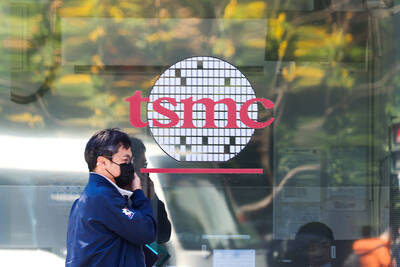
Taiwan Semiconductor Manufacturing Co’s (TSMC, 台積電) share of the global foundry market rose to almost 70 percent last year amid booming demand for artificial intelligence (AI), market information advisory firm TrendForce Corp (集邦科技) said on Thursday. The contract chipmaker posted US$122.54 billion in revenue, up 36.1 percent from a year earlier, accounting for 69.9 percent of the global market, TrendForce said. Its share was up from 64.4 percent in 2024, it said. TSMC’s closest rival, Samsung Electronics, was a distant second, posting US$12.63 billion in sales, down 3.9 percent from a year earlier, for a 7.2 percent share of the global market. In the
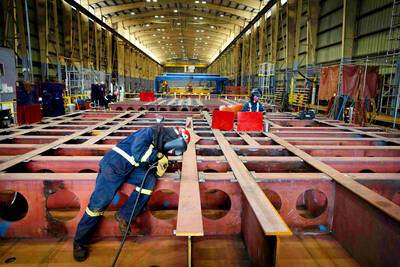
At a massive shipyard in North Vancouver, Canadian workers grind metal beams for a powerful new icebreaker crucial to cementing the country’s presence in the increasingly contested arctic. Icebreakers are specialized, expensive vessels able to navigate in the frozen far north. And “this is the crown jewel,” said Eddie Schehr, vice president of production at the Seaspan shipyard. For Canadian Prime Minister Mark Carney, who heads to Norway next Friday to observe arctic defense drills involving troops from 14 NATO states, Canada’s extreme north has emerged as a strategic priority. “Canada is and forever will be an Arctic nation,” he said ahead of
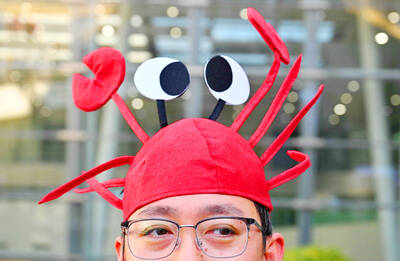
Chinese entrepreneur Frank Gao used to spend long hours running his social media accounts but now outsources the chore to artificial intelligence (AI) agent tool OpenClaw, which is taking China by storm despite official warnings over cybersecurity. OpenClaw, created in November by an Austrian coder, differs from bots such as ChatGPT because it can execute real-life tasks such as sending e-mails, organizing files or even booking flight tickets. “Since January, I’ve spent hours on the lobster every day,” Gao said in an interview, referring to OpenClaw’s red crustacean mascot. “We’re family.” After downloading OpenClaw, users connect it to artificial intelligence models of their


 RSS
RSS