


MACROECONOMICS
Japan biz confidence slips
Confidence among Japan’s biggest manufacturers has slipped for the second straight quarter, a key central bank survey showed yesterday. The Bank of Japan’s Tankan report — a quarterly survey of about 10,000 companies — showed a reading of 21 among major manufacturers in its June survey against 24 in the March report. The Tankan report, the broadest indicator of how Japan Inc is faring, marks the difference between the percentage of firms that are upbeat and those that see conditions as unfavorable.
AUTOS
Nissan drops battery sale
Nissan Motor Co abandoned a US$1 billion deal to sell its electric-battery business because the prospective buyer failed to raise the money required. The Japanese automaker canceled the sale to GSR Capital (金沙江資本), saying in a statement yesterday the Chinese private-equity firm did not have sufficient funds. Nissan and GSR were due to close the transaction by Friday last week. The deal had already been postponed three times, most recently on April 27, because certain conditions had not been met. The deal with GSR for Nissan subsidiary Automotive Energy Supply Corp and manufacturing operations in Japan, the US and the UK would have ended a long search for a buyer as the carmaker works to streamline operations.
TECHNOLOGY
Softbank invests in ‘handy’
Japanese technology conglomerate Softbank is investing in a mobile device service for hotel guests, called handy Japan, that offers information on tourist attractions and Internet access. Terms of the deal, announced yesterday, were not disclosed. Handy, developed by Hong Kong-based Tink Labs, is available in 650,000 rooms in 4,000 hotels in 82 countries. It rolled out in Japan in July last year and has been adopted by 1,700 hotels and 240,000 rooms, about a third of the nation’s hotels, both sides said. Handy works as a smartphone rental that is a complementary hotel service. The device can contact a hotel’s concierge, link to the Internet, and make local and international calls.
ENERGY
BP Azerbaijan plant running
British petroleum giant BP has started operating a US$28 billion pipeline in Azerbaijan to supply gas to Turkey and elsewhere in Europe, the company said yesterday. The “Shah Deniz 2” development is “the starting point for the Southern Gas Corridor series of pipelines that will for the first time deliver natural gas from the Caspian Sea directly to European markets,” BP said in a statement. The pipeline bypasses Russia and has been supported by the EU, which is keen to reduce Europe’s energy dependence on Moscow.
BUSINESS
Interpol hunts billionaire
Interpol yesterday issued an arrest warrant for Indian billionaire diamond merchant Nirav Modi, tightening the noose on one of the main suspects in a US$1.8 billion fraud at a major state-run bank. Modi is a jeweler to the stars whose celebrity clients have included Naomi Watts and Kate Winslet. His eponymous high-end brand has stores in several of the world’s major cities. India last month requested Interpol to issue a so-called red corner notice to help trace Modi after the fugitive diamond merchant was last spotted in Britain. A red corner notice seeks the arrest or provisional arrest of wanted persons with a view to extradition.
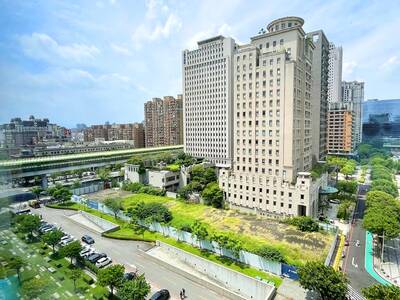
Taichung reported the steepest fall in completed home prices among the six special municipalities in the first quarter of this year, data compiled by Taiwan Realty Co (台灣房屋) showed yesterday. From January through last month, the average transaction price for completed homes in Taichung fell 8 percent from a year earlier to NT$299,000 (US$9,483) per ping (3.3m²), said Taiwan Realty, which compiled the data based on the government’s price registration platform. The decline could be attributed to many home buyers choosing relatively affordable used homes to live in themselves, instead of newly built homes in the city’s prime property market, Taiwan Realty
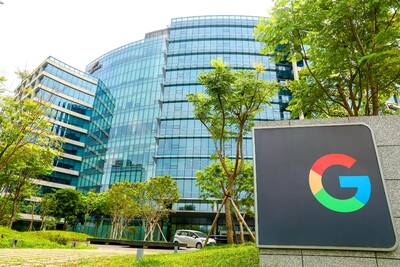
The government yesterday approved applications by Alphabet Inc’s Google to invest NT$27.08 billion (US$859.98 million) in Taiwan, the Ministry of Economic Affairs said in a statement. The Department of Investment Review approved two investments proposed by Google, with much of the funds to be used for data processing and electronic information supply services, as well as inventory procurement businesses in the semiconductor field, the ministry said. It marks the second consecutive year that Google has applied to increase its investment in Taiwan. Google plans to infuse NT$25.34 billion into Charter Investments Ltd (特許投資顧問) through its Singapore-based subsidiary Fructan Holdings Singapore Pte Ltd, and

JET JUICE: The war on Iran’s secondary effects have seen fuel prices skyrocket, knocking flight schedules down to earth in return as airlines struggle with costs Airline passengers should brace for more irritation in the next few months as carriers worldwide cancel flights and ground planes to cope with stratospheric increases in jet-fuel prices. Dutch flag carrier KLM is the latest company to cut its schedule, saying on Thursday that it would scrap 80 return flights at Amsterdam’s Schiphol Airport in the coming month. That puts it in the same league as United Airlines Holdings Inc, Deutsche Lufthansa AG and Cathay Pacific Airways Ltd, which have all pruned itineraries to mitigate costs. Global capacity for next month has been reduced by about 3 percentage points, with all
Micron Technology Inc is a driving force pushing the US Congress to pass legislation that would put new export restrictions on equipment its Chinese competitors use to make their chips, according to people familiar with the matter. A US House of Representatives panel yesterday was to vote on the “MATCH Act,” a bill designed to close gaps in restrictions on chipmaking equipment. It would also pressure foreign companies that sell equipment to Chinese chipmaking facilities to align with export curbs on US companies like Lam Research Corp and Applied Materials Inc. The bill targets facilities operated by China’s ChangXin Memory Technologies Inc


 RSS
RSS