


Lloyds Banking Group PLC, Britain’s largest mortgage lender, said it is on track to meet full-year targets despite increasing its quarterly impairments by almost one third.
Loan impairments rose to £270 million (US$354 million) in the three months ended Sept. 30 from £204 million in the same period a year ago, the bank said in a statement yesterday.
There was a “single large corporate impairment” in the third quarter of the year, without specifying details, the bank said.
“We have announced improved financial targets for 2017, reflecting the strong financial performance in the year and we remain on track to deliver our longer-term guidance,” chief executive officer Antonio Horta-Osorio said in the statement.
Lloyds has grown in riskier consumer finance with the acquisition of Bank of America Corp’s MBNA UK credit card division for £1.9 billion in December last year in an attempt to diversify the bank’s mortgage-dominated balance sheet. The bank also has the biggest exposure to consumer car finance among Britain’s banks, though it represents only about 3 percent of its balance sheet.
The Bank of England is to examine resilience to consumer credit within its stress tests of banks this year as motor finance experiences growth that is outpacing household incomes.
The bank is preparing to outline a new strategy for growth in February next year, which analysts expect will involve further cost reductions and investment in technology after the bank eliminated thousands of jobs.
The government sold its last remaining shares in the firm in May some eight years after its bailout, but Lloyds, which has 97 percent of its business in the UK, remains wedded to the fortunes of the economy as the government negotiates Brexit and edges toward its first interest-rate increase for a decade.
Pretax profit for the third quarter more than doubled to £1.95 billion. Excluding exceptional charges, Lloyds reported a pretax profit of £2.1 billion, in line with the average estimate of three analysts compiled by Bloomberg News.
It is to consider a special dividend or share buyback at the end of the year after the bank generated more capital than expected, Lloyds said.
However, any payouts are dependent on the UK regulator’s pending final decision on a key capital buffer.
The lender now forecasts capital generation of between 225 and 240 basis points this year from a previous guidance of 170 to 200 basis points. The bank’s common equity Tier 1 ratio, a measure of financial strength, rose to 14.9 percent in the quarter, exceeding the assumed minimum of 13 percent, the statement said.
The bank’s shares fell as much as 2.8 percent and were 1.7 percent lower at £0.6623 as of 8:22am yesterday in London.
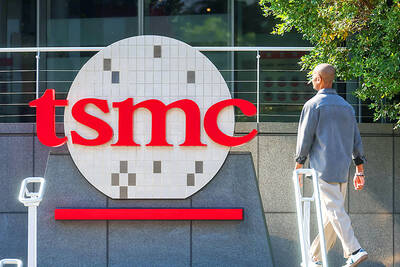
Shares of contract chipmaker Taiwan Semiconductor Manufacturing Co (TSMC, 台積電) came under pressure yesterday after a report that Apple Inc is looking to shift some orders from the Taiwanese company to Intel Corp. TSMC shares fell NT$55, or 2.4 percent, to close at NT$2,235 on the local main board, Taiwan Stock Exchange data showed. Despite the losses, TSMC is expected to continue to benefit from sound fundamentals, as it maintains a lead over its peers in high-end process development, analysts said. “The selling was a knee-jerk reaction to an Intel-Apple report over the weekend,” Mega International Investment Services Corp (兆豐國際投顧) analyst Alex Huang
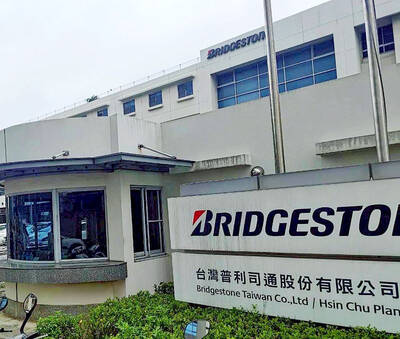
TRANSITION: With the closure, the company would reorganize its Taiwanese unit to a sales and service-focused model, Bridgestone said Bridgestone Corp yesterday announced it would cease manufacturing operations at its tire plant in Hsinchu County’s Hukou Township (湖口), affecting more than 500 workers. Bridgestone Taiwan Co (台灣普利司通) said in a statement that the decision was based on the Tokyo-based tire maker’s adjustments to its global operational strategy and long-term market development considerations. The Taiwanese unit would be reorganized as part of the closure, effective yesterday, and all related production activities would be concluded, the statement said. Under the plan, Bridgestone would continue to deepen its presence in the Taiwanese market, while transitioning to a sales and service-focused business model, it added. The Hsinchu

Taiwan Semiconductor Manufacturing Co (TSMC, 台積電) has approved a capital budget of US$31.28 billion for production expansion to meet long-term development needs during the artificial intelligence (AI) boom. The company’s board meeting yesterday approved the capital appropriation plan for purposes such as the installation of advanced technology capacity and fab construction, the world’s largest contract chipmaker said in a statement. At an earnings conference last month, TSMC forecast that its capital expenditure for this year would be at the higher end of the US$52 billion to US$56 billion range it forecast in January in response to robust demand for 5G, AI and

Taiwan Semiconductor Manufacturing Co’s (TSMC, 台積電) investment project in Arizona has progressed better than expected, but it still faces challenges such as water and labor shortages, National Development Council (NDC) Minister Yeh Chun-hsien (葉俊顯) said yesterday. Speaking with reporters after visiting TSMC’s Arizona hub and attending the SelectUSA Investment Summit in Maryland last week, Yeh said TSMC’s Arizona site turned a profit of NT$16.14 billion (US$514 million) last year in its first full year of mass production. “TSMC told me it was surprised by the smooth trial run of the first fab, which has left the company optimistic about the project’s outlook,”


 RSS
RSS