


Nothing in the farming background of the Guillemot brothers, who hail from France’s remote Brittany region, destined them to one day do battle with France’s most feared corporate raider.
However, that was before they conquered the gaming world with titles like Just Dance and action game Assassin’s Creed, attracting the voracious attention of fellow Breton businessman Vincent Bollore, head of the media conglomerate Vivendi SA.
The Guillemot brothers are already 1-0 down against Bollore.
Vivendi earlier this year succeeded with a hostile public offer for shares in Gameloft SA, the developer of games for mobile devices including the Dungeon Hunter and Modern Combat series, that was founded by Michel Guillemot.
And now Bollore also wants Ubisoft SA, the prized jewel in the Guillemot crown.
He has already taken nearly 23 percent in the company that is led by Yves Guillemot.
That sounded the alarm among the tight-knit and discreet brothers, who own just 13 percent of Ubisoft’s shares with 19 percent of the voting rights.
Moreover, Bollore will soon benefit from a new regulation in France that gives long-term shareholders double voting rights, to have 27.5 percent of votes.
Vivendi’s pledge in June that it would not launch a hostile public offer for Ubisoft over the next six months did little to calm their worries, as Bollore has made no secret of his desire to unite Gameloft and Ubisoft.
Concerned that Vivendi’s next step might be a push to get its representatives on Ubisoft’s board of directors, the Guillemot brothers circled the wagons ahead of an Ubisoft shareholders’ meeting at the end of last month, causing Vivendi to back off.
However, Vivendi later said in a statement it “considers that it would be good corporate governance for it to be represented on the company’s board of directors considering its level of equity interest.”
“Vivendi’s statement should feed the fear of management to a creeping takeover by the media group,” brokerage Gilbert Dupont said in a client note.
Vivendi also blocked measures at the meeting that would have the given the board the right to distribute free shares or offer share options to managers or employees, which would have allowed the Guillemot brothers to cheaply strengthen their control over Ubisoft.
Yves Guillemot said after the meeting they had “won an important battle for the company,” but not the war.
Gilbert Dupont said it considered a public offer unlikely at this point, given the opposition voiced by employees at the shareholder meeting to the prospect of a Vivendi takeover.
Another broker, who asked not to be named, noted that a public takeover would require an additional outlay of 3 billion euros (US$3.36 billion), and that given its debt levels, Vivendi might not want to fork out the cash.
The Guillemot brothers launched Ubisoft in 1986, scoring a breakout success in 1995 with Rayman, featuring the limbless humanoid known to throw his floating appendages at his enemies, on the first PlayStation console.
It quickly emerged as a major firm in the industry, generating 1.4 billion euros in annual sales and employing 11,000 people across 20 countries.
The brothers, who sit on the board of directors, hold equal shares in Ubisoft and other family-held companies.
They speak each week in sometimes stormy conference calls, and gather regularly for trips on the family yacht anchored in the Brittany port of Trinite-sur-Mer.
“The Guillemots are a clan of discreet visionaries,” said Laurent Michaud, an expert at technology consultancy Idate. “They take risks with small teams on projects off beaten paths.”
The brothers have successfully defended Ubisoft against a hostile takeover attempt before, seeing off the giant US game developer Electronic Arts Inc in 2004.
However, with Bollore, they have an experienced corporate raider and in Vivendi a media company with interests in film and TV that could gain additional value from Ubisoft’s game franchises.
Ubisoft has, in fact, been moving in this direction itself. Its movie unit, Ubisoft Motion Pictures, is releasing its first full-length feature film, Assassin’s Creed, in December.
Shares of contract chipmaker Taiwan Semiconductor Manufacturing Co (TSMC, 台積電) came under pressure yesterday after a report that Apple Inc is looking to shift some orders from the Taiwanese company to Intel Corp. TSMC shares fell NT$55, or 2.4 percent, to close at NT$2,235 on the local main board, Taiwan Stock Exchange data showed. Despite the losses, TSMC is expected to continue to benefit from sound fundamentals, as it maintains a lead over its peers in high-end process development, analysts said. “The selling was a knee-jerk reaction to an Intel-Apple report over the weekend,” Mega International Investment Services Corp (兆豐國際投顧) analyst Alex Huang
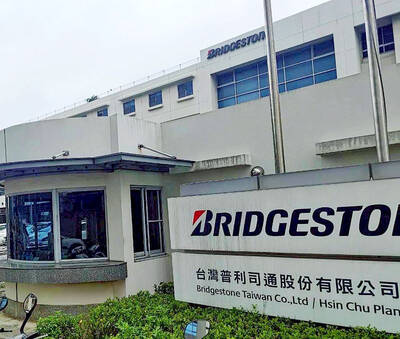
TRANSITION: With the closure, the company would reorganize its Taiwanese unit to a sales and service-focused model, Bridgestone said Bridgestone Corp yesterday announced it would cease manufacturing operations at its tire plant in Hsinchu County’s Hukou Township (湖口), affecting more than 500 workers. Bridgestone Taiwan Co (台灣普利司通) said in a statement that the decision was based on the Tokyo-based tire maker’s adjustments to its global operational strategy and long-term market development considerations. The Taiwanese unit would be reorganized as part of the closure, effective yesterday, and all related production activities would be concluded, the statement said. Under the plan, Bridgestone would continue to deepen its presence in the Taiwanese market, while transitioning to a sales and service-focused business model, it added. The Hsinchu

Taiwan Semiconductor Manufacturing Co (TSMC, 台積電) has approved a capital budget of US$31.28 billion for production expansion to meet long-term development needs during the artificial intelligence (AI) boom. The company’s board meeting yesterday approved the capital appropriation plan for purposes such as the installation of advanced technology capacity and fab construction, the world’s largest contract chipmaker said in a statement. At an earnings conference last month, TSMC forecast that its capital expenditure for this year would be at the higher end of the US$52 billion to US$56 billion range it forecast in January in response to robust demand for 5G, AI and

Taiwan Semiconductor Manufacturing Co’s (TSMC, 台積電) investment project in Arizona has progressed better than expected, but it still faces challenges such as water and labor shortages, National Development Council (NDC) Minister Yeh Chun-hsien (葉俊顯) said yesterday. Speaking with reporters after visiting TSMC’s Arizona hub and attending the SelectUSA Investment Summit in Maryland last week, Yeh said TSMC’s Arizona site turned a profit of NT$16.14 billion (US$514 million) last year in its first full year of mass production. “TSMC told me it was surprised by the smooth trial run of the first fab, which has left the company optimistic about the project’s outlook,”


 RSS
RSS