


Ecuadoran President Rafael Correa on Saturday said that he hopes OPEC countries will reach an agreement to stabilize the oil market at the upcoming meeting in Algeria, warning of “serious risks” for the group if they do reach a deal.
OPEC members are to hold an informal meeting in Algeria from today to Wednesday.
“It is a meeting being held for other reasons, but all the OPEC members will be there, so we hope to have other informal meetings and reach agreements to stabilize the oil market,” Correa said in his weekly televised broadcast.
“Otherwise the consequences could be very serious, it could lead to a disintegration of OPEC itself... There is even a risk that internal disputes within OPEC could lead prices to plummet again,” he said.
Ecuador supports the position of ideological ally Venezuela that major oil producers should freeze production levels to limit excess supply and support prices.
The idea has received some support among oil producers, but oil prices slumped on Friday on signs that OPEC members Saudi Arabia and Iran were struggling to reach a preliminary consensus in the run-up to the Algeria talks.
A previous bid to freeze output, led by Saudi Arabia, fell apart in Doha in April when Iran refused to play ball, arguing it needed to bring its production back up to pre-Western sanctions levels.
“An agreement on a production freeze accepted by everyone would be a surprise,” said Didier Houssin, head of research group IFPEN.
“Analysts expect more a comment that’s a bit calming on the need to continue to follow the market ... and to stabilize production. Without binding measures, without specific quotas,” Houssin said.
The OPEC talks are to take place on the sidelines of a three-day International Energy Forum gathering — in which Russia will participate — from today.
So far the two major producers have not taken any action to reduce the oversupply, which has resulted from a boom in US fracking and from OPEC’s nearly two-year-old strategy to throw open the spigots to defend market share.
OPEC secretary-general Mohammed Barkindo of Nigeria, has himself dampened expectations, describing the meeting as consultative, while Algerian Minister of Energy Noureddine Boutarfa has notably said OPEC could call a special decisionmaking meeting in Algiers.
Oil prices have plunged from peaks of more than US$100 a barrel in the middle of 2014 to near 13-year lows below US$30 in January. Prices have strengthened since lows at the start of the year and currently stand at about US$45 a barrel, within striking distance of the US$50 to US$60 range desired by some OPEC members.
Additional reporting by AFP
Shares of contract chipmaker Taiwan Semiconductor Manufacturing Co (TSMC, 台積電) came under pressure yesterday after a report that Apple Inc is looking to shift some orders from the Taiwanese company to Intel Corp. TSMC shares fell NT$55, or 2.4 percent, to close at NT$2,235 on the local main board, Taiwan Stock Exchange data showed. Despite the losses, TSMC is expected to continue to benefit from sound fundamentals, as it maintains a lead over its peers in high-end process development, analysts said. “The selling was a knee-jerk reaction to an Intel-Apple report over the weekend,” Mega International Investment Services Corp (兆豐國際投顧) analyst Alex Huang
Taiwan Semiconductor Manufacturing Co (TSMC, 台積電) is expected to remain Apple Inc’s primary chip manufacturing partner despite reports that Apple could shift some orders to Intel Corp, industry experts said yesterday. The comments came after The Wall Street Journal reported on Friday that Apple and Intel had reached a preliminary agreement following more than a year of negotiations for Intel to manufacture some chips for Apple devices. Taiwan Institute of Economic Research (台灣經濟研究院) economist Arisa Liu (劉佩真) said TSMC’s advanced packaging technologies, including integrated fan-out and chip-on-wafer-on-substrate, remain critical to the performance of Apple’s A-series and M-series chips. She said Intel and Samsung
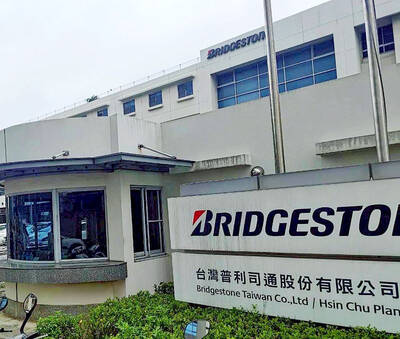
TRANSITION: With the closure, the company would reorganize its Taiwanese unit to a sales and service-focused model, Bridgestone said Bridgestone Corp yesterday announced it would cease manufacturing operations at its tire plant in Hsinchu County’s Hukou Township (湖口), affecting more than 500 workers. Bridgestone Taiwan Co (台灣普利司通) said in a statement that the decision was based on the Tokyo-based tire maker’s adjustments to its global operational strategy and long-term market development considerations. The Taiwanese unit would be reorganized as part of the closure, effective yesterday, and all related production activities would be concluded, the statement said. Under the plan, Bridgestone would continue to deepen its presence in the Taiwanese market, while transitioning to a sales and service-focused business model, it added. The Hsinchu
Taiwan Semiconductor Manufacturing Co (TSMC, 台積電) has approved a capital budget of US$31.28 billion for production expansion to meet long-term development needs during the artificial intelligence (AI) boom. The company’s board meeting yesterday approved the capital appropriation plan for purposes such as the installation of advanced technology capacity and fab construction, the world’s largest contract chipmaker said in a statement. At an earnings conference last month, TSMC forecast that its capital expenditure for this year would be at the higher end of the US$52 billion to US$56 billion range it forecast in January in response to robust demand for 5G, AI and


 RSS
RSS